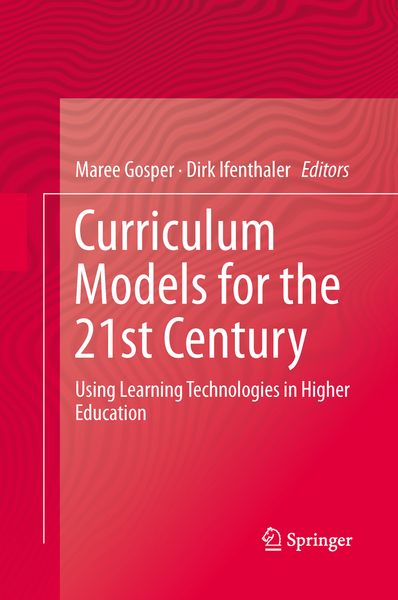
Curriculum Models for the 21st Century Using Learning Technologies in Higher Education
-
- Hardcover
- Taschenbuch ausgewählt
- eBook
-
Sprache:Englisch
144,99 €
UVP
164,99 €
inkl. gesetzl. MwSt.,
Beschreibung
Produktdetails
Einband
Taschenbuch
Erscheinungsdatum
19.08.2015
Herausgeber
Maree Gosper + weitereVerlag
Springer UsSeitenzahl
444
Maße (L/B/H)
23,5/15,5/2,6 cm
Gewicht
709 g
Auflage
Softcover reprint of the original 1st edition 2014
Sprache
Englisch
ISBN
978-1-4899-9501-8
Changing student profiles and the increasing availability of mainstream and specialized learning technologies are stretching the traditional face-to-face models of teaching and learning in higher education. Institutions, too, are facing far-reaching systemic changes which are placing strains on existing resources and physical infrastructure and calling into question traditional ways of teaching through lectures and tutorials. And, with an ever-increasing scrutiny on teaching and teachers’ accountability for positive educational outcomes, the call for closer attention to learning, teaching and, most especially, to the design and delivery of the curriculum is given increasing relevance and importance.
Research provides strong evidence of the potential for technologies to facilitate not only cognition and learning but also to become integral components in the redesign of current curriculum models. Some Universities and individual academics have moved along this pathway, developing new and innovative curriculum, blending pedagogies and technologies to suit their circumstances. Yet, there are others, unsure of the possibilities, the opportunities and constraints in these changing times. Curriculum Models for the 21st Century gives insights into how teaching and learning can be done differently. The focus is on a whole of curriculum approach, looking at theoretical models and examples of practice which capitalize on the potential of technologies to deliver variations and alternatives to the more traditional lecture-based model of University teaching.
Kundinnen und Kunden meinen
Verfassen Sie die erste Bewertung zu diesem Artikel
Helfen Sie anderen Kund*innen durch Ihre Meinung
Kurze Frage zu unserer Seite
Vielen Dank für Ihr Feedback
Wir nutzen Ihr Feedback, um unsere Produktseiten zu verbessern. Bitte haben Sie Verständnis, dass wir Ihnen keine Rückmeldung geben können. Falls Sie Kontakt mit uns aufnehmen möchten, können Sie sich aber gerne an unseren Kund*innenservice wenden.
zum Kundenservice