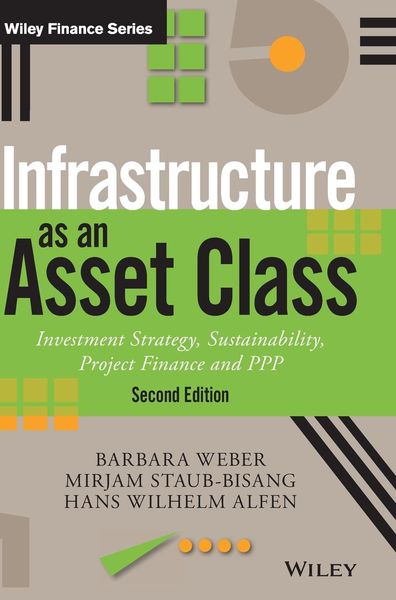
Infrastructure as an Asset Class Investment Strategy, Sustainability, Project Finance and PPP
-
- Englisch ausgewählt
106,99 €
inkl. gesetzl. MwSt.,
Beschreibung
Produktdetails
Einband
Gebundene Ausgabe
Erscheinungsdatum
20.05.2016
Verlag
John Wiley & Sons IncSeitenzahl
432
Maße (L/B/H)
25/17,5/2,7 cm
Gewicht
909 g
Auflage
2nd edition
Sprache
Englisch
ISBN
978-1-119-22654-3
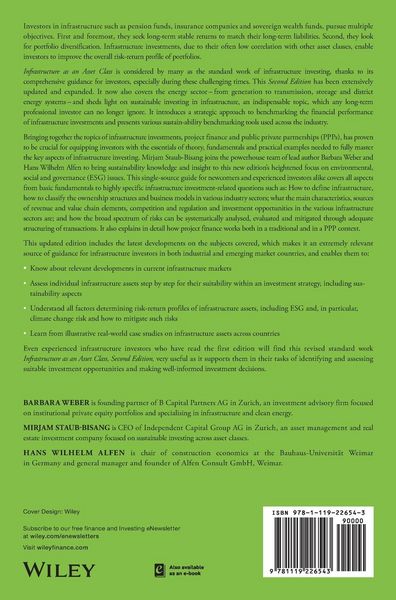
Infrastructure As An Asset Class is the leading infrastructure investment guide, with comprehensive coverage and in-depth expert insight. This new second edition has been fully updated to reflect the current state of the global infrastructure market, its sector and capital requirements, and provides a valuable overview of the knowledge base required to enter the market securely. Step-by-step guidance walks you through individual infrastructure assets, emphasizing project financing structures, risk analysis, instruments to help you understand the mechanics of this complex, but potentially rewarding, market. New chapters explore energy, renewable energy, transmission and sustainability, providing a close analysis of these increasingly lucrative areas.
The risk profile of an asset varies depending on stage, sector and country, but the individual structure is most important in determining the risk/return profile. This book provides clear, detailed explanations and invaluable insight from a leading practitioner to give you a solid understanding of the global infrastructure market.
* Get up to date on the current global infrastructure market
* Investigate individual infrastructure assets step-by-step
* Examine illustrative real-world case studies
* Understand the factors that determine risk/return profiles
Infrastructure continues to be an area of global investment growth, both in the developed world and in emerging markets. Conditions continually change, markets shift and new considerations arise; only the most current reference can supply the right information practitioners need to be successful. Infrastructure As An Asset Class provides clear reference based on the current global infrastructure markets, with in-depth analysis and expert guidance toward effective infrastructure investment.
Noch keine Bewertungen vorhanden
Verfassen Sie die erste Bewertung zu diesem Artikel
Helfen Sie anderen Kundinnen und Kunden durch Ihre Meinung.
Kurze Frage zu unserer Seite
Vielen Dank für Ihr Feedback
Wir nutzen Ihr Feedback, um unsere Produktseiten zu verbessern. Bitte haben Sie Verständnis, dass wir Ihnen keine Rückmeldung geben können. Falls Sie Kontakt mit uns aufnehmen möchten, können Sie sich aber gerne an unseren Kund*innenservice wenden.
zum Kundenservice