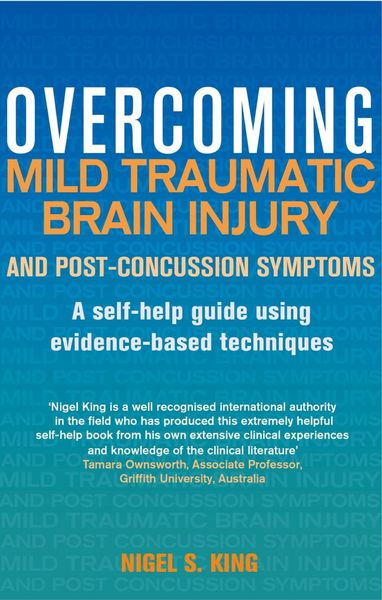
Overcoming Mild Traumatic Brain Injury and Post-Concussion Symptoms A self-help guide using evidence-based techniques
-
- Taschenbuch
- eBook ausgewählt
-
Form:Einzelkauf Download
-
Sprache:Englisch
3,99 €
inkl. gesetzl. MwSt.Beschreibung
Produktdetails
Format
ePUB
Kopierschutz
Ja
Family Sharing
Ja
Text-to-Speech
Ja
Erscheinungsdatum
01.10.2015
Verlag
Little, Brown Book GroupSeitenzahl
240 (Printausgabe)
Dateigröße
1728 KB
Sprache
Englisch
EAN
9781472136107
HIGHLY COMMENDED for the British Medical Awards book prize for Popular Medicine
Up to 10% of people will suffer a mild head injury (or 'mild traumatic brain injury') in their lifetime and up to 50% of those people will also find they have lingering post-concussion symptoms in the months or years afterwards. These symptoms can include headaches, dizziness, fatigue, irritability, sleep disturbance, reduced day-to-day memory, poor concentration, taking longer to think, 'muzzy' headedness, depression, anxiety, tinnitus, blurred or double vision, sensitivity to light or noise, frustration, nausea, restlessness and sensitivity to alcohol. In such circumstances the 'mild' head injury may feel anything but mild. This is particularly so if large areas of your day to day life are affected.
People in these circumstances can have their difficulties compounded by the very different explanations for their persisting difficulties. These usually involve receiving contradictory opinions about the extent to which ongoing symptoms are caused by neurological brain injury or other factors.
These complicating factors can make it very difficult to find the right kind of service or expertise after a TBI. Patients can easily feel like they are being ''pushed from pillar to post" when trying to find services that can help with their problems. On top of all of this, there is a distinct lack of good, science- based information for patients about the best ways to manage PCS. It is therefore very common for those who experience prolonged difficulties to find their situation extremely confusing, frustrating and stressful.
Dr Nigel King is an expert with much experience in this area, and has written a very valuable book weaving together the most useful knowledge in this area. It clarifies some of the complex issues for those who suffer with prolonged problems and provides practical, science-based self-help guidance for managing TBI difficulties. Using cognitive rehabilitation techniques and CBT approaches for the associated mental health complications of PCS, this much need book provides help, hope and understanding for what can be a highly disabling and misunderstood condition.
Noch keine Bewertungen vorhanden
Verfassen Sie die erste Bewertung zu diesem Artikel
Helfen Sie anderen Kundinnen und Kunden durch Ihre Meinung.
Kurze Frage zu unserer Seite
Vielen Dank für Ihr Feedback
Wir nutzen Ihr Feedback, um unsere Produktseiten zu verbessern. Bitte haben Sie Verständnis, dass wir Ihnen keine Rückmeldung geben können. Falls Sie Kontakt mit uns aufnehmen möchten, können Sie sich aber gerne an unseren Kund*innenservice wenden.
zum Kundenservice