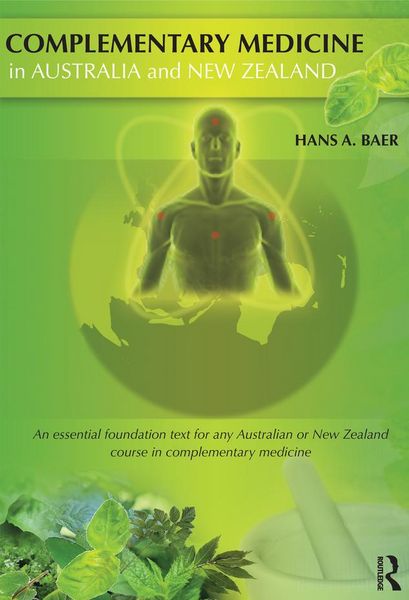
Complementary Medicine in Australia and New Zealand Its popularisation, legitimation and dilemmas
-
- Einzelkauf Download ausgewählt
-
Sprache:Englisch
-
eBook Format:PDF
- PDF 132,70 € ausgewählt
- ePUB 131,60 €
132,70 €
inkl. gesetzl. MwSt.Beschreibung
Produktdetails
Format
Kopierschutz
Ja
Family Sharing
Nein
Text-to-Speech
Nein
Erscheinungsdatum
17.07.2015
Verlag
Taylor & Francis eBooksSeitenzahl
200 (Printausgabe)
Dateigröße
1028 KB
Sprache
Englisch
EAN
9781317325000
In the late nineteenth century on the eve of the formation of Australia as a nation-state in 1902, the Australian medical system could be best described as a pluralistic one in the sense that while regular medicine constituted the predominant medical system, it was not clearly the dominant one in that regular physicians faced competition from a wide array of alternative practitioners. As regular medicine increasingly assumed the guise of being scientific, it evolved into biomedicine and developed a link with corporate and state interests in the early twentieth century in Australia, as in other capitalist developed societies.
Relying upon state support, Australian biomedicine has achieved dominance over alternative medical system, such as homeopathy, herbal medicine, osteopathy, chiropractic, and naturopathy. Various social forces, particularly the development of the holistic health movement, have served to challenge biomedical dominance in Australia, like elsewhere.
What started out as a popular health movement in the early 1970s has evolved into the professionalized entity that is generally referred to as 'complementary medicine' in Australia (as opposed to 'complementary and alternative medicine' in the US and UK). Complementary medicine in Australia encompasses many medical systems and therapies.
Since the 1980s certain heterodox medical systems, particularly chiropractic, osteopathy, acupuncture and Chinese medicine, naturopathy, Western herbalism, and homeopathy, have achieved considerable recognition from the Australian state, either at the federal level or at the state and territorial levels. Indeed, the Australian state appears to have gone further than any other Anglophone country in terms of providing public funding for complementary medicine education. Conversely, it has committed a limited amount of funding for complementary medicine research compared to the United States.
Noch keine Bewertungen vorhanden
Verfassen Sie die erste Bewertung zu diesem Artikel
Helfen Sie anderen Kundinnen und Kunden durch Ihre Meinung.
Kurze Frage zu unserer Seite
Vielen Dank für Ihr Feedback
Wir nutzen Ihr Feedback, um unsere Produktseiten zu verbessern. Bitte haben Sie Verständnis, dass wir Ihnen keine Rückmeldung geben können. Falls Sie Kontakt mit uns aufnehmen möchten, können Sie sich aber gerne an unseren Kund*innenservice wenden.
zum Kundenservice