Gutscheinbedingungen

**Gültig bis 06.07.2026 auf fremdsprachige Bücher online auf thalia.at, in der Thalia App ab einem Mindestbestellwert von 30€ und in allen Thalia Buchhandlungen in Österreich. In den Buchhandlungen nur gültig auf lagernde Ware. Einzelne Artikel können ausgeschlossen sein. Ausgenommen sind preisgebundene Artikel & eBooks. Pro Einkauf einmal einlösbar. Nur gültig gegen Vorlage oder im Onlineshop hinterlegter Bonuscard. Infos zur Einlösung in der Buchhandlung sind auf der Bonuscard-Vorteilspreisseite zu finden. Click & Collect nur bei Onlinevorabzahlung möglich. Keine Einlösung bei Scan & Go-Bezahlung. Keine Barauszahlung. Nicht kombinierbar mit anderen Aktionen und Gutscheinen. Gutschein wird auf max. 500€ Bestellwert angerechnet. Nicht gültig für Versandkosten und Services.

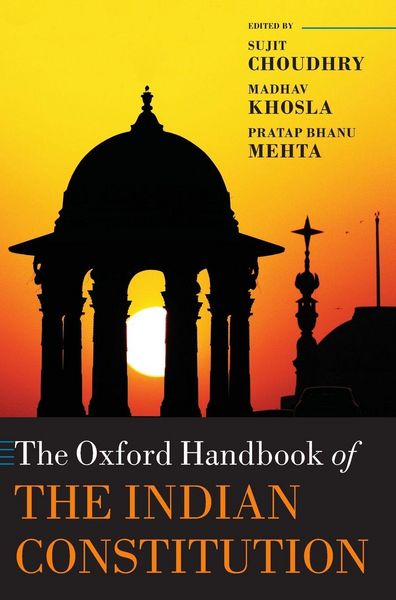
Produktbild: Oxford Handbook of the Indian Constitution

Oxford Handbook of the Indian Constitution

272,99 €

inkl. gesetzl. MwSt., Versandkostenfrei


Beschreibung

Produktdetails

Einband

Gebundene Ausgabe

Erscheinungsdatum

01.05.2016

Herausgeber

Choudhry Sujit + weitere

Verlag

Oxford University Press

Seitenzahl

1116

Maße (L/B/H)

25/17,5/6,4 cm

Gewicht

1856 g

Sprache

Englisch

ISBN

978-0-19-870489-8

Beschreibung

Rezension

While there are already some existing substantial pieces of work on the Indian Constitution, the volume by Khosla et al. is exhilarating for two reasons. Firstly, the book is comprehensive for its encyclopedic coverage of the various dimensions related to the Indian Constitution - its genesis, its evolution, and its political and social relevance to the Indian society. Secondly, the book enterprisingly brings together a multifaceted set of perspectives emanating from both varied disciplinary standpoints and intellectual concerns. ... The book is useful to any scholar interested in issues surrounding the Indian Constitution, and will equally prove to be a good reference text for students of Indian constitution and legal history of India. Meenakshi Sinha, Regional & Federal Studies

Produktdetails

Einband

Gebundene Ausgabe

Erscheinungsdatum

01.05.2016

Herausgeber

Verlag

Oxford University Press

Seitenzahl

1116

Maße (L/B/H)

25/17,5/6,4 cm

Gewicht

1856 g

Sprache

Englisch

ISBN

978-0-19-870489-8

Herstelleradresse

Libri GmbH
Europaallee 1
36244 Bad Hersfeld
DE

Email: gpsr@libri.de

Noch keine Bewertungen vorhanden

Verfassen Sie die erste Bewertung zu diesem Artikel

Helfen Sie anderen Kundinnen und Kunden durch Ihre Meinung.

Kundinnen und Kunden meinen

Bewertungen (0)

Die Leseprobe wird geladen.
  • Produktbild: Oxford Handbook of the Indian Constitution
    • Introduction

    • 1: Sujit Choudhry, Madhav Khosla, and Pratap Bhanu Mehta: Locating Indian Constitutionalism

    • Part I: History

    • 2: Rohit De: Constitutional Antecedents

    • 3: Uday S. Mehta: Indian Constitutionalism: Crisis, Unity, and History

    • 4: Hanna Lerner: The Indian Founding: A Comparative Perspective

    • Part II: Negotiating Constitutionalism

    • 5: Chintan Chandrachud: Constitutional Interpretation

    • 6: Upendra Baxi: Law, Politics, and Constitutional Hegemony: The Supreme Court, Jurisprudence, and Demosprudence

    • 7: Gary Jacobsohn: Constitutional Identity

    • 8: Shruti Rajagopalan: Constitutional Change: A Public Choice Analysis

    • 9: Lavanya Rajamani: International Law and the Constitutional Schema

    • Part III: Constituting Democracy

    • 10: Niraja Gopal Jayal: Citizenship

    • 11: Sujit Choudhry: Language

    • 12: Aditya Sondhi: Elections

    • 13: Rahul Sagar: Emergency Powers

    • 14: Madhav Khosla: Constitutional Amendment

    • Part IV: Separation of Powers

    • 15: Justice (retd.) Ruma Pal: Separation of Powers

    • 16: M. R. Madhavan: Legislature: Composition, Qualifications, and Disqualifications

    • 17: Sidharth Chauhan: Legislature: Privileges and Process

    • 18: Shubhankar Dam: Executive

    • 19: Nick Robinson: Judicial Architecture and Capacity

    • 20: Justice (retd.) B. N. Srikrishna: Judicial Independence

    • 21: Raeesa Vakil: Jurisdiction

    • 22: T. V. Somanathan: The Administrative and Regulatory State

    • 23: Arun K. Thiruvengadam: Tribunals

    • 24: Prateek Jalan and Ritin Rai: Review of Administrative Action

    • Part V: Federalism

    • 25: Mahendra Pal Singh: The Federal Scheme

    • 26: V. Niranjan: Legislative Competence: The Union and the States

    • 27: Arvind Datar: Inter-State Trade and Commerce

    • 28: Harish Salve: Inter-State River Water Disputes

    • 29: Nirvikar Singh: Fiscal Federalism

    • 30: Louise Tillin: Asymmetric Federalism

    • 31: K. C. Sivaramakrishnan: Local Government

    • Part VI: Rights - Structures and Scope

    • 32: Ananth Padmanabhan: Rights: Breadth, Scope, and Applicability

    • 33: Stephen Gardbaum: Horizontal Effect

    • 34: Gopal Subramanium: Writs and Remedies

    • 35: Surya Deva: Savings Clauses: The Ninth Schedule and Articles 31A-C

    • 36: Gautam Bhatia: Directive Principles of State Policy

    • 37: Shyam Divan: Public Interest Litigation

    • 38: Shyam Balganesh: The Constitutionalization of Indian Private Law

    • Part VII: Rights - Substance and Content

    • 39: Tarunabh Khaitan: Equality: Legislative Review under Article 14

    • 40: Vinay Sitapati: Reservations

    • 41: Ratna Kapur: Gender Equality

    • 42: Anup Surendranath: Life and Personal Liberty

    • 43: Abhinav Chandrachud: Due Process

    • 44: Aparna Chandra and Mrinal Satish: Criminal Law and the Constitution

    • 45: Lawrence Liang: Speech and Expression

    • 46: Menaka Guruswamy: Assembly and Association

    • 47: Anirudh Burman: Movement and Residence

    • 48: Vikramaditya Khanna: Profession, Occupation, Trade, and Business

    • 79: Ronojoy Sen: Secularism and Religious Freedom

    • 50: Flavia Agnes: Personal Laws

    • 51: K. Vivek Reddy: Minority Educational Institutions

    • 52: Namita Wahi: Property

    • Part VIII: The Government's Legal Personality

    • 53: V. Umakanth: Government Contracts

    • 54: Neel Maitra: Sovereign Immunity

    • 55: Raju Ramachandran: Public Employment and Service Law

    • Epilogue

    • 56: Mark Tushnet: The Indian Constitution Seen from Outside