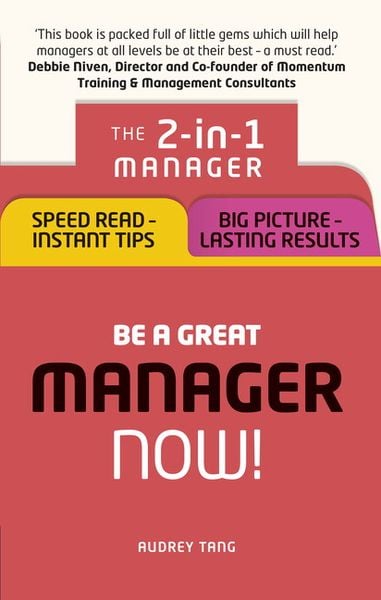
Be a Great Manager – Now!
-
- Taschenbuch ausgewählt
- eBook
-
Sprache:Englisch
14,99 €
inkl. gesetzl. MwSt.,
- Kostenlose Lieferung ab 30 € Einkaufswert
- Versandkostenfrei für Bonuscard-Kund*innen
Beschreibung
Produktdetails
Einband
Taschenbuch
Erscheinungsdatum
06.05.2016
Abbildungen
illustrations
Verlag
Pearson Education LimitedSeitenzahl
256
Maße (L/B/H)
23,4/15,6/1,5 cm
Gewicht
317 g
Auflage
1
Sprache
Englisch
ISBN
978-1-292-11966-3
‘This book is packed full of little gems which will help managers at all levels be at their best – a must read.’
Debbie Niven, Director and Co-founder of Momentum Training & Management Consultants
Discover how to Be a Great Manager – Now!
This 2-in-1 guide is designed to help you become a more effective manager in an instant, whilst giving you the deeper knowledge to ensure long-lasting results.
With the unique 2-in-1 approach, you can learn your way. Use the seven Speed Read tips immediately, then take your time exploring the Big Picture chapters.
· Understand how to be a great manager − quickly
· Effectively manage the issues that teams face
· Communicate with confidence and get the right message across
· Encourage your staff for exceptional performance and professional development
As an ambitious manager, you need the right information at the right time to help you advance in your career. The 2-in-1 Manager will ensure you improve and succeed in business, right now and in the future.
‘An excellent book – one every manager should read if they want to succeed.’
Ashley Braganza, Professor of Organisational Transformation and Head of Economics and Finance, Brunel University London
'Whether you are a millennial in management or embarking on management, you have to read this no nonsense, straight to the point book.'
Coach Chris Browne, Personal Development and Employability Coach
Noch keine Bewertungen vorhanden
Verfassen Sie die erste Bewertung zu diesem Artikel
Helfen Sie anderen Kundinnen und Kunden durch Ihre Meinung.
Kurze Frage zu unserer Seite
Vielen Dank für Ihr Feedback
Wir nutzen Ihr Feedback, um unsere Produktseiten zu verbessern. Bitte haben Sie Verständnis, dass wir Ihnen keine Rückmeldung geben können. Falls Sie Kontakt mit uns aufnehmen möchten, können Sie sich aber gerne an unseren Kund*innenservice wenden.
zum Kundenservice