KI-Beratung Beta

Gutscheinbedingungen

**Gültig am 20.11.2026 ab einem Mindestbestellwert von 30€ auf Spielzeug, Schreibwaren, Filme, Geschenke & Trends, Musik, tolino eReader & Zubehör, Hörbücher und Hörbuch-Downloads, nicht preisgebundene Bücher und Kalender online auf thalia.at und in der Thalia App. Einzelne Artikel können ausgeschlossen sein. Aufgrund der Buchpreisbindung sind deutschsprachige Bücher und eBooks ausgenommen. Zusätzlich ausgenommen sind Abos & Flatrates, Games, Geschenkkarten/-boxen, Shelfies, Software, Zeitschriften sowie einzelne Artikel von tonies®. Pro Einkauf einmal einlösbar. Click & Collect nur bei Onlinevorabzahlung möglich. Keine Barauszahlung. Nicht kombinierbar mit anderen Aktionen und Gutscheinen. Gutschein wird auf max. 500€ Bestellwert angerechnet. Nicht gültig für Versandkosten und Services. Preisgebundene Artikel sind vom Mindestbestellwert ausgeschlossen.

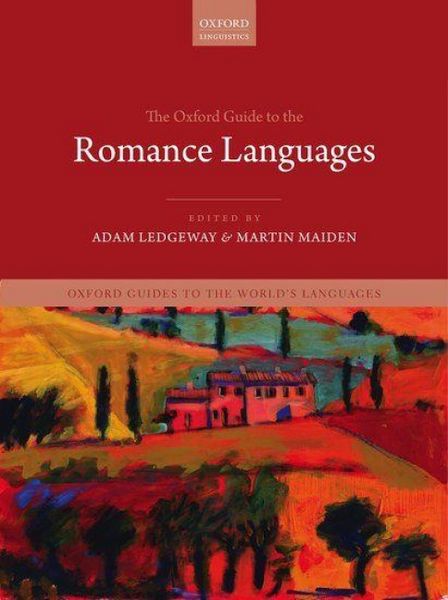
Produktbild: The Oxford Guide to the Romance Languages

The Oxford Guide to the Romance Languages

326,99 €

inkl. gesetzl. MwSt., Versandkostenfrei


Produktdetails

Einband

Gebundene Ausgabe

Erscheinungsdatum

30.08.2016

Herausgeber Adam Ledgeway + weitere
Verlag Oxford University Press

Produktdetails

Einband

Gebundene Ausgabe

Erscheinungsdatum

30.08.2016

Herausgeber
Verlag Oxford University Press
Seitenzahl

1248

Maße (L/B/H)

28,4/23,7/6,6 cm

Gewicht

2975 g

Sprache

Englisch

ISBN

978-0-19-967710-8

Herstelleradresse

Libri GmbH
Europaallee 1
36244 Bad Hersfeld
DE

Email: gpsr@libri.de

Noch keine Bewertungen vorhanden

Verfassen Sie die erste Bewertung zu diesem Artikel

Helfen Sie anderen Kundinnen und Kunden durch Ihre Meinung.

Kundinnen und Kunden meinen

Bewertungen (0)

  • Produktbild: The Oxford Guide to the Romance Languages
    • Series preface

    • Abbreviations

    • The Contributors

    • Introduction

    • Part I: The Making of the Romance Languages

    • 1: James Clackson: Latin as a source for the Romance Languages

    • 2: Roger Wright: Latin and Romance in the medieval period: A sociophilological approach

    • 3: Barbara Frank-Job and Maria Selig: Early evidence and sources

    • Part II: Typology and Classification

    • 4: Nigel Vincent: A structural comparison of Latin and Romance

    • 5: Paolo Ramat and Davide Ricca: Romance: A typological approach

    • 6: Georg Bossong: Classifications

    • 7: Hans Goebl: Romance linguistic geography and dialectometry

    • Part III: Individual Structural Overviews

    • 8: Martin Maiden: Romanian, Istro-Romanian, Megleno-Romanian, and Aromanian

    • 9: Martin Maiden: Dalmatian

    • 10: Paola Benincà and Laura Vanelli: Friulian

    • 11: Giampaolo Salvi: Ladin

    • 12: Stephen R. Anderson: Romansh (Rumantsch)

    • 13: Paola Benincà, Mair Parry, and Diego Pescarini: The dialects of northern Italy

    • 14: Adam Ledgeway: Italian, Tuscan, and Corsican

    • 15: Michele Loporcaro and Tania Paciaroni: The dialects of central Italy

    • 16: Adam Ledgeway: The dialects of southern Italy

    • 17: Guido Mensching and Eva-Maria Remberger: Sardinian

    • 18: John Charles Smith: French and northern Gallo-Romance

    • 19: Michèle Oliviéri and Patrick Sauzet: Southern Gallo-Romance (Occitan)

    • 20: Andres Kristol: Francoprovençal

    • 21: Alex Alsina: Catalan

    • 22: Donald N. Tuten, Enrique Pato, and Ora R. Schwarzwald: Spanish, Astur-Leonese, Navarro-Aragonese, Judaeo-Spanish

    • 23: Francisco Dubert and Charlotte Galves: Galician and Portuguese

    • 24: Annegret Bollée and Philippe Maurer: Creoles

    • Part IV: Comparative Overviews

    • Phonology

    • 25: Stephan Schmid: Segmental phonology

    • 26: Giovanna Marotta: Prosodic structure

    • Morphology

    • 27: Martin Maiden: Inflectional morphology

    • 28: Franz Rainer: Derivational morphology

    • 29: Francesca Forza and Sergio Scalise: Compounding

    • Syntax

    • 30: Giuliana Giusti: The structure of the nominal group

    • 31: Silvio Cruschina and Adam Ledgeway: The structure of the clause

    • Semantics and Pragmatics

    • 32: Steven N. Dworkin: Lexical stability and shared lexicon

    • 33: Ingmar Söhrman: Onomasiological differentiation

    • 34: Silvio Cruschina: Information and discourse structure

    • Sociolinguistics

    • 35: Mari C. Jones, Mair Parry, and Lynn Williams: Sociolinguistic variation

    • 36: Johannes Kabatek: Diglossia

    • 37: Christopher J. Pountain: Standardization

    • Part V: Issues in Romance Phonology

    • 38: Martin Maiden: Diphthongization

    • 39: Lori Repetti: Palatalization

    • 40: Rodney Sampson: Sandhi phenomena

    • 41: Thomas Finbow: Writing systems

    • Part VI: Issues in Romance Morphology

    • 42: Martin Maiden: Number

    • 43: Martin Maiden: Morphomes

    • 44: Chiara Cappellaro: Tonic pronominal system: Morphophonology

    • 45: Diego Pescarini: Clitic pronominal system: Morphophonology

    • Part VII: Issues in Romance Syntax

    • 46: Adam Ledgeway: Functional categories

    • 47: Cecilia Poletto and Christina Tortora: Subject clitics: Syntax

    • 48: Ian Roberts: Object clitics

    • 49: Michele Loporcaro: Auxiliary selection and participial agreement

    • Part VIII: Issues in Romance Syntax and Semantics

    • 50: Delia Bentley: Split intransitivity

    • 51: Cecilia Poletto: Negation

    • 52: Delia Bentley and Francesco Maria Ciconte: Copular and existential constructions

    • Part IX: Issues in Romance Pragmatics and Discourse

    • 53: Ion Giurgea and Eva-Maria Remberger: Illocutionary force

    • 54: Adam Ledgeway and John Charles Smith: Deixis

    • 55: Richard Ashdowne: Address systems

    • Part X: Case Studies

    • The Nominal Group

    • 56: Adina Dragomirescu and Alexandru Nicolae: Case

    • 57: Michele Loporcaro: Gender

    • The Verbal Group

    • 58: Pier Marco Bertinetto and Mario Squartini: Tense and aspect

    • 59: Josep Quer: Mood

    • 60: Michela Cennamo: Voice

    • 61: Michelle Sheehan: Complex predicates

    • The Clause

    • 62: Giampaolo Salvi: Word order

    • 63: Adam Ledgeway: Clausal complementation

    • 64: Elisabeth Stark: Relative clauses

    • References

    • Index