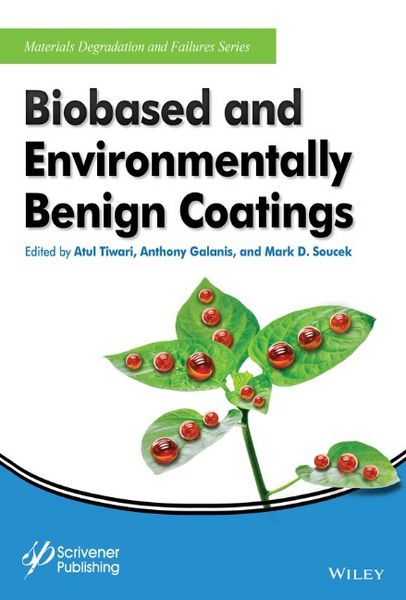
Produktbild: Biobased and Environmentally Benign Coatings

Biobased and Environmentally Benign Coatings

248,99 €

inkl. gesetzl. MwSt., Versandkostenfrei


Beschreibung

Produktdetails

Einband

Gebundene Ausgabe

Erscheinungsdatum

11.04.2016

Verlag

John Wiley & Sons Inc

Seitenzahl

352

Maße (L/B/H)

25,9/18/2,3 cm

Gewicht

771 g

Auflage

1. Auflage

Sprache

Englisch

ISBN

978-1-119-18492-8

Beschreibung

Produktdetails

Einband

Gebundene Ausgabe

Erscheinungsdatum

11.04.2016

Verlag

John Wiley & Sons Inc

Seitenzahl

352

Maße (L/B/H)

25,9/18/2,3 cm

Gewicht

771 g

Auflage

1. Auflage

Sprache

Englisch

ISBN

978-1-119-18492-8

Herstelleradresse

Libri GmbH
Europaallee 1
36244 Bad Hersfeld
DE

Email: gpsr@libri.de

Noch keine Bewertungen vorhanden

Verfassen Sie die erste Bewertung zu diesem Artikel

Helfen Sie anderen Kundinnen und Kunden durch Ihre Meinung.

Kundinnen und Kunden meinen

Bewertungen (0)

Die Leseprobe wird geladen.
  • Produktbild: Biobased and Environmentally Benign Coatings
  • Preface xi
     
    1 Novel Bio-based Polymers for Coating Applications 1
    Harjoyti Kalita, Deep Kalita, Samim Alam, Andrey Chernykh, Ihor Tarnavchyk, James Bahr, Satyabrata Samanta, Anurad Jayasooriyama, Shashi Fernando, Sermadurai Selvakumar, Dona Suranga Wickramaratne, Mukund Sibi, and Bret J. Chisholm
     
    1.1 Introduction 1
     
    1.2 Polymers Based on Plant Oils 3
     
    1.2.1 Properties of Homopolymers and Their Surface Coatings 5
     
    1.2.2 Properties of Copolymers and Their Surface Coatings 7
     
    1.3 Polymers Based on Cardanol 9
     
    1.4 Polymers Based on Eugenol 10
     
    1.5 Conclusion 14
     
    Acknowledgments 14
     
    Disclaimer 14
     
    References 15
     
    2 Deposition of Environmentally Compliant Cerium-Containing Coatings and Primers on Copper-Containing Aluminium Aircraft Alloys 17
    Stephan V. Kozhukharov
     
    2.1 Importance and Indispensability of the Corrosion-Protective Coating Layers 17
     
    2.1.1 Employment of Reliable Materials for the Aircraft Industry 17
     
    2.1.2 Corrosion Phenomena, Basic Definitions and Concepts 20
     
    2.1.3 Brief Summary 22
     
    2.2 Introduction to the Cerium Conversion Primer Layers 23
     
    2.2.1 Background and Basic Definitions 23
     
    2.2.2 Deposition Methods 23
     
    2.2.3 Technical Stages of CeCC Deposition 25
     
    2.2.3.1 Preliminary Treatment Procedures 25
     
    2.2.3.2 Deposition Process, Mechanisms and Factors 28
     
    2.2.3.3 Posterior Sealing Procedures 37
     
    2.2.4 Brief Summary 37
     
    2.3 Elaboration of Hybrid and Composite Upper and Finishing Coating Layers 38
     
    2.3.1 Advantages of the Hybrid Coatings Systems 38
     
    2.3.2 Technological Bases of the Sol-Gel Approach 43
     
    2.3.3 Hybrid Nanocomposite Primer Coatings: Basic Concepts 46
     
    2.3.4 Corrosion Inhibitors as Self-Healing Coating Ingredients 47
     
    2.3.4.1 Rare Earth Salts as Corrosion Inhibitors 47
     
    2.3.4.2 Organic Compounds as Corrosion Inhibitors 52
     
    2.3.5 Technological Features of the Production of Hybrid Nanocomposite Primer Coatings 53
     
    2.3.6 Alternatives for the Inhibitor Containing Self-Healing Coatings 54
     
    2.3.6.1 Coatings with Recuperative Microcapsules 54
     
    2.3.6.2 Exterior Ice-Phobic and UV Protective Finishes 55
     
    2.3.7 Brief Summary 57
     
    Acknowledgment 58
     
    References 58
     
    3 Ferrites as Non-toxic Pigments for Eco-friendly Corrosion Protection Coatings 71
    D.O. Grigoriev, T. Vakhitov, and S.N. Stepin
     
    3.1 Introduction 71
     
    3.2 Crystalline Structure, Physicochemical Properties, and Inhibition Mechanism of Ferrites 72
     
    3.3 Methods for the Preparation of Ferrites 76
     
    3.3.1 Ceramic Method 76
     
    3.3.2 Ceramic Method with Utilizing Industrial Wastes 78
     
    3.3.3 Other Methods of Ferrites Preparation 79
     
    3.4 Novel Types of Ferrite Pigments 81
     
    3.5 Ferrite-Based Multifunctional Coatings 83
     
    3.6 Conclusion 84
     
    Acknowledgement 84
     
    References 84
     
    4 Application of Coatings and Films in Fruits and Vegetables 87
    R.K. Dhall
     
    4.1 Introduction 87
     
    4.2 Coatings versus Films 88
     
    4.3 Structural Matrix: Hydrocolloids and Lipids 88
     
    4.4 Application of Hydrocolloids Coatings 89
     
    4.5 Application of Lipid Coatings 91
     
    4.6 Application of Composite Coatings 91
     
    4.7 Addition of Active Compounds 93
     
    4.7.1 Antimicrobial Coatings 93
     
    4.7.2 Antioxidant Coatings 95
     
    4.7.3 Texture Enhances 96
     
    4.7.4 Nutraceutical Coatings 97
     
    4.8 Nanotechnology 97
     
    4.9 Commercial Application of Edible Coatings 98
    &nbs