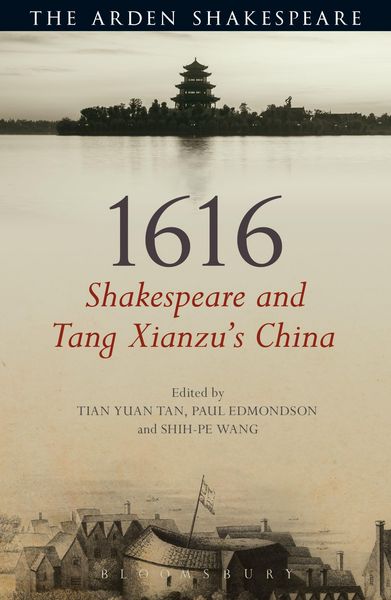
Produktbild: 1616: Shakespeare and Tang Xianzu's China

1616: Shakespeare and Tang Xianzu's China

48,99 €

inkl. gesetzl. MwSt., Versandkostenfrei


Beschreibung

Produktdetails

Einband

Taschenbuch

Erscheinungsdatum

10.03.2016

Herausgeber

Tian Yuan Tan + weitere

Verlag

Arden shakespeare

Seitenzahl

352

Maße (L/B/H)

19,8/12,8/2,2 cm

Gewicht

375 g

Sprache

Englisch

ISBN

978-1-4725-8341-3

Beschreibung

Produktdetails

Einband

Taschenbuch

Erscheinungsdatum

10.03.2016

Herausgeber

Verlag

Arden shakespeare

Seitenzahl

352

Maße (L/B/H)

19,8/12,8/2,2 cm

Gewicht

375 g

Sprache

Englisch

ISBN

978-1-4725-8341-3

Herstelleradresse

Libri GmbH
Europaallee 1
36244 Bad Hersfeld
DE

Email: gpsr@libri.de

Kundinnen und Kunden meinen

0 Bewertungen

Informationen zu Bewertungen

Zur Abgabe einer Bewertung ist eine Anmeldung im Konto notwendig. Die Authentizität der Bewertungen wird von uns nicht überprüft. Wir behalten uns vor, Bewertungstexte, die unseren Richtlinien widersprechen, entsprechend zu kürzen oder zu löschen.

Die Bewertungen sind nach Format, Anzahl Sterne und Datum sortiert.

Verfassen Sie die erste Bewertung zu diesem Artikel

Helfen Sie anderen Kund*innen durch Ihre Meinung

Kundinnen und Kunden meinen

0 Bewertungen filtern

Die Leseprobe wird geladen.
  • Produktbild: 1616: Shakespeare and Tang Xianzu's China
  • Foreword by Wilt L. Idema, Harvard University

    Introduction by Tian Yuan Tan, Paul Edmondson, Shih-pe Wang

    1) Setting the Scene: Playwrights and Localities
    - Yongming Xu, ‘The Backdrop of Regional Theatre to Tang Xianzu’s Drama’
    - Paul Edmondson, ‘Stratford-upon-Avon: 1616’

    2) Classics, Tastes, and Popularity
    - Wei Hua, ‘The “Popular Turn”in the Elite Theatre of the Ming after Tang Xianzu: Love, Dream, and Deaths in The Tale of the West Loft’
    - Nick Walton, ‘Blockbusters and Popular Stories’

    3) Making History
    - Ayling Wang, ‘Shishiju as Public Forum: The Crying Phoenix and the Dramatization of Current Political Affairs in Late Ming China’
    - Helen Cooper, ‘Dramatizing the Tudors’

    4) The State and the Theatre
    - Tian Yuan Tan, ‘Sixty Plays from the Ming Palace, 1615-1618’
    - Janet Clare, ‘Licensing the King’s Men: From Court Revels to Public Performance’

    5) The Transmission of Dramatic Texts and Printing
    - Stephen H. West, ‘Tired, Sick, and Looking for Money: Zang Maoxun in 1616’
    - Jason Scott-Warren, ‘Status Anxiety: Arguing about Plays and Print in Early Modern London’

    6) Dramatic Authorship and Collaboration
    - Patricia Sieber, ‘Is There a Playwright in This Text? The 1610s and the Consolidation of Dramatic Authorship in Late Ming Print Culture’
    - Peter Kirwan, ‘“May I subscribe a name?”: Terms of Collaboration in 1616’

    7) Audiences, Critics, and Reception
    - Shih-pe Wang, ‘Revising Peony Pavilion: Audience Reception in Presenting Tang Xianzu’s Text’
    - Anjna Chouhan, ‘“No epilogue, I pray you”: Audience Reception in Shakespearian Theatre’

    8) Music and Performance
    - Mei Sun, ‘Seeking the Relics of Music and Performance: An Investigation of Chinese Theatrical Scenes Published in the Early Seventeenth Century (1606–1616)’
    - David Lindley, ‘Music in the English theatre of 1616’

    9) Theatre in Theory and Practice
    - Regina Llamas, ‘Xu Wei’s A Record of Southern Drama: The Idea of a Theatre at the Turn of Seventeenth-Century China’
    - Will Tosh, ‘Taking Cover: 1616 and the Move Indoors’

    10) Theatre across Genres and Cultures
    - Xiaoqiao Ling, ‘Elite Drama Readership Staged in Vernacular Fiction: The Western Wing and The Retrieved History of Hailing’
    - Kate McLuskie, ‘“There be salmons in both”: Models of Connection for Seventeenth-Century English and Chinese Drama’

    Afterword by Stanley Wells, CBE, Shakespeare Birthplace Trust

    Notes on Contributors

    List of Cited Works