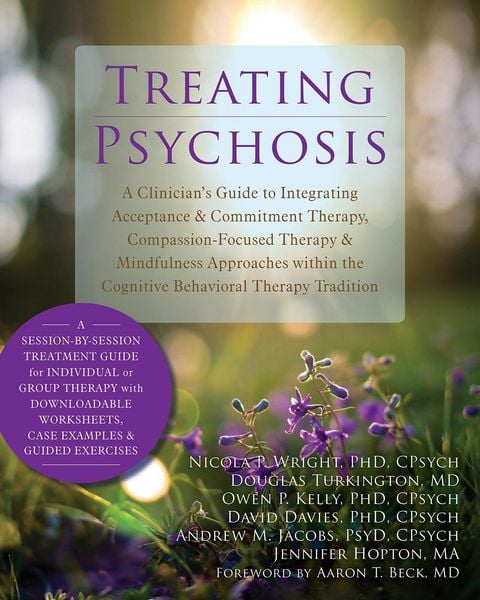
Treating Psychosis A Clinician's Guide to Integrating Acceptance and Commitment Therapy, Compassion-Focused Therapy, and Mindfulness Approaches within the Cognitive Behavioral Therapy Tradition
-
- Taschenbuch
- eBook ausgewählt
-
Form:Einzelkauf Download
-
Sprache:Englisch
-
eBook Format:PDF
- PDF 60,70 € ausgewählt
- ePUB 60,70 €
60,70 €
inkl. gesetzl. MwSt.Beschreibung
Produktdetails
Format
Kopierschutz
Ja
Family Sharing
Ja
Text-to-Speech
Nein
Erscheinungsdatum
01.06.2014
Verlag
New Harbinger PublicationsSeitenzahl
(Printausgabe)
Dateigröße
2314 KB
Sprache
Englisch
EAN
9781608824083
Psychosis can be associated with a variety of mental health problems, including schizophrenia, severe depression, bipolar disorder, anxiety, and post-traumatic stress disorders. While traditional treatments for psychosis have emphasized medication-based strategies, evidence now suggests that individuals affected by psychosis can greatly benefit from psychotherapy. Treating Psychosis is an evidence-based treatment guide for mental health professionals working with individuals affected by psychosis. Using a cognitive behavioral therapy (CBT) approach that incorporates acceptance and commitment therapy (ACT), compassion-focused therapy (CFT) and mindfulness approaches, this book is invaluable in helping clinicians develop effective treatment for clients affected by psychosis. The guide provides session-by-session clinical interventions for use in individual or group treatment on an inpatient, outpatient, or community basis. The book features 40 reproducible clinical practice forms and a companion website with additional downloadable clinical forms and tools, guided exercises, case examples, and resources. The therapeutic approaches presented are rooted in theory and research, and informed by extensive clinical experience working with client populations affected by psychosis. The approaches outlined in this book offer clinicians and clients the opportunity to partner in developing therapeutic strategies for problematic symptoms to enable those affected by psychosis to work toward valued goals and ultimately live more meaningful lives. This guide emphasizes a compassionate, de-stigmatizing approach that integrates empowering and strengths-oriented methods that place the client's values and goals at the center of any therapeutic intervention.
Noch keine Bewertungen vorhanden
Verfassen Sie die erste Bewertung zu diesem Artikel
Helfen Sie anderen Kundinnen und Kunden durch Ihre Meinung.
Kurze Frage zu unserer Seite
Vielen Dank für Ihr Feedback
Wir nutzen Ihr Feedback, um unsere Produktseiten zu verbessern. Bitte haben Sie Verständnis, dass wir Ihnen keine Rückmeldung geben können. Falls Sie Kontakt mit uns aufnehmen möchten, können Sie sich aber gerne an unseren Kund*innenservice wenden.
zum Kundenservice