KI-Beratung Beta

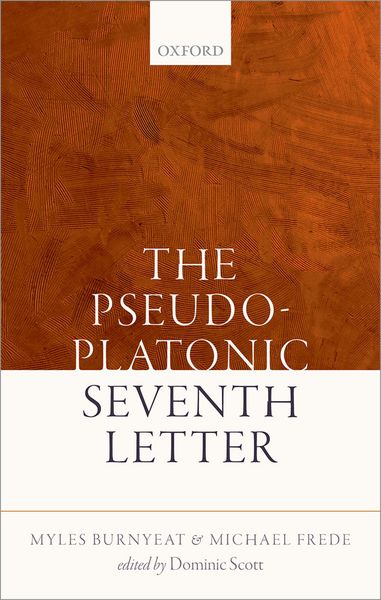
Produktbild: The Pseudo-Platonic Seventh Letter

The Pseudo-Platonic Seventh Letter

74,60 €

inkl. gesetzl. MwSt.

Beschreibung

The Seventh Platonic Letter describes Plato's attempts to turn the ruler of Sicily, Dionysius II, into a philosopher ruler along the lines of the Republic. It explains why Plato turned from politics to philosophy in his youth and how he then tried to apply his ideas to actual politics later on. It also...

Beschreibung

The Seventh Platonic Letter describes Plato's attempts to turn the ruler of Sicily, Dionysius II, into a philosopher ruler along the lines of the Republic. It explains why Plato turned from politics to philosophy in his youth and how he then tried to apply his ideas to actual politics later on. It also sets out his views about language, writing and philosophy. As such, it represents a potentially crucial source of information about Plato, who tells us almost nothing about himself in his dialogues. But is it genuine? Scholars have debated the issue for centuries, although recent opinion has moved in its favour. The origin of this book was a seminar given in Oxford in 2001 by Myles Burnyeat and Michael Frede, two of the most eminent scholars of ancient philosophy in recent decades. Michael Frede begins by casting doubt on the Letter by looking at it from the general perspective of letter writing in antiquity, when it was quite normal to fabricate letters by famous figures from the past. Both then attack the authenticity of the letter head-on by showing how its philosophical content conflicts with what we find in the Platonic dialogues. They also reflect on the question of why the Letter was written, whether as an attempt to exculpate Plato from the charge of meddling in politics (Frede), or as an attempt to portray, through literary means, the ways in which human weakness and emotions can lead to disasters in political life (Burnyeat).

Produktdetails

Format

PDF

Kopierschutz

Ja

Family Sharing

Nein

Text-to-Speech

Nein

Produktdetails

Format

PDF

Format

eBooks im PDF-Format haben eine festgelegte Seitengröße und eignen sich daher nur bedingt zum Lesen auf einem tolino eReader oder Smartphone. Für den vollen Lesegenuss empfehlen wir Ihnen bei PDF-eBooks die Verwendung eines Tablets oder Computers.

Kopierschutz

Ja

Kopierschutz

Zum Lesen dieses eBooks auf Geräten der tolino Familie sowie auf sonstigen eReadern und am PC benötigen Sie eine ByteBook-ID. Weitere Hinweise zum Lesen von kopiergeschützten eBooks finden Sie unter Hilfe/Downloads.

Family Sharing

Nein

Family Sharing

Mit Family Sharing können Sie eBooks innerhalb Ihrer Familie (max. sechs Mitglieder im gleichen Haushalt) teilen. Sie entscheiden selbst, welches Buch Sie mit welchem Familienmitglied teilen möchten. Auch das parallele Lesen durch verschiedene Familienmitglieder ist durch Family Sharing möglich. Um eBooks zu teilen oder geteilt zu bekommen, muss jedes Familienmitglied ein Konto bei Thalia oder einem anderen tolino-Buchhändler haben. Weitere Informationen finden Sie unter Hilfe/Family-Sharing.

Text-to-Speech

Nein

Text-to-Speech

Bedeutet Ihnen Stimme mehr als Text? Mit der Funktion Text-to-Speech können Sie sich im tolino webReader und in der aktuellen Thalia – Lesen & Hören App das eBook vorlesen lassen. Weitere Informationen finden Sie unter Hilfe/Text-to-Speech.

Erscheinungsdatum

11.06.2015

Herausgeber Dominic Scott
Verlag Oxford University Press
Seitenzahl

208 (Printausgabe)

Dateigröße

2305 KB

Sprache

Englisch

EAN

9780191053382

Barrierefreiheit
  • keine Information zur Barrierefreiheit bekannt

Noch keine Bewertungen vorhanden

Verfassen Sie die erste Bewertung zu diesem Artikel

Helfen Sie anderen Kundinnen und Kunden durch Ihre Meinung.

Kundinnen und Kunden meinen

Bewertungen (0)

Weitere Artikel finden Sie in

Die Leseprobe wird geladen.
  • Produktbild: The Pseudo-Platonic Seventh Letter