Gutscheinbedingungen

**Gültig nur für Bestellungen an die Wunsch-Poststation bis 10.06.2026 auf Spielzeug, Schreibwaren, Filme, Geschenke & Trends, Musik, tolino eReader & Zubehör, Hörbücher und Hörbuch-Downloads (außer Abo), nicht preisgebundene Bücher und Kalender online auf thalia.at und in der Thalia App. Einzelne Artikel können ausgeschlossen sein. Aufgrund der Buchpreisbindung sind deutschsprachige Bücher und eBooks ausgenommen. Zusätzlich ausgenommen sind preisgebundene Artikel, Abos & Flatrates, eBooks, Games, Geschenkkarten/-boxen, Shelfies, Software, Zeitschriften sowie einzelne Artikel von tonies®. Pro Einkauf einmal einlösbar. Kein Click & Collect möglich. Keine Barauszahlung. Nicht kombinierbar mit anderen Aktionen und Gutscheinen. Gutschein wird auf max. 500€ Bestellwert angerechnet. Nicht gültig für Versandkosten und Services.

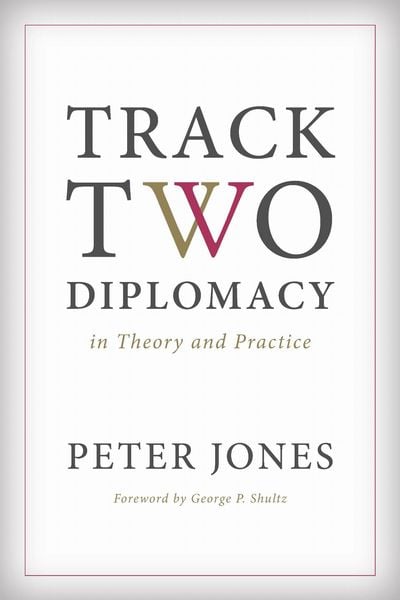
Produktbild: Track Two Diplomacy in Theory and Practice

Track Two Diplomacy in Theory and Practice

126,99 €

inkl. gesetzl. MwSt., Versandkostenfrei


Beschreibung

Produktdetails

Einband

Gebundene Ausgabe

Erscheinungsdatum

02.09.2015

Verlag

Stanford University Press

Seitenzahl

256

Maße (L/B/H)

24/15,9/1,9 cm

Gewicht

473 g

Sprache

Englisch

ISBN

978-0-8047-9406-0

Beschreibung

Rezension

"This valuable work presents a unique and contemporary treatment of Track Two Diplomacy that will serve the important function of increasing understanding about this essential method of interactive conflict resolution. Written in an accessible and honest style, the book will appeal to scholars, professionals and students as an introductory and yet comprehensive overview."-Ronald J. Fisher, Professor of International Peace and Conflict Resolution, School of International Service, American University "Although impervious to standard metrics of program evaluation, Track II Diplomacy remains an important, if poorly understood, complement to official governmental negotiations. From the perspective of an experienced Track II practitioner, Peter Jones provides a nuanced perspective on both the promise and limits of this unheralded form of unofficial diplomacy."-Stephen J. Del Rosso, Director, International Peace and Security, Carnegie Corporation of New York "This book will be a classic that defines the field of Track Two diplomacy. It successfully bridges several different worlds: the experience of a Track Two practitioner and fine academic scholarship; the worlds of interactive conflict resolution and regional security oriented Track Two; and the worlds of security studies and peace studies. It is an exemplary work."-Esra Cuhadar, Bilkent University "In short, Track Two Diplomacy is a highly accessible book, full of insights, and useful for academics, practitioners and officials alike. The book is one of its kind in its ability to bridge disciplinary barriers and differing views about the utility of political theory, and its willingness to challenge conventional methods of social science research."-Happymon Jacob, St. Anthony's International Review

Produktdetails

Einband

Gebundene Ausgabe

Erscheinungsdatum

02.09.2015

Verlag

Stanford University Press

Seitenzahl

256

Maße (L/B/H)

24/15,9/1,9 cm

Gewicht

473 g

Sprache

Englisch

ISBN

978-0-8047-9406-0

Herstelleradresse

Libri GmbH
Europaallee 1
36244 Bad Hersfeld
DE

Email: gpsr@libri.de

Kundinnen und Kunden meinen

0 Bewertungen

Informationen zu Bewertungen

Zur Abgabe einer Bewertung ist eine Anmeldung im Konto notwendig. Die Authentizität der Bewertungen wird von uns nicht überprüft. Wir behalten uns vor, Bewertungstexte, die unseren Richtlinien widersprechen, entsprechend zu kürzen oder zu löschen.

Die Bewertungen sind nach Format, Anzahl Sterne und Datum sortiert.

Verfassen Sie die erste Bewertung zu diesem Artikel

Helfen Sie anderen Kund*innen durch Ihre Meinung

Kundinnen und Kunden meinen

0 Bewertungen filtern

Die Leseprobe wird geladen.
  • Produktbild: Track Two Diplomacy in Theory and Practice


  • Contents and Abstracts


    Introduction


    chapter abstract

    This chapter summarizes the key aims of the book and its intended audiences. The aims include the "demystifying" of the field of Track Two, and the systematic review of the field and its place in international relations. The intended audiences are officials who must interact with Track Two, and scholars and practitioners who study it.


    1
    What is Track Two Diplomacy


    chapter abstract

    This chapter reviews the many definitions which have been developed for the field of Track Two and analyzes the contribution each has made to the development of our understanding of it. The chapter explores the development of Track Two within the broader field of conflict resolution, and also outlines the history of the development of Track Two itself. Based upon this, the chapter outlines some recurring themes which are common to the various definitions and historical experiences of Track Two and then advances its own definition of the field. The chapter also notes that, while most Track Two has been intended for the resolution of conflicts, other models have arisen, such as Track Two in the service of regional security.


    2
    Theoretical Foundations of Track Two


    chapter abstract

    This chapter looks at the major paradigms in the field of International Relations and asks where Track Two fits in terms of its relationship to them. It finds that none of the paradigms completely explains Track Two, and argues that an eclectic approach must be taken to understanding where and how Track Two fits into IR theory. The chapter then identifies and explores attempts which have been made by previous scholars and practitioners of Track Two to explain and define what they are doing in relation to adapted forms of IR and other social science theories.


    3
    Where Theory Meets Practice


    chapter abstract

    This chapter explores the interplay between practice and attempts to develop theoretical explanations for Track Two. While much of Track Two theory is not well-received by mainstream theories of international affairs, this does not mean that it lacks theoretical foundation. Several practitioners and students of the field have developed theoretical frameworks. Other practitioners have developed or borrowed concepts from other constructs and applied them eclectically to their activities. In keeping with Track Two's action-oriented approach, much of this activity tries to help practitioners answer critical questions about how to make their efforts more effective. Four particularly important aspects of this are: the question of the 'theories of change' which practitioners take into their cases, the way they conceive the conflict, the question of when it is best to launch a Track Two process, and the ethical and cultural issues which arise when practicing Track Two.


    4
    On People: The Characteristics and Role of the Third Party


    chapter abstract

    This chapter explores the role of the 'third party,' the individual who facilitates a Track Two process. It explores questions like: why do most Track Two dialogues have a third party? Who are these people and what do they do? How are they prepared for the role? There is no single, all-encompassing definition, nor are there agreed standards to prepare people for this role. Instead, the idea of the third party has evolved through trial and error, and most who undertake it are prepared through study and a long apprenticeship of assisting others. Moreover, there are differing perceptions of what the third party does, often based on different conceptions of the primary purpose of Track Two. Some embrace an eclectic approach which stresses personal skills and indefinable qualities, while others believe that the field needs standards and professionalization. Finally, the chapter explores what "power" the third party has.


    5
    On Method: The Problem Solving Workshop


    chapter abstract

    This chapter examines what is arguably the main process used in Track Two dialogues, Problem Solving Workshops (PSW). It begins by identifying the evolution of the "problem solving" idea in the social sciences and its application to conflicts. It then looks at how PSWs are organized. The conditions PSWs aim to create are: equality among participants, regardless of asymmetries within the conflict; a sense of common purpose; cooperative interdependence; and a set of rules which are employed by a facilitator to guide the conversation towards cooperative and reflective analysis. As to objectives, PSW processes aim to create an environment within which people who have been involved in a conflict are able to step back from their long-held positions and examine its underlying causes. After this, the PSW participants ideally move on to developing possible ways forward. The chapter also looks at the question of how Track Two is funded.


    6
    On Impact: Transfer and the Evaluation of Track Two


    chapter abstract

    Track Two dialogues are meant to influence events in some way. This chapter considers how the results of such discussions reach their intended target and what practitioners and participants in Track Two can do to make such a transfer of ideas more effective. The chapter traces the evolution of the idea of transfer. It then identifies and assesses some of the key considerations and practical questions which surround the field. The chapter then asks how Track Two processes are evaluated and measured. This is a particularly difficult area for the field. The chapter traces the evolution of thinking about to measure the results of Track Two and identifies the key issues.


    Conclusion


    chapter abstract

    The Conclusion explores the issue of how theory and practice can come together to help the reader understand Track Two more fully. It rejects the notion that the two must be in opposition to each other, which is in vogue in some social science circles, and argues that each can inform the other. The Conclusions note that many social science academics have tended to be dismissive of Track Two, and the field of conflict resolution generally, as not being sufficiently 'theory-based,' and it takes issue with this assertion. However, ultimately, the Conclusion argues that Track Two is more about practice than it is about theory-building because it is ultimately about working with people, who are idiosyncratic. Finally, the Conclusion advances a set of propositions about Track Two which are presented as the main findings of the book.