Contents and Abstracts
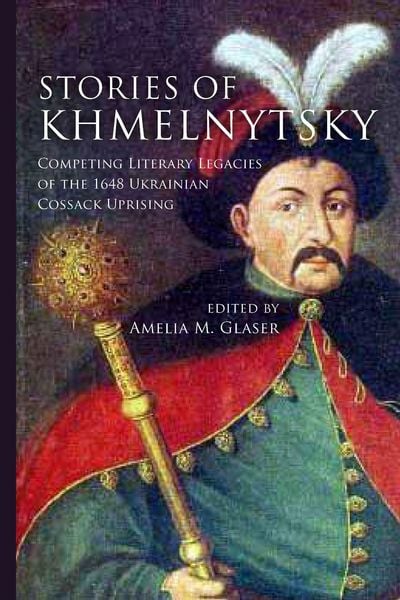
Introduction: Bohdan Khmelnytsky as Protagonist: Between Hero and Villain
Amelia M. Glaser
chapter abstract
This introduction provides an overview of the 1648 Cossack uprising, and discusses the contested legacy of Hetman Bohdan Khmelnytsky. It takes as an example Mikeshin's statue of Khmelnytsky, unveiled in Kyiv in 1888 to commemorate the Baptism of Rus', to present the central problem of memorializing a charismatic figure like Khmelnytsky, who has been remembered as a hero or villain depending on the national context and the regime in power. The introductory chapter also offers a discussion of the literature in Polish, Ukrainian, Russian, Hebrew, and Yiddish that has memorialized Khmelnytsky and the Cossack uprising from 1648 to the present, focusing on the early modern period, Romanticism, Modernism, and the twentieth century.
1
A Portrait in Ambivalence: The Case of Natan Hanover and His Chronicle, Yeven metsulah
Adam Teller
chapter abstract
In Jewish communal memory, Bohdan Khmelnytskyi is reviled as the mass-murderer of thousands of Jews in Ukraine. However, this memory preserves little detail about the man himself. This can be traced back to the contemporary Jewish chronicles that describe him in only the briefest terms. However, the most sophisticated and detailed chronicle, Yeven metsulah, by Natan Neta Hanover (Venice 1653), presents a multifaceted portrait of Khmelnytsky. Hanover uses his literary skills to explore the factors leading the Cossack hetman not only to rebel against the Polish-Lithuanian Commonwealth, but also to turn his anger on the Jews. Though Jews' pro-Polish orientation during the rebellion was clear, Hanover presents the little known, but highly significant, ambivalence felt by some Jews towards Khmelnytsky in the years before the uprising. This chapter contextualizes Hanover's portrayal of Khmelnytsky, reflecting on the sources of Hanover's outlook and its significance for later generations.
2
"A Man Worthy of the Name Hetman": The Fashioning of Khmelnytsky as a Hero in the Hrabianka Chronicle
Frank E. Sysyn
chapter abstract
The most widely disseminated historical-literary work of eighteenth-century Ukraine, the Hrabianka Chronicle, exists in short and long redactions in scores of manuscripts. Yet, there is no academic edition or a thorough examination of its sources. Even Hryhorii Hrabianka's authorship is in question. The text is viewed as exemplary of the founding myths of the Hetmanate at the turn of the eighteenth century. Mykhailo Hrushevsky saw it as a product of the milieu of the chancellors of the Hetmanate. Source studies such as Mykola Petrovsky's questioned the authenticity of documents in the Chronicle. Early twentieth-century scholars such as Ivan Franko and Mykola Zerov cast it as one of the major prose works of early modern Ukrainian literature. This chapter examines the depiction of Khmelnytsky as a hero in the Chronicle. It also treats that image's impact on subsequent Ukrainian historiography and literature.
3
A Reevaluation of the "Khmelnytsky Factor": The Case of the Seventeenth-Century Sabbatean Movement
Ada Rapoport-Albert
chapter abstract
The Khmelnytsky uprising and its violent aftermath devastated many Jewish communities in the Polish-Lithuanian Commonwealth, especially the Ukraine. This chapter considers whether, or to what extent, these catastrophic events may have triggered the emergence of what, by the mid-1660s, had become the mass messianic movement of Shabetai Tsevi—an Ottoman Jew who first proclaimed his messianic vocation in 1648.
4
Apotheosis, Rejection, and Transference: Bohdan Khmelnytsky in Polish, Russian, and Ukrainian Romantic Literature
George G. Grabowicz
chapter abstract
Polish, Russian, and Ukrainian pre-Romanticism and Romanticism provide a comparative basis for examining the figure of Bohdan Khmelnytsky. Each of these literatures, while variously interacting with the others, articulates its own perspective. This is particularly true in the Ukrainian case which witnessed a belated, rapid development of a national literature. The topos of national leader was applied regularly to Khmelnytsky, as reflected in Polish dramas by Niemcewicz (1817) and Zaborowski (1823), as well as in Decembrist writings by Glinka and Ryleev. The Ukrainian Istoriia rusov (written ca. 1800-1820s, published in 1846) culminates in the Hetmanate's "official" perspective, which apotheosizes Khmelnytsky. The historicism in the early part of the century is supplanted by an emphasis on the folk, the national cause, and the structures of mythical thought. Khmelnytsky becomes marginal or absent from depictions of the Cossack past (for example for Gogol/Hohol). Shevchenko in large measure rejected his legacy.
5
Heroes and Villains in the Historical Imagination: The Elusive Khmelnytsky
Taras Koznarsky
chapter abstract
This chapter examines the stock repertory of heroic qualities assigned to Khmelnytsky in Ukrainian historical narratives of the first decades of the nineteenth century. It argues that the cult of Khmelnytsky served as the most important element in the mobilization and self-promotion of the Ukrainian elites in the Russian empire, and hence, as the foundation for the legitimacy of the Ukrainian historical narrative itself. The chapter suggests that Khmelnytsky functioned as an antidote to the stigma of Mazepa the traitor, ingrained in the self-perception of Ukrainian elites as well as in the Russian popular imagination. It reveals the mirrorlike connection between Khmelnytsky the hero and Mazepa the villain at the level of the structure of their biographies, attributes, and agencies in Ukrainian historical narratives.
6
The Image of Bohdan Khmelnytsky in Polish Romanticism and Its Post-Romantic Reflex
Roman Koropeckyj
chapter abstract
In contrast to the image of the haidamak, the figure of Khmelnytsky barely registers in Polish romantic literature. This is a function of the open-ended nature of the Polish-Cossack conflict and the ambiguous nature of the hetman himself. When he appears, it is most often in a melodramatic fashion, as an indignant but proud Cossack bent on avenging the seizure of his estate and the abduction of his wife by the Polish gentryman Czapliński. This image draws heavily on Polish romantic historians' attempt to explain the causes of the 1648 rebellion. This episode is also the basis of the fullest treatment of Khmelnytsky in Polish literature, Henryk Sienkiewicz's novel With Fire and Sword, where it is reconfigured as the story of Bohun and Helena. The reconfiguration and ostensible resolution of this subplot allows Polish literature to finally narrate the Khmelnystky uprising as a comforting allegory.
7
The Heirs of Tulchyn: A Modernist Reappraisal of Historical Narrative
Amelia M. Glaser
chapter abstract
This chapter examines Minskii's retelling of the massacre at Tulchyn in his Russian-language play in verse, "Osada Tulchina" (The Siege of Tulchyn), which appeared in the St. Petersburg Jewish literary journal Voskhod in 1888 (the same year Mikeshin's monument was unveiled in Kyiv's St. Sophia Square for the nine-hundred-year anniversary of the baptism of Rus'). Minskii emphasizes Jewish resistance to the Cossacks, and creates a heroic Jewish figure, a Marrano named Josif de Kastro, who flouts Ashkenazi passivity to fight the Cossacks. Avrom Reisin translated this play into Yiddish in 1905. Many aspects of Minskii's version of the Tulchyn episode would reappear in twentieth-century Jewish narratives about 1648, including Sholem Asch's 1919 Kiddush ha-Shem, which describes the uprising as a test of Jewish protagonists, revealing unexpected acts of bravery and heroism in the face of destruction.
8
Hanukkah Cossack Style: Zaporozhian Warriors and Zionist Popular Culture (1904-1918)
Israel Bartal
chapter abstract
This chapter addresses positive images of the Ukrainian struggle for independence (as well as the 1648 uprising) as depicted in the writings of several Jewish radical Zionists at the beginning of the twentieth century. These images found their way to Palestine and had considerable influence on the emerging Israeli popular culture. The Cossack warrior served as a model for the "regeneration" of a "New Jew," claimed by members of Labor Zionism in Palestine. The Eastern European "other"—the horrifying enemy of the shtetl Jew— had transformed in the minds of some of the "second Aliyah" pioneers (1904-1918) who settled in Palestine into an ideal example of heroism, simple rural life, and unlimited national commitment. Furthermore, they tended to apply some of the supposedly Cossack traits to the Middle-Eastern Bedouin.
9
The Cult of Strength: Khmelnytsky in the Literature of Ukrainian Nationalists During the 1930s and 1940s
Myroslav Shkandrij
chapter abstract
Ukrainian literature written outside the Soviet Union during the 1930s and 1940s found itself within a force field in which three political currents competed: the national democratic, the authoritarian (as promoted by the Organization of Ukrainian Nationalists), and the Dontsovian. The portrayal of Khmelnytsky is compared in three novels by popular writers of the period: Semen Ordivsky (Hryhorii Luzhnytsky), Yurii Lypa, and Yurii Kosach. Although in each case the literary portrait emphasizes Khmelnytsky's strong leadership and "masculine" virtues, there are also significant differences in the way the ruler is presented. Each novelist implicitly challenges tenets of authoritarianism, particularly the version promulgated by Dmytro Dontsov.
10
Jews and Soviet Remythologization of the Ukrainian Hetman: The Case of the Order of Bohdan Khmelnytsky
Gennady Estraikh
chapter abstract
In October 1943, the importance of Ukrainian Cossackdom as a constituent of the usable past was recognized by introducing the Order of Bohdan Khmelnytsky, the only Soviet military order named after a non-Russian historical personality. At the same time, the town of Pereiaslav, where in 1654 the Pereiaslav Agreement between the Russian Tsar Aleksei I and the Ukrainian Cossacks led by Khmelnytsky had laid the foundation for Ukraine's integration into the Russian state, was renamed Pereiaslav-Khmelnytsky. This chapter analyzes the reaction of Soviet and non-Soviet Jews to Khmelnytsky's elevated position in the official hierarchy of national heroes.
11
On the Other Side of Despair: Cossacks and Jews in Yurii Kosach's The Day of Rage
Yohanan Petrovsky-Shterm
chapter abstract
This chapter contextualizes Yuri Kosach's two-volume historical novel Den' hnivu (The Day of Rage, 1947) against the backdrop of Ukrainian twentieth-century literary reconstructions of the 1648 Cossack rebellion. Unlike his ethnocentric contemporaries in Soviet Ukraine and in the Diaspora, Kosach creates a highly unusual multiethnic version of the events, capitalizing on multiculturalism and heteroglossia. Natan Neta Hanover, a celebrated Jewish chronicler, appears in his novel as a Jewish sage sympathetic to the Ukrainian cause, while Hanover's disciple Berakha joins the Cossack troops. Although written by a Ukrainian nationalist, Kosach's alternative conceptualization of the 1648-49 events moves beyond the established Ukrainian literary patterns and paves the way for new ways to imagine Ukraine as a complex multiethnic and multicultural geopolitical phenomenon in the center of Europe.
12
Khmelnytsky in Motion: The Case of Soviet, Polish, and Ukrainian Film
Izabela Kalinowska and Marta Kondratyuk
chapter abstract
In pictorial art, Khmelnytsky towers above those around him. Likewise, in monuments scattered throughout the post-Soviet space, he appears as a strong and determined figure. This uniformity reflects the predominantly positive interpretation of Khmelnytsky within imperial Russian and Soviet state ideologies. This chapter examines and compares the constituent elements of the cinematic Khmelnytsky in three film productions from different national and political contexts: Igor Savchenko's Bohdan Kmelnytsky (1941), Jerzy Hoffman's With Fire and Sword (1999), and Mykola Mashchenko's Bohdan-Zinovii Khmelnytsky (2007). It analyzes the historical and cultural ramifications of Khmelnytsky's image in the three films. In each, the hetman's world reflects the ideological circumstances of the film's making. Yet Khmelnytsky himself emerges as a positive character in all three pictures. Thus, the question is how Khmelnytsky, a controversial and divisive historical figure, becomes a hero not only for the Ukrainians, but also for the Russians and the Poles.
Afterword
Judith Deutsch Kornblatt
chapter abstract
The Afterword examines the image of Khmelnytsky and his fellow Cossacks as boundary jumpers who provide subsequent readers, viewers, and listeners with ample material to use in the construction of their own ambiguous and contradictory identities.