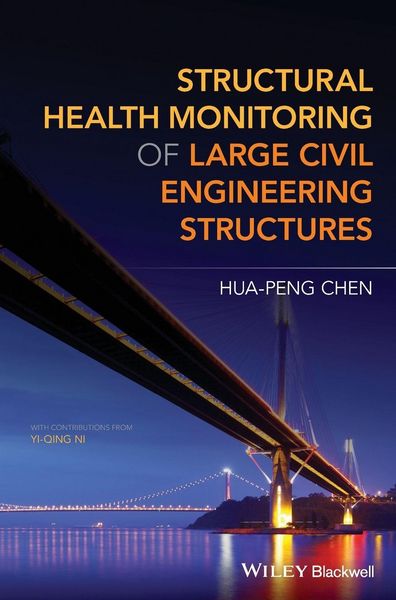
Structural Health Monitoring of Large Civil Engineering Structures
-
- Englisch ausgewählt
159,99 €
inkl. gesetzl. MwSt.,
Beschreibung
Produktdetails
Einband
Gebundene Ausgabe
Erscheinungsdatum
30.03.2018
Verlag
John Wiley & Sons IncSeitenzahl
336
Maße (L/B/H)
25,2/17,7/2,4 cm
Gewicht
777 g
Auflage
1. Auflage
Sprache
Englisch
ISBN
978-1-119-16643-6
Structural Health Monitoring (SHM) provides the facilities for in-service monitoring of structural performance and damage assessment, and is a key element of condition based maintenance and damage prognosis. This comprehensive book brings readers up to date on the most important changes and advancements in the structural health monitoring technologies applied to civil engineering structures. It covers all aspects required for such monitoring in the field, including sensors and networks, data acquisition and processing, damage detection techniques and damage prognostics techniques. The book also includes a number of case studies showing how the techniques can be applied in the development of sustainable and resilient civil infrastructure systems.
Structural Health Monitoring of Large Civil Engineering Structures offers in-depth chapter coverage of: Sensors and Sensing Technology for Structural Monitoring; Data Acquisition, Transmission, and Management; Structural Damage Identification Techniques; Modal Analysis of Civil Engineering Structures; Finite Element Model Updating; Vibration Based Damage Identification Methods; Model Based Damage Assessment Methods; Monitoring Based Reliability Analysis and Damage Prognosis; and Applications of SHM Strategies to Large Civil Structures.
* Presents state-of-the-art SHM technologies allowing asset managers to evaluate structural performance and make rational decisions
* Covers all aspects required for the practical application of SHM
* Includes case studies that show how the techniques can be applied in practice
Structural Health Monitoring of Large Civil Engineering Structures is an ideal book for practicing civil engineers, academics and postgraduate students studying civil and structural engineering.
Noch keine Bewertungen vorhanden
Verfassen Sie die erste Bewertung zu diesem Artikel
Helfen Sie anderen Kundinnen und Kunden durch Ihre Meinung.
Kurze Frage zu unserer Seite
Vielen Dank für Ihr Feedback
Wir nutzen Ihr Feedback, um unsere Produktseiten zu verbessern. Bitte haben Sie Verständnis, dass wir Ihnen keine Rückmeldung geben können. Falls Sie Kontakt mit uns aufnehmen möchten, können Sie sich aber gerne an unseren Kund*innenservice wenden.
zum Kundenservice