KI-Beratung Beta

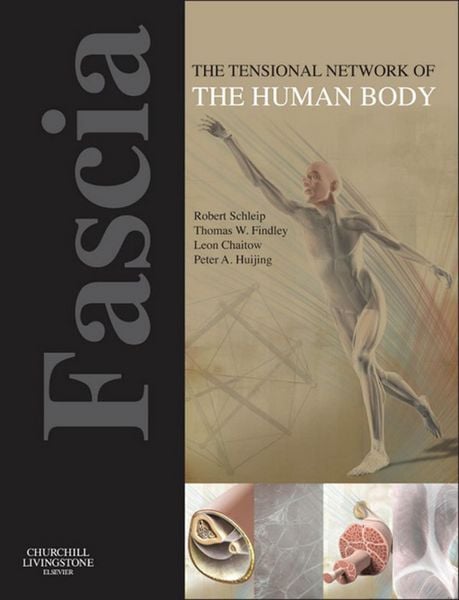
Produktbild: Fascia: The Tensional Network of the Human Body

Fascia: The Tensional Network of the Human Body The science and clinical applications in manual and movement therapy

1
  • Form:Einzelkauf Download
  • Sprache:Englisch

49,99 €

inkl. gesetzl. MwSt.

Beschreibung

This book is the product of an important collaboration between clinicians of the manual therapies and scientists in several disciplines that grew out of the three recent International Fascia Research Congresses (Boston, Amsterdam, and Vancouver). The book editors, Thomas Findley MD PhD, Robert Schleip...

Beschreibung

This book is the product of an important collaboration between clinicians of the manual therapies and scientists in several disciplines that grew out of the three recent International Fascia Research Congresses (Boston, Amsterdam, and Vancouver). The book editors, Thomas Findley MD PhD, Robert Schleip PhD, Peter Huijing PhD and Leon Chaitow DO, were major organizers of these congresses and used their extensive experience to select chapters and contributors for this book.
This volume therefore brings together contributors from diverse backgrounds who share the desire to bridge the gap between theory and practice in our current knowledge of the fascia and goes beyond the 2007, 2009 and 2012 congresses to define the state-of-the-art, from both the clinical and scientific perspective.
Prepared by over 100 specialists and researchers from throughout the world, Fascia: The Tensional Network of the Human Body will be ideal for all professionals who have an interest in fascia and human movement - physiotherapists, osteopathic physicians, osteopaths, chiropractors, structural integration practitioners, manual therapists, massage therapists, acupuncturists, yoga or Pilates instructors, exercise scientists and personal trainers - as well as physicians involved with musculoskeletal medicine, pain management and rehabilitation, and basic scientists working in the field.
- Reflects the efforts of almost 100 scientists and clinicians from throughout the world
- Offers comprehensive coverage ranging from anatomy and physiology, clinical conditions and associated therapies, to recently developed research techniques
- Explores the role of fascia as a bodywide communication system
- Presents the latest information available on myofascial force transmission which helps establish a scientific basis for given clinical experiences
- Explores the importance of fascia as a sensory organ - for example, its important proprioceptive and nociceptive functions which have implications for the generation of low back pain
- Describes new imaging methods which confirm the connectivity of organs and tissues
- Designed to organize relevant information for professionals involved in the therapeutic manipulation of the body's connective tissue matrix (fascia) as well as for scientists involved in basic science research
- Reflects the increasing need for information about the properties of fascia, particularly for osteopaths, massage therapists, physiotherapists and other complementary health care professionals
- Offers new insights on the fascial related foundations of Traditional Chinese Medicine Meridians and the fascial effects of acupuncture

Produktdetails

Format

ePUB

Kopierschutz

Nein

Family Sharing

Nein

Text-to-Speech

Ja

Produktdetails

Format

ePUB

Format

eBooks im ePUB-Format erlauben eine dynamische Anpassung des Inhalts an die jeweilige Display-Größe des Lesegeräts. Das Format eignet sich daher besonders für das Lesen auf mobilen Geräten, wie z.B. Ihrem tolino, Tablets oder Smartphones.

Kopierschutz

Nein

Kopierschutz

Dieses eBook können Sie uneingeschränkt auf allen Geräten der tolino Familie, allen sonstigen eReadern und am PC lesen. Das eBook ist nicht kopiergeschützt und kann ein personalisiertes Wasserzeichen enthalten. Weitere Hinweise zum Lesen von eBooks mit einem personalisierten Wasserzeichen finden Sie unter Hilfe/Downloads.

Family Sharing

Nein

Family Sharing

Mit Family Sharing können Sie eBooks innerhalb Ihrer Familie (max. sechs Mitglieder im gleichen Haushalt) teilen. Sie entscheiden selbst, welches Buch Sie mit welchem Familienmitglied teilen möchten. Auch das parallele Lesen durch verschiedene Familienmitglieder ist durch Family Sharing möglich. Um eBooks zu teilen oder geteilt zu bekommen, muss jedes Familienmitglied ein Konto bei Thalia oder einem anderen tolino-Buchhändler haben. Weitere Informationen finden Sie unter Hilfe/Family-Sharing.

Text-to-Speech

Ja

Text-to-Speech

Bedeutet Ihnen Stimme mehr als Text? Mit der Funktion Text-to-Speech können Sie sich im tolino webReader und in der aktuellen Thalia – Lesen & Hören App das eBook vorlesen lassen. Weitere Informationen finden Sie unter Hilfe/Text-to-Speech.

Erscheinungsdatum

26.02.2013

Herausgeber
Verlag Elsevier HealthScience EN
Seitenzahl

566 (Printausgabe)

Sprache

Englisch

EAN

9780702052286

Barrierefreiheit
  • keine Information zur Barrierefreiheit bekannt

Kundinnen und Kunden meinen

Informationen zu Bewertungen

Zur Abgabe einer Bewertung ist eine Anmeldung im Konto notwendig. Die Authentizität der Bewertungen wird von uns nicht überprüft. Wir behalten uns vor, Bewertungstexte, die unseren Richtlinien widersprechen, entsprechend zu kürzen oder zu löschen.

Die Bewertungen sind nach Format, Anzahl Sterne und Datum sortiert.

  • ranofer@gmx.net

    aus Berlin

    3/5

    31.10.2022

    Buch (Taschenbuch)

    The publication is composed…

    The publication is composed of fortyeight chapters with contributions from fifty-three authors, divided into three sections: theory, assessment, and clinical application. Because the book provides a lot of valuable information it can be recommend for anyone who practices or studies manual therapy or movement therapy. Nevertheless, it has some fundamental shortcomings. The presentation of the importance of fascia for movement and the practical consequences for movement therapy and manual therapy cannot do without sufficient consideration of the relationship between body structure, fascia as the organ of body structure and gravity as a third factor. The reason for this lies in the following context: If we talk about the structure of the human body, we are not only talking about the spatial relationships of its partial structures to each other, but also about the relationship of the body as a whole, i.e. its overall structure, to gravity. For all inorganic and organic physical entities respectively their structure are in close interaction with the earth's gravitational force. Gravity affects the organism throughout its life, shaping or deforming it, depending on how optimally its body structure is adapted to it or not. Harmony between the human energy field and the gravitational energy is therefore essential for the body structure and thus also for the quality of movement. In order to understand the more or less good adaptation of man to gravity, it is necessary to know that - according to the principle of actio = reactio - the force of gravity on the surface of the earth produces a counterforce. In physics, this is called the normal force or supporting force. While in biology, medicine and sport gravity is one-sided understood as a destructive force against which one has to fight, in reality it plays a positive role for humans due to the supporting force - if they know how to adapt to it optimally, both structurally and functionally. These facts are not taken into account at all in the book, or only to a completely inadequate extent. For example, there is no example of a comprehensive structural analysis in the Assessment section. A chapter that goes in this direction is the one by Leon Chaitow. However, it is only fragmentary and also incorrectly executed. Gravity as a superordinate reference point is only sporadically and completely insufficient perceived. When selecting and applying exercises, differentiation in relation to individual body structures is essential. However, this is missing in all the described approaches of movement therapies, especially conspicuous in the chapters on yoga and Pilates. Dr. Ida Rolf, the founder of Structural Integration, known mainly as Rolfing, pioneered fascia therapy by relating the factors fascia - body structure - gravity, both theoretically and practically. However, she and her method are not mentioned in the book. Neither does osteopathy, which was the first to recognise the importance of fascia. In Structural Integration there are various models of a comprehensive structural analysis, and it is surprising that this has not found its way into the chapter on assessment. It is also surprising that the editors in the clinical application section do not present a chapter on Rolf-Movement, the movement-related practice of Structural Integration. All the more so as one of the editors, Robert Schleip, is a Rolfing practitioner and instructor of the Dr. Ida Rolf Institute. It is also strange and puzzling that two other Structural Integration practitioners, Thomas Myers and Stefan Dennenmoser, make no reference to the Rolf Movement in their contributions.

Kundinnen und Kunden meinen

5

0

4

0

3

1

2

0

1

0

Bewertungen (1)

Weitere Artikel finden Sie in

Die Leseprobe wird geladen.
  • Produktbild: Fascia: The Tensional Network of the Human Body