KI-Beratung Beta

Gutscheinbedingungen

**Gültig bis 30.11.2026 auf Spielzeug, Schreibwaren, Filme, Geschenke & Trends, Musik, tolino eReader & Zubehör, Hörbücher und Hörbuch-Downloads, nicht preisgebundene Bücher und Kalender online auf thalia.at und in der Thalia App. Einzelne Artikel können ausgeschlossen sein. Aufgrund der Buchpreisbindung sind deutschsprachige Bücher und eBooks ausgenommen. Zusätzlich ausgenommen sind Abos & Flatrates, Games, Geschenkkarten/-boxen, Shelfies, Software, Zeitschriften sowie einzelne Artikel von tonies®. Pro Einkauf einmal einlösbar. Nur gültig mit im Onlineshop hinterlegter Bonuscard. Click & Collect nur bei Onlinevorabzahlung möglich. Keine Barauszahlung. Nicht kombinierbar mit anderen Aktionen und Gutscheinen. Gutschein wird auf max. 500€ Bestellwert angerechnet. Nicht gültig für Versandkosten und Services.

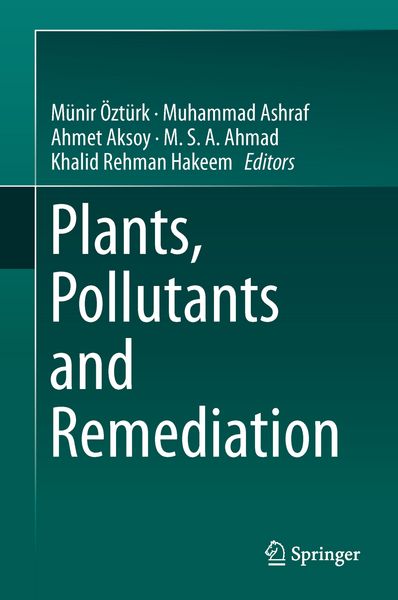
Produktbild: Plants, Pollutants and Remediation
- 12%

Plants, Pollutants and Remediation

12% sparen

95,99 € UVP 109,99 €

inkl. gesetzl. MwSt., Versandkostenfrei


Beschreibung

In the era of current industrial and civil development, everyone is expressing a deep concern about the problem of environmental pollution. The majority of the global community has a vested interest in supporting and sustaining any move for the protection of environment. In the greater part of the last...

Beschreibung

In the era of current industrial and civil development, everyone is expressing a deep concern about the problem of environmental pollution. The majority of the global community has a vested interest in supporting and sustaining any move for the protection of environment. In the greater part of the last century it was the fast pace of industrialization, galloping demand for energy and reckless exploitation of natural resources that were mainly responsible for creating the problem of environmental pollution. In the current scenario, high illiteracy rates of the developing nations leads to increasing environmental pollution. When it comes to the hazards of environmental pollution, there is only a very thin dividing line between different countries. One pollutes and the other suffers-there are no eventual winners without significant changes globally. Pollution is posing serious threats to all kinds of diversities on earth in particular plants. The plant world is of vital importance for our planet. It is a worldwide priority aimed at better meeting the needs for food, livelihoods and nature. To meet the food demand of fast-growing population, global food production will have to be doubled. The sustainability of food production depends on the sustainability of plant resources and using tolerant varieties to augment food production.

This volume therefore covers discussions on the recent developments in this connection and the emerging role of plants as indicators, remediation, and such related issues as biodiversity conservation and the effects of on edible plants. It reviews issues concerning the future of plant life. Taking cognizance of this, several experts from different parts of the globe have contributed from their experience and knowledge to the critical issues of "Environmental Pollution," and the "Role of Plants in this connection”.

Produktdetails

Einband

Gebundene Ausgabe

Erscheinungsdatum

20.01.2016

Abbildungen

XV, 404 p. 133 illus., 28 illus. in color.

Herausgeber Münir Öztürk + weitere

Produktdetails

Einband

Gebundene Ausgabe

Erscheinungsdatum

20.01.2016

Abbildungen

XV, 404 p. 133 illus., 28 illus. in color.

Herausgeber
Verlag Springer Netherland
Seitenzahl

404

Maße (L/B/H)

24,1/16/2,7 cm

Gewicht

824 g

Auflage

16001 Auflage 1st edition 2015

Sprache

Englisch

ISBN

978-94-017-7193-1

Herstelleradresse

Springer-Verlag GmbH
Europaplatz 3
69115 Heidelberg
DE

Email: ProductSafety@springernature.com

Noch keine Bewertungen vorhanden

Verfassen Sie die erste Bewertung zu diesem Artikel

Helfen Sie anderen Kundinnen und Kunden durch Ihre Meinung.

Kundinnen und Kunden meinen

Bewertungen (0)

Weitere Artikel finden Sie in

  • Produktbild: Plants, Pollutants and Remediation

  • 1. Visible Injury, CO2 Assimilation and PSII Photochemistry of Eucaliptus Plants in Response to Boron Stress.- 2. Vanadium in the Environment and its Bioremediation.- 3. Nitrogen pollution, Plants and Human health.- 4. Evaluation of Wild Halophytes of Aralo-Caspian flora towards Soil Restoration and Food Security Improvement.- 5. Nickel Metal Uptake and Metal-Specific Stress Alleviation in a Perennial Desert Grass Cenchrus ciliaris.- 6. Taming Food Security through Wastewater Irrigation Practices.- 7. The potentiality of wastewater use for irrigation in Turkey.- 8. Plant secondary metabolites: deleterious effects, remediation.- 9. Genotoxic Effects of Boron on Chickpea (Cicer arietinum L.) and Tomato (Solanum lycopersicum L.).- 10. The Method of Dynamic Factors in Bioindication and Phytoremediation.- 11. Plant-Pollutant Interaction.- 12. Plants for remediation:  uptake, translocation and transformation of organic pollutants.- 13. Potential Use of Licorice in Phytoremediation of Salt Affected Soils.- 14. Effect of Nutrient Enrichment on Metal Accumulation and Biological Responses of Duckweed (Lemnaceae) Spread in Turkey.- 15. Temporal variation of biological oxygen demand (BOD), chemical oxygen demand (COD), and pH values in surface waters of Gölcük-Kocaeli, Turkey.-  16. Ambient Ozone Levels in the Eastern Mediterranean Region and Assessment of its Effect on the Forested Mountain Areas of Southern Turkey.- 17. Determination of environmental activities and perspectives of plants: a field research in Kayseri.- 18. An approach for sustainable management of the Balıklıgol Lakes, Turkey.- 19. Kinetics and Mechanisms of Biosorption of Copper Ion onto Waste Yeast (S. Cerevisiae).- 20. Effects of Air Pollution on Urban Plants: Nezahat Gökyiğit Botanical Garden.