Gutscheinbedingungen

**Gültig bis 06.07.2026 auf fremdsprachige Bücher online auf thalia.at, in der Thalia App ab einem Mindestbestellwert von 30€ und in allen Thalia Buchhandlungen in Österreich. In den Buchhandlungen nur gültig auf lagernde Ware. Einzelne Artikel können ausgeschlossen sein. Ausgenommen sind preisgebundene Artikel & eBooks. Pro Einkauf einmal einlösbar. Nur gültig gegen Vorlage oder im Onlineshop hinterlegter Bonuscard. Infos zur Einlösung in der Buchhandlung sind auf der Bonuscard-Vorteilspreisseite zu finden. Click & Collect nur bei Onlinevorabzahlung möglich. Keine Einlösung bei Scan & Go-Bezahlung. Keine Barauszahlung. Nicht kombinierbar mit anderen Aktionen und Gutscheinen. Gutschein wird auf max. 500€ Bestellwert angerechnet. Nicht gültig für Versandkosten und Services.

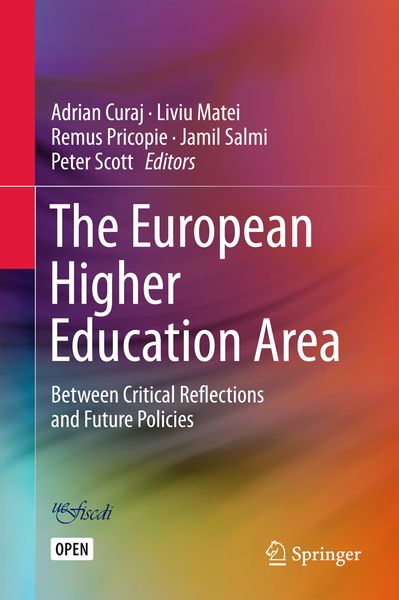
Produktbild: The European Higher Education Area

The European Higher Education Area Between Critical Reflections and Future Policies

51,99 €

inkl. gesetzl. MwSt., Versandkostenfrei


Beschreibung

Produktdetails

Einband

Set mit diversen Artikeln

Erscheinungsdatum

22.10.2015

Abbildungen

XLIV, 76 illus. In 2 volumes, not available separately., schwarz-weiss Illustrationen

Herausgeber

Adrian Curaj + weitere

Verlag

Springer

Seitenzahl

898

Maße (L/B/H)

24,1/16/6,4 cm

Gewicht

1803 g

Auflage

1st edition 2015

Sprache

Englisch

ISBN

978-3-319-18767-9

Beschreibung

Portrait

With 10 years of BW consulting and project management experience, Peter Scott focuses on the reporting capabilities of BW. As an international consultant he has worked on many project deliverables and has logged over 2000 classroom hours teaching BW reporting functionality. He sits on BW 'Ask the Expert' panels and is certified in SAP BW.

Produktdetails

Einband

Set mit diversen Artikeln

Erscheinungsdatum

22.10.2015

Abbildungen

XLIV, 76 illus. In 2 volumes, not available separately., schwarz-weiss Illustrationen

Herausgeber

Verlag

Springer

Seitenzahl

898

Maße (L/B/H)

24,1/16/6,4 cm

Gewicht

1803 g

Auflage

1st edition 2015

Sprache

Englisch

ISBN

978-3-319-18767-9

Herstelleradresse

Springer-Verlag KG
Sachsenplatz 4-6
1201 Wien
AT

Email: GPSR Kontakt

Noch keine Bewertungen vorhanden

Verfassen Sie die erste Bewertung zu diesem Artikel

Helfen Sie anderen Kundinnen und Kunden durch Ihre Meinung.

Kundinnen und Kunden meinen

Bewertungen (0)

  • Produktbild: The European Higher Education Area
  • Contents of Part 1 Introduction. The Future of Higher Education and “the European Level”. Liviu Matei.- Part I: Internationalization of Higher Education.- 1. Internationalisation of Higher Education – What Can Research Add to the Policy Debate? [Overview Paper]. Hans de Wit, Ligia Deca, Fiona Hunter.- 2. Internationalization of Higher Education: Navigating Between Contrasting Trends. Sarah Guri-Rosenblit.- 3. Balanced Mobility Across the Board – a Sensible Objective? Irina Ferencz.- 4. Challenges of Student Mobility in a Cosmopolitan Europe. Janine Wulz, Florian Rainer.- 5. Redefining Internationalization at Home. Jos Beelen, Elspeth Jones.- 6. The Impact of Exposure to Diversity in the International University Environment and the Development of Intercultural Competence in Students. Jeanine Gregersen – Hermans .- 7. Internationalisation as a Lever for Change: the Case of Italy. Fiona Hunter.- 8. Becoming Bologna Capable: Strategic Cooperation and Capacity Building in International Offices in Kazakhstani HEIs. Jason Sparks, Adil Ashirbekov, Aisi Li, Lynne Parmenter, Zakir Jumakulov, Aida Sagintayeva.- 9. Internationalization Strategies and Policies in Second-tier Higher Education Institutions. Hans de Wit, Miri Yemini, Randall Martin.- Part II: Higher Education Financing and Governance.- 10. Background Note for the Section on Financing and Governance [Overview Paper]. Liviu Matei.- 11. Strategies for Efficient Funding of Universities in Europe. Enora Bennetot Pruvot, Anna-Lena Claeys-Kulik, Thomas Estermann.- 12. Financing Research Universities in Post-communist EHEA Countries. Ernő Keszei, Frigyes Hausz, Attila Fonyó, Béla Kardon.- 13. Policy Incentives and Research Productivity in the Romanian Higher Education. An Institutional Approach. Lazăr Vlăsceanu, Marian-Gabriel Hâncean.- 14. Patterns of Funding the Internationalisation of Higher Education. A Conceptual Framework for the Study of Internationalisation. Liviu Matei, Julia Iwinska, Daniela Crăciun.- 15. The Evolving Landscape of South-East Asian Higher Education and the Challenges of Governance. Sauwakon Ratanawijitrasin.- Part III: Excellence and Diversification of Higher Education Institutions’ Missions.- 16. Seeking Excellence, Practicing Rankings, and Aiming at Diversification of Higher Education Institutions’ Mission in the European Higher Education Area [Overview Paper]. Jan Sadlak.- 17. Excellence-driven Policies and Initiatives in the Context of Bologna Process: Rationale, Design, Implementation and Outcomes. Isak Froumin, Mikhail Lisyutkin.- 18. The Knowledge Society and Diversification of Higher Education: From the Social Contract to the Mission of Uiversities. Attila Pausits.- 19. Excellence and Diversification of Higher Education Institutions’ Missions. Marco Porzionato, Federica De Marco.- 20. “New” Rankings on the Scene: The U21 Ranking of National Higher Education Systems and U-Multirank. Gergely Kováts.- Part IV: Teaching, Learning and Student Engagement.- 21. Teaching and Learning: an Overview of the Thematic Session [Overview Paper]. Manja Klemenčič, Paul Ashwin.- 22. Teaching and Learning: A Journey from the Margins to the Core in European Higher Education Policy. Cristina Sin.- 23. The Meanings of Student Engagement: Implications for Policies and Practices. Paul Ashwin, Debbie McVitty.- 24. How Do We Know How Students Experience Higher Education? On the Use of Student Surveys. Manja Klemenčič, Igor Chirikov.- 25. Understanding the Quality of Learning in Digital Learning Environments: State of the Art and Research Needed. Bernadette Charlier, Laurent Cosnefroy, Annie Jézégou, Geneviève Lameul.- 26. Assessment of Learning Outcomes. Hamish Coates.- 27. Giving Voice to Non-traditional Students “Walking” the Narrative Mediation Path. An Interpretative Phenomenological Analysis. Dan Florin Stănescu, Elena-Mădălina Iorga, José González Monteagudo, Maria Francesca Freda.- Part V: Social Dimension and Equity of Higher Education .- 28. Equity and the Social Dimension: an Overview [Overview Paper]. Alex Usher.- 29. No Future for the Social Dimension? Florian Kaiser, Aengus Ó Maoláin, Līva Vikmane.- 30.- A Comprehensive Approach to Investigating the Social Dimension in European Higher Education Systems – EUROSTUDENT and the PL4SD Country Reviews. Dominic Orr, Shweta Mishra.- 31. How did the Latest Increase in Fees in England Affect Student Enrolment and Inequality? Koen Geven.- 32. Struggling with Social Polarization. Student Financial Support in Romania in the Framework of the Bologna Process.- Daniela Alexe, Cezar Mihai Hâj, Bogdan Murgescu.- 33 Premises of Inclusive Access and Success of Roma People in the Romanian Higher Education.Diana-Maria Cismaru, Cristina Fiţ, Delia Gologan.

    Contents of Part 2

    Part VI  Education, Research and Innovation.- 1. Bridging Education, Research and Innovation: the Pivotal Role of Doctoral Training [Overview Paper]. Marzia Foroni.- 2. European Doctoral Programs in Light of EHEA and ERA. Nicola Vittorio.- 3. Tuning Tools and Insights for Modern Competence-based Third-cycle Programs. Ann Katherine Isaacs.- 4. Enhancing the Quality of Research in Europe: Theoretical Perspectives on and Guiding Principles for Researcher Development. Linda Evans.- 5. The Quality of Doctoral Training and Employability of Doctorate Holders: the Views of Doctoral Candidates and Junior Researchers. Filomena Parada, John Peacock.- 6.   The Romanian PhD students at CERN: the Bologna Process and Beyond. Alexandru Nicolin, Florin Buzatu.-  Part VII  Quality Assurance.- 7. European Quality Assurance - a European Higher Education Area success story [Overview Paper]. Hanne Smidt.- 8. International Quality Reviews with an EQAR-registered Agency. Melinda Szabo.- 9. A Merry-Go-Round of Evaluations Moving from Administrative Burden to Reflection on Education and Research in Romania. Koen Geven, Adina Maricuţ.- 10. Students as Stakeholders in the Policy Context of the European Standards and Guidelines for Quality Assurance in Higher Education Institutions. Frauke Logermann, Liudvika Leišytė.- 11. Negotiating Liminality in Higher Education: Formal and Informal Dimensions of the Student Experience as Facilitators of Quality. Vanessa Rutherford, Ian Pickup.- Part VIII  The Impacts of the Bologna Process on the EHEA and Beyond.- 12. The EHEA at the Cross-roads. The Bologna Process and the Future of Higher Education [Overview Paper]. Sjur Bergan.- 13. Current and Future Prospects for the Bologna Process in the Turkish Higher Education System. Armağan Erdoğan.- 14. The Bologna Process Goes East? From “Third Countries” to Prioritizing Inter-regional Cooperation Between the ASEAN and EU. Que Anh Dang.- 15. Future Scenarios for the European Higher Education Area: Exploring the Possibilities of “Experimentalist Governance”. Robert Harmsen.- Part IX  Evidence-based Policies in Higher Education: Data Analytics, Impact Assessment and Reporting.- 16. Evidence-based Policies in Higher Education: Data Analytics, Impact Assessment and Reporting [Overview Paper]. Jamil Salmi.- 17. Higher Education Research in Europe. Ulrich Teichler.- 18. A Comparative Study on Cost-sharing in Higher Education – Using the Case Study Approach to Contribute to Evidence-based Policy. Dominic Orr.- 19. Does Research Influence Educational Policy? The Perspective of Researchers and Policy-makers in Romania. Georgeta Ion, Romiţă Iucu.- 20. Changed Academic Relationship Between Professors and Students at Uni Potsdam: Impact of Bologna 2011-2012. Christen Hairston.- About the Editors.- About the Authors.