Gutscheinbedingungen

**Gültig bis 06.07.2026 auf fremdsprachige Bücher online auf thalia.at, in der Thalia App ab einem Mindestbestellwert von 30€ und in allen Thalia Buchhandlungen in Österreich. In den Buchhandlungen nur gültig auf lagernde Ware. Einzelne Artikel können ausgeschlossen sein. Ausgenommen sind preisgebundene Artikel & eBooks. Pro Einkauf einmal einlösbar. Nur gültig gegen Vorlage oder im Onlineshop hinterlegter Bonuscard. Infos zur Einlösung in der Buchhandlung sind auf der Bonuscard-Vorteilspreisseite zu finden. Click & Collect nur bei Onlinevorabzahlung möglich. Keine Einlösung bei Scan & Go-Bezahlung. Keine Barauszahlung. Nicht kombinierbar mit anderen Aktionen und Gutscheinen. Gutschein wird auf max. 500€ Bestellwert angerechnet. Nicht gültig für Versandkosten und Services.

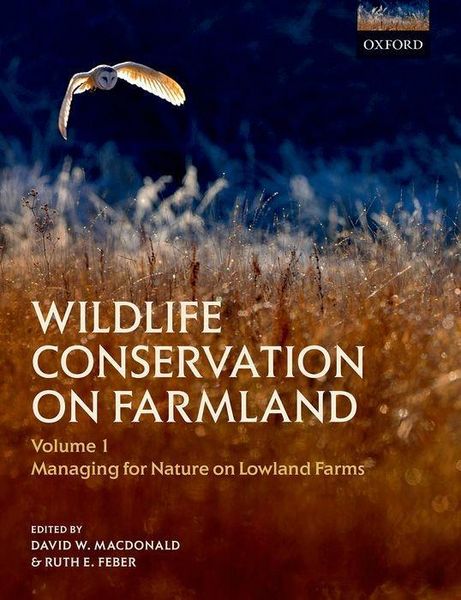
Produktbild: Wildlife Conservation on Farmland Volume 1

Wildlife Conservation on Farmland Volume 1 Managing for Nature in Lowland Farms

162,99 €

inkl. gesetzl. MwSt., Versandkostenfrei


Beschreibung

Produktdetails

Einband

Gebundene Ausgabe

Erscheinungsdatum

16.09.2015

Abbildungen

138 illustrations

Herausgeber

David W. Macdonald + weitere

Verlag

Oxford University Press

Seitenzahl

336

Maße (L/B/H)

24,9/18,5/1,8 cm

Gewicht

866 g

Sprache

Englisch

ISBN

978-0-19-874548-8

Beschreibung

Produktdetails

Einband

Gebundene Ausgabe

Erscheinungsdatum

16.09.2015

Abbildungen

138 illustrations

Herausgeber

Verlag

Oxford University Press

Seitenzahl

336

Maße (L/B/H)

24,9/18,5/1,8 cm

Gewicht

866 g

Sprache

Englisch

ISBN

978-0-19-874548-8

Herstelleradresse

Libri GmbH
Europaallee 1
36244 Bad Hersfeld
DE

Email: gpsr@libri.de

Noch keine Bewertungen vorhanden

Verfassen Sie die erste Bewertung zu diesem Artikel

Helfen Sie anderen Kundinnen und Kunden durch Ihre Meinung.

Kundinnen und Kunden meinen

Bewertungen (0)

Weitere Artikel finden Sie in

Die Leseprobe wird geladen.
  • Produktbild: Wildlife Conservation on Farmland Volume 1
    • 1: David W. Macdonald, Eva M. Raebel and Ruth E. Feber: Farming and wildlife: a perspective on a shared future

    • 2: Helen Smith, Ruth E. Feber and David W. Macdonald: From weed reservoir to wildlife resource--redefining arable field margins

    • 3: Ruth E. Feber, Paul J. Johnson, Fran H. Tattersall, Will Manley, Barbara Hart, Helen Smith and David W. Macdonald: How can field margin management contribute to invertebrate biodiversity?

    • 4: David W. Macdonald, Lauren A. Harrington, Merryl Gelling, Fran H. Tattersall and Tom Tew: Small mammals on lowland farmland

    • 5: Jeremy D. Wilson and Richard B. Bradbury: Agri-environment schemes and the future of farmland bird conservation

    • 6: Ruth E. Feber, Paul J. Johnson, Dan E. Chamberlain, Leslie G. Firbank, Robert J. Fuller, Barbara Hart, Will Manley, Fiona Mathews, Lisa R. Norton, Martin Townsend and David W. Macdonald: Does organic farming affect biodiversity?

    • 7: Hanna L. Tuomisto, Ian D. Hodge, Philip Riordan and David W. Macdonald: Farming for the future: optimizing farming systems for society and the environment

    • 8: Thomas Merckx and David W. Macdonald: Landscape-scale conservation of farmland moths

    • 9: Danielle Linton, Lauren A. Harrington and David W. Macdonald: Habitat use by vesper bats: disentangling local and landscape-scale effects within lowland farmland

    • 10: Eva M. Raebel, David J. Thompson and David W. Macdonald: Local and landscape scale management of Odonata

    • 11: Rosalind F. Shaw, Alison E. Poole, Ruth E. Feber, Eva M. Raebel and David W. Macdonald: Freshwaters and farming: impacts of land use and management on the biodiversity of rivers and ditches

    • 12: Christina D. Buesching, Eleanor M. Slade, Thomas Merckx and David W. Macdonald: Local and landscape-scale impacts of woodland management on wildlife

    • 13: Elina Rantanen, David W. Macdonald, Nick W. Sotherton and Francis Buner: Improving reintroduction success of the Grey Partridge using behavioural studies

    • 14: Tom P. Moorhouse, Merryl Gelling and David W. Macdonald: Water vole restoration in the Upper Thames

    • 15: Tom P. Moorhouse, David W. Macdonald, Rob Strachan and Xavier Lambin: What does conservation research do, when should it stop, and what do we do then? Questions answered with water voles.

    • 16: Christopher J. Sandom and David W. Macdonald: What next? Rewilding as a radical future for the British countryside