KI-Beratung Beta

Gutscheinbedingungen

**Gültig bis 30.11.2026 auf Spielzeug, Schreibwaren, Filme, Geschenke & Trends, Musik, tolino eReader & Zubehör, Hörbücher und Hörbuch-Downloads, nicht preisgebundene Bücher und Kalender online auf thalia.at und in der Thalia App. Einzelne Artikel können ausgeschlossen sein. Aufgrund der Buchpreisbindung sind deutschsprachige Bücher und eBooks ausgenommen. Zusätzlich ausgenommen sind Abos & Flatrates, Games, Geschenkkarten/-boxen, Shelfies, Software, Zeitschriften sowie einzelne Artikel von tonies®. Pro Einkauf einmal einlösbar. Nur gültig mit im Onlineshop hinterlegter Bonuscard. Click & Collect nur bei Onlinevorabzahlung möglich. Keine Barauszahlung. Nicht kombinierbar mit anderen Aktionen und Gutscheinen. Gutschein wird auf max. 500€ Bestellwert angerechnet. Nicht gültig für Versandkosten und Services.

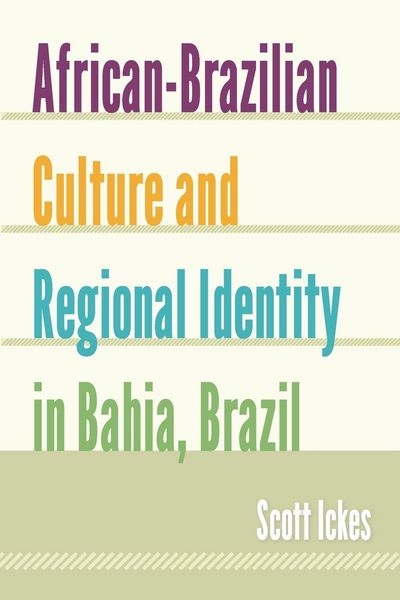
Produktbild: African-Brazilian Culture and Regional Identity in Bahia, Brazil

African-Brazilian Culture and Regional Identity in Bahia, Brazil

36,99 €

inkl. gesetzl. MwSt., Versandkostenfrei


Beschreibung

Salvador, the capital of the state of Bahia, is often referred to as “Brazil's Black Rome”. Culturally complex, vibrant, and rich with history, its African-descended population is one of the largest in Latin America. Yet despite representing a majority of the population, African-Bahians remain a marginalized...

Beschreibung

Salvador, the capital of the state of Bahia, is often referred to as “Brazil's Black Rome”. Culturally complex, vibrant, and rich with history, its African-descended population is one of the largest in Latin America. Yet despite representing a majority of the population, African-Bahians remain a marginalized racial group within the state as a whole.
In African-Brazilian Culture and Regional Identity in Bahia, Brazil, Scott Ickes examines how in the middle of the twentieth century, African-Bahian cultural practices such as capoeira, samba, and Candomblé during carnival and other popular religious festivals came to be accepted as essential components of Bahian regional identity. Previously, public performances of traditionally African-Bahian practices were repressed in favor of more European traditions and a more “modern” vision.
Newfound acceptance of these customs was a democratic move forward, but it also perpetuated the political and economic marginalization of the black majority. Ickes argues that cultural-political alliances between African-Bahian cultural practitioners and their dominant-class allies nevertheless helped to create a meaningful framework through which African-Bahian inclusion could be negotiated a framework that is also important in the larger discussions of race and regional and national identity throughout Brazil.

Produktdetails

Einband

Taschenbuch

Erscheinungsdatum

15.11.2015

Abbildungen

9 figures, 3 tables, map

Verlag University Press of Florida

Produktdetails

Einband

Taschenbuch

Erscheinungsdatum

15.11.2015

Abbildungen

9 figures, 3 tables, map

Verlag University Press of Florida
Seitenzahl

340

Maße (L/B/H)

23,4/15,6/1,9 cm

Gewicht

522 g

Sprache

Englisch

ISBN

978-0-8130-6170-2

Herstelleradresse

Libri GmbH
Europaallee 1
36244 Bad Hersfeld
DE

Email: gpsr@libri.de

Noch keine Bewertungen vorhanden

Verfassen Sie die erste Bewertung zu diesem Artikel

Helfen Sie anderen Kundinnen und Kunden durch Ihre Meinung.

Kundinnen und Kunden meinen

Bewertungen (0)

  • Produktbild: African-Brazilian Culture and Regional Identity in Bahia, Brazil