Gutscheinbedingungen

**Gültig bis 21.06.2026 auf tolino Accessoires online auf thalia.at und in der Thalia App. Einzelne Artikel können ausgeschlossen sein. Ausgenommen sind tolino stylus schwarz (4016621130282) und weiß (4016621131463). Pro Einkauf einmal einlösbar. Click & Collect nur bei Onlinevorabzahlung möglich. Keine Barauszahlung. Nicht kombinierbar mit anderen Aktionen und Gutscheinen. Nicht gültig für Geschenkkarten, Versandkosten und Services. Nur solange der Vorrat reicht.

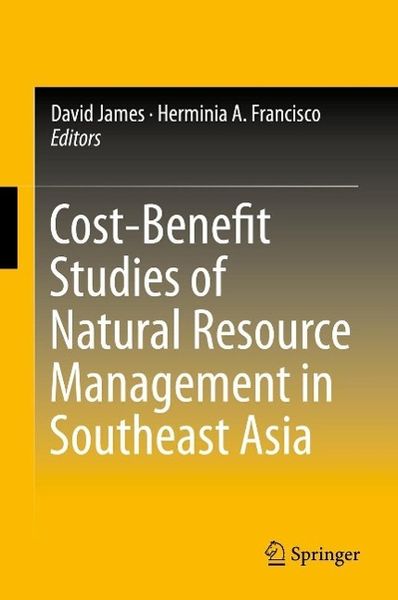
Produktbild: Cost-Benefit Studies of Natural Resource Management in Southeast Asia

Cost-Benefit Studies of Natural Resource Management in Southeast Asia

98,99 €

inkl. gesetzl. MwSt.

Beschreibung

Produktdetails

Format

PDF

Kopierschutz

Nein

Family Sharing

Nein

Text-to-Speech

Nein

Erscheinungsdatum

19.03.2015

Herausgeber

David James + weitere

Verlag

Springer Nature Singapore

Seitenzahl

396 (Printausgabe)

Dateigröße

3855 KB

Sprache

Englisch

EAN

9789812873934

Beschreibung

Portrait

Dr. David James is an independent consultant based in Sydney, Australia. He obtained his MA from the University of Newcastle, NSW and PhD from the University of Bristol, U.K. He has more than 40 years of practical and research experience specialising in environmental and natural resource economics. Currently, he is working on the economics of climate change, ecosystem services and integrated catchment management. During his career, he has conducted economic assessments and provided policy advice on forestry, fisheries, agriculture, dry lands, catchments, riverine systems, coastal zones, energy systems, water and sewerage, solid waste, urban development, air and water pollution and protected areas.Dr James received a United Nations Environment Programme Global 500 Award in 1988 for his pioneering work in environmental impact assessment and natural resource management incorporating economic principles. He is also the recipient of an East West Centre Makana Team Award for his work in environmental economics in SE Asia. Since 1988 David has served as Special Commissioner on the Australian Resource Assessment Commission's Forest and Timber Inquiry, Member of the NSW Government's Natural Resources Audit Council, Co-Chair of the NSW Economic and Social Technical Committee for the Regional Forestry Agreement Process, Independent Adviser to several Government Commissions of Inquiry, and Member of numerous governmental advisory committees. David has worked extensively in developing countries, including acting as ICEM Senior Economist in the Protected Areas and Development Review for the Mekong region. He is the longest serving Resource Person with the Economy and Environment Program for South-East Asia (EEPSEA), providing guidance and training to researchers throughout the region.Dr. Herminia Francisco is the Director of the Economy and Environment Program for Southeast Asia (EEPSEA). The Program plays an important role in developing researchers' capacity to produce high quality, policy relevant studies to support improved environmental management in Southeast Asia. EEPSEA receives funding support from the International Development Research Centre (IDRC) of Canada and the Swedish International Development Cooperation Agency (Sida). It has been administered by WorldFish since November 2012.Prior to taking the post as Director of EEPSEA, Dr Francisco was stationed in Cambodia for two years where she managed the capacity-building training and research grant activities for select institutions in Lao PDR, Cambodia and Vietnam. Dr Francisco also taught for several years at the University of the Philippines at Los Baños and was also involved in providing consultancy services to several international organizations before joining EEPSEA. Her written work covers topics such as economics of soil erosion and conservation, pricing of environmental services, climate change adaptation, and institutional issues governing the management of common pool resources.

Produktdetails

Format

PDF

eBooks im PDF-Format haben eine festgelegte Seitengröße und eignen sich daher nur bedingt zum Lesen auf einem tolino eReader oder Smartphone. Für den vollen Lesegenuss empfehlen wir Ihnen bei PDF-eBooks die Verwendung eines Tablets oder Computers.

Kopierschutz

Nein

Dieses eBook können Sie uneingeschränkt auf allen Geräten der tolino Familie, allen sonstigen eReadern und am PC lesen. Das eBook ist nicht kopiergeschützt und kann ein personalisiertes Wasserzeichen enthalten. Weitere Hinweise zum Lesen von eBooks mit einem personalisierten Wasserzeichen finden Sie unter Hilfe/Downloads.

Family Sharing

Nein

Mit Family Sharing können Sie eBooks innerhalb Ihrer Familie (max. sechs Mitglieder im gleichen Haushalt) teilen. Sie entscheiden selbst, welches Buch Sie mit welchem Familienmitglied teilen möchten. Auch das parallele Lesen durch verschiedene Familienmitglieder ist durch Family Sharing möglich. Um eBooks zu teilen oder geteilt zu bekommen, muss jedes Familienmitglied ein Konto bei Thalia oder einem anderen tolino-Buchhändler haben. Weitere Informationen finden Sie unter Hilfe/Family-Sharing.

Text-to-Speech

Nein

Bedeutet Ihnen Stimme mehr als Text? Mit der Funktion Text-to-Speech können Sie sich im tolino webReader und in der aktuellen Thalia – Lesen & Hören App das eBook vorlesen lassen. Weitere Informationen finden Sie unter Hilfe/Text-to-Speech.

Barrierefreiheit

  • keine Information zur Barrierefreiheit bekannt

Erscheinungsdatum

19.03.2015

Herausgeber

Verlag

Springer Nature Singapore

Seitenzahl

396 (Printausgabe)

Dateigröße

3855 KB

Sprache

Englisch

EAN

9789812873934

Kundinnen und Kunden meinen

0 Bewertungen

Informationen zu Bewertungen

Zur Abgabe einer Bewertung ist eine Anmeldung im Konto notwendig. Die Authentizität der Bewertungen wird von uns nicht überprüft. Wir behalten uns vor, Bewertungstexte, die unseren Richtlinien widersprechen, entsprechend zu kürzen oder zu löschen.

Die Bewertungen sind nach Format, Anzahl Sterne und Datum sortiert.

Verfassen Sie die erste Bewertung zu diesem Artikel

Helfen Sie anderen Kund*innen durch Ihre Meinung

Kundinnen und Kunden meinen

0 Bewertungen filtern

Weitere Artikel finden Sie in

  • Produktbild: Cost-Benefit Studies of Natural Resource Management in Southeast Asia
  • Foreword.- Preface.- Part I: Guide to Cost-Benefit Analysis and Case Studies.- Chapter 1: Introduction.- Chapter 2: Principles and Practice of Cost-Benefit Analysis.- Part II: Agriculture, Forestry and Fisheries.- Chapter 3: A Cost-Benefit Analysis of Jatropha Biodiesel Production in China.- Chapter 4: Comparing the Social Costs of Biofuels and Fossil Fuels: A Case Study of Vietnam.- Chapter 5: Economic Analysis of Rice Straw Management Alternatives and Understanding Farmers' Choices.- Chapter 6: Optimal Forest Management For Carbon Sequestration: A Case Study of Eucalyptus Urophylla and Acacia Mangium in Yen Bal Province, Vietnam.- Chapter 7: Rubber Plantation Development In Cambodia: A Cost-Benefit Analysis.- Chapter 8: Environmental Consequences of and Pollution Control Options for Pond "Tra" Fish Production in Thotnot District, Cantho City, Vietnam.- Part III: River Basin Management.- Chapter 9: Application of an Educated Trade-Off Analysis Framework for The Ma Oya River Basin Development Project, Sri Lanka.- Chapter 10: Policy Options for Sustainable River Sand Mining in Sri Lanka.- Part IV: Protected Areas.- Chapter 11: A Cost-Benefit Analysis of Ecotourism: A Case Study of Xe Pian National Protected Area, Champasak Province, Lao PDR.- Chapter 12: A Cost and Benefit Analysis of the Community Forestry Project in Chumkiri District, Kampot Province, Cambodia.- Chapter 13: Economic Benefit of Management Options for a Suburban Forest (Kho Hong Hill) in South Thailand.- Chapter 14: Cost-Effectiveness of Policy Options for Sustainable Wetland Conservation: A Case Study of Qixinghe Wetland, China.- Part V: Adaptation to Climate Change.- Chapter 15: Economic Vulnerability and Possible Adaptation to Coastal Erosion in San Fernando City, Philippines.- Chapter 16: Adaptation To Sea Level Rise in The Vietnamese Mekong River Delta: Should A Sea Dike Be Built?.- Chapter 17: Exploring the Potentials of A Technology-Based Flood Early Warning System In Laguna, Philippines: A Cost-Benefit Analysis.- Index