Gutscheinbedingungen

**Gültig am 28.06.2026 auf Spielzeug, Schreibwaren, Filme, Geschenke & Trends, Musik, tolino eReader & Zubehör, Hörbücher und Hörbuch-Downloads (außer Abo), nicht preisgebundene Bücher und Kalender online auf thalia.at und in der Thalia App. Einzelne Artikel können ausgeschlossen sein. Aufgrund der Buchpreisbindung sind deutschsprachige Bücher und eBooks ausgenommen. Zusätzlich ausgenommen sind preisgebundene Artikel, Abos & Flatrates, eBooks, Games, Geschenkkarten/-boxen, Shelfies, Software, Zeitschriften sowie einzelne Artikel von tonies®. Pro Einkauf einmal einlösbar. Click & Collect nur bei Onlinevorabzahlung möglich. Keine Barauszahlung. Nicht kombinierbar mit anderen Aktionen und Gutscheinen. Gutschein wird auf max. 500€ Bestellwert angerechnet. Nicht gültig für Versandkosten und Services.

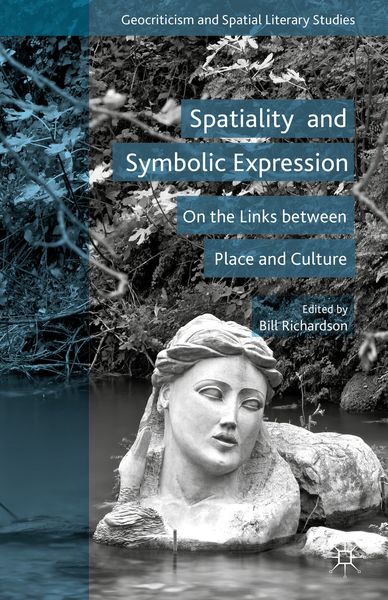
  • Produktbild: Spatiality and Symbolic Expression
  • Produktbild: Spatiality and Symbolic Expression

Spatiality and Symbolic Expression On the Links between Place and Culture

49,99 €

inkl. gesetzl. MwSt., Versandkostenfrei


Beschreibung

Produktdetails

Einband

Gebundene Ausgabe

Erscheinungsdatum

21.07.2015

Herausgeber

Bill Richardson

Verlag

Palgrave Macmillan US

Seitenzahl

250

Maße (L/B/H)

22,2/14,5/1,9 cm

Gewicht

470 g

Auflage

1st edition 2015

Sprache

Englisch

ISBN

978-1-137-50289-6

Beschreibung

Rezension

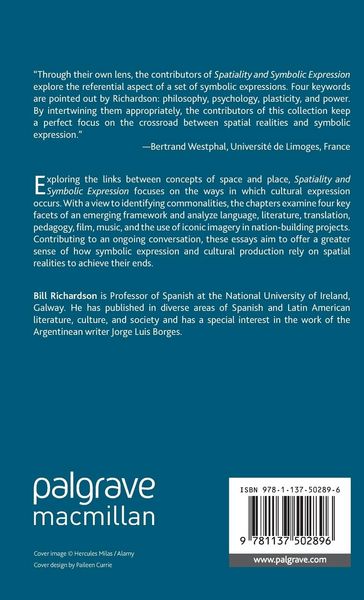
"We know now that space is something more than a rough container of events that are occurring in time. It was one of the original purposes of geocriticism to help demonstrating it. Through their own lens, the contributors of Spatiality and Symbolic Expression explore the referential aspect of all a set of symbolic expressions. Four key-words are pointed out by Richardson: philosophy, psychology, plasticity, and power. By intertwining them appropriately, the contributors of this collection keep a perfect focus on the crossroad between spatial realities and symbolic expression." - Bertrand Westphal, Université de Limoges, France

Produktdetails

Einband

Gebundene Ausgabe

Erscheinungsdatum

21.07.2015

Herausgeber

Bill Richardson

Verlag

Palgrave Macmillan US

Seitenzahl

250

Maße (L/B/H)

22,2/14,5/1,9 cm

Gewicht

470 g

Auflage

1st edition 2015

Sprache

Englisch

ISBN

978-1-137-50289-6

Herstelleradresse

Palgrave Macmillan
Tiergartenstr. 17
69121 Heidelberg
DE

Email: ProductSafety@springernature.com

Kundinnen und Kunden meinen

0 Bewertungen

Informationen zu Bewertungen

Zur Abgabe einer Bewertung ist eine Anmeldung im Konto notwendig. Die Authentizität der Bewertungen wird von uns nicht überprüft. Wir behalten uns vor, Bewertungstexte, die unseren Richtlinien widersprechen, entsprechend zu kürzen oder zu löschen.

Die Bewertungen sind nach Format, Anzahl Sterne und Datum sortiert.

Verfassen Sie die erste Bewertung zu diesem Artikel

Helfen Sie anderen Kund*innen durch Ihre Meinung

Kundinnen und Kunden meinen

0 Bewertungen filtern

  • Produktbild: Spatiality and Symbolic Expression
  • Produktbild: Spatiality and Symbolic Expression
  • Introduction: The ' 'Spatio-Cultural Dimension ' ': Overview and a Proposed Framework; Bill Richardson

    1. Space, Time and the Articulation of a Place in the World: The Philosophical Context; Felix Ó Murchadha

    2. Symbol, Situatedness, and the Individuality of Literary Space; Bill Richardson

    3. Bridging Gaps; Building Bridges: Spatial Metaphors, Symbolic Expression, and Pedagogy; Christiane Schönfeld and Ulf Strohmayer

    4. Spatiality, Place and Displacement in Two Gaelic Songs; Lillis Ó Laoire

    5. Lips in Language and Space: Imaginary Places in James Dawson ' 's Australian Aborigines; Paul Carter

    6. The Space of Language and the Place of Literature; Paolo Bartoloni

    7. Dreaming Well-Being into Being: Dualities of Virtual-Actual Communities; Karen Le Rossignol

    8. Between a Rock and No Place: Ursula Meier ' 's Home; Conn Holohan

    9. Op weg naar Broxeele: the Production of Shared Spaces; Catherine Emerson

    10. The Politics of Space: Poetical Dwelling and the Occupation of Poetry; Miles Kennedy

    Conclusion: Mapping, not the Map; Bill Richardson