KI-Beratung Beta

Gutscheinbedingungen

**Gültig bis 11.11.2026 auf Spielzeug, Schreibwaren, Filme, Geschenke & Trends, Musik, tolino eReader & Zubehör, Hörbücher und Hörbuch-Downloads, nicht preisgebundene Bücher und Kalender online auf thalia.at und in der Thalia App. Einzelne Artikel können ausgeschlossen sein. Aufgrund der Buchpreisbindung sind deutschsprachige Bücher und eBooks ausgenommen. Zusätzlich ausgenommen sind Abos & Flatrates, Games, Geschenkkarten/-boxen, Shelfies, Software, Zeitschriften sowie einzelne Artikel von tonies®. Pro Einkauf einmal einlösbar. Click & Collect nur bei Onlinevorabzahlung möglich. Keine Barauszahlung. Nicht kombinierbar mit anderen Aktionen und Gutscheinen. Gutschein wird auf max. 500€ Bestellwert angerechnet. Nicht gültig für Versandkosten und Services.

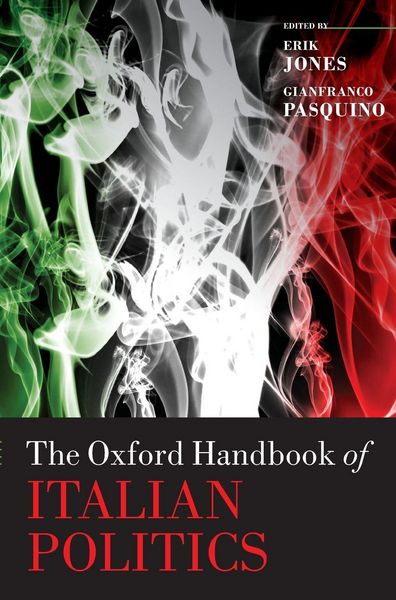
Produktbild: OHB ITALIAN POLITICS OHBK C

OHB ITALIAN POLITICS OHBK C

68,99 €

inkl. gesetzl. MwSt., Versandkostenfrei


Beschreibung

The Oxford Handbook of Italian Politics provides a comprehensive look at the political life of one of Europe's most exciting and turbulent democracies.Under the hegemonic influence of Christian Democracy in the early post-World War II decades, Italy went through a period of rapid growth and political...

Beschreibung

The Oxford Handbook of Italian Politics provides a comprehensive look at the political life of one of Europe's most exciting and turbulent democracies.Under the hegemonic influence of Christian Democracy in the early post-World War II decades, Italy went through a period of rapid growth and political transformation. In part this resulted in tumult and a crisis of governability; however, it also gave rise to innovation in the form of Eurocommunism and new forms of political accommodation. The great strength of Italy lay in its constitution; its great weakness lay in certain legacies of the past. Organized crime - popularly but notexclusively associated with the mafia - is one example. A self-contained and well entrenched 'caste' of political and economic elites is another. These weaknesses became apparent in the breakdown of political order in the late 1980s and early 1990s. This ushered in a combination of populist politicalmobilization and experimentation with electoral systems design, and the result has been more evolutionary than transformative. Italian politics today is different from what it was during the immediate post-World War II period, but it still shows many of the influences of the past.

Produktdetails

Einband

Gebundene Ausgabe

Erscheinungsdatum

05.11.2015

Herausgeber Jones Erik + weitere
Verlag Oxford University Press

Produktdetails

Einband

Gebundene Ausgabe

Erscheinungsdatum

05.11.2015

Herausgeber
Verlag Oxford University Press
Seitenzahl

790

Maße (L/B/H)

25/17,5/4,6 cm

Gewicht

1517 g

Sprache

Englisch

ISBN

978-0-19-966974-5

Herstelleradresse

Libri GmbH
Europaallee 1
36244 Bad Hersfeld
DE

Email: gpsr@libri.de

Noch keine Bewertungen vorhanden

Verfassen Sie die erste Bewertung zu diesem Artikel

Helfen Sie anderen Kundinnen und Kunden durch Ihre Meinung.

Kundinnen und Kunden meinen

Bewertungen (0)

Die Leseprobe wird geladen.
  • Produktbild: OHB ITALIAN POLITICS OHBK C
    • Preface

    • I. Core Concepts

    • 1: James L. Newell: La Classe Dirigente

    • 2: Anthony L. Cardoza: The Risorgimento

    • 3: Marco Valbruzzi: Trasformismo

    • 4: Maurizio Cotta: Partitocracy: Parties and Their Critics in Italian Political Life

    • 5: John A. Davis: A Tale of Two Italies? The 'Southern Question' Past and Present

    • II. Political Institutions

    • 6: Giuliano Amato: The Constitution

    • 7: Gianfranco Pasquino: The Presidents of the Republic

    • 8: Mauro Calise: Government and Prime Minister

    • 9: Salvatore Vassallo: The Parliament

    • 10: Carlo Guarnieri: The Courts

    • 11: Marta Regalia: Electoral Systems

    • 12: Carol Mershon: Party Systems in Post-World War II Italy

    • 13: Simona Piattoni: Bureaucracy

    • III. Political Traditions

    • 14: Gianfranco Baldini: Christian Democracy: The Italian Party

    • 15: Paolo Bellucci: Communists

    • 16: Nicolò Conti: Socialists, Republicans, and Radicals

    • 17: Piero Ignazi: Fascists and Post-fascists

    • 18: Gianluca Passarelli: Populism and the Lega Nord

    • 19: Giovanni Orsina: Liberalism and Liberals

    • IV. Political Periods

    • 20: Paolo Pombeni: Christian Democracy in Power, 1946-1963

    • 21: Ilaria Favretto: The 'Opening to the Left'

    • 22: Stephen Hellman: The Compromesso Storico

    • 23: Martin J. Bull: The Pentapartito

    • 24: Martin Rhodes: Tangentopoli - More than Twenty Years on

    • 25: Jonathan Hopkin: Bipolarity (and After)

    • V. Major Figures

    • 26: Aldo Agosti: Alcide De Gasperi and Palmiro Togliati

    • 27: Valerio Castronovo: Gianni Agnelli and Enrico Mattei

    • 28: Emanuele Bernardi: Aldo Moro and Enrico Berlinguer

    • 29: Antonio Varsori: Bettino Craxi and Giulio Andreotti

    • 30: Mark Donovan and Mark Gilbert: Silvio Berlusconi and Romano Prodi

    • VI. Religion and Politics

    • 31: Alberto Melloni: The Catholic Hierarchy

    • 32: Paolo Acanfora: The Catholic Right

    • 33: Roberto Cipriani and Verónica Roldán: Religious Differentiation and New Religions in Italy

    • 34: Massimo Teodori: The Laity

    • VII. Economic Institutions, Associations, and Interests

    • 35: Chiara Saraceno: Trends and Tensions within the Italian Family

    • 36: Giuseppe Berta: Industry and the Firm

    • 37: Patrick Vesan: Labour Market Policy and Politics

    • 38: Maurizio Ferrera and Matteo Jessoula: The Welfare State: Pensions and Health Care

    • 39: Lucia Quaglia: The Bank of Italy

    • 40: Marino Regini: Trade Unions

    • 41: Carlo Carboni: Liberal and Licensed Professions

    • 42: Vera Zamagni: The Cooperative Movement

    • VIII. Politics, Culture, and Society

    • 43: Stephen Gundle: Cinema and Television

    • 44: Paolo Mancini: Print Media

    • 45: Nadia Urbinati: Intellectuals

    • 46: David Hine: Public Ethics and Political Corruption in Italy

    • 47: Donatella Campus: Women in Politics

    • 48: Giuseppe Sciortino: Immigration

    • 49: Donatella della Porta: Social Movements

    • 50: Anna Cento Bull: Terrorist Movements

    • 51: Letizia Paoli: Mafia, Camorra and 'Ndrangheta

    • IX. External Relations

    • 52: Mario Del Pero: Italy and the Atlantic Alliance

    • 53: Vincent Della Sala: Gli Esami Non Finiscono Mai : Italy and the European Union

    • 54: Roberto Aliboni: Italy and the Mediterranean after WWII