KI-Beratung Beta

Gutscheinbedingungen

**Gültig bis 18.11.2026 auf englischsprachige Klassiker (klassiker-32728) online auf thalia.at und in der Thalia App. Einzelne Artikel können ausgeschlossen sein. Ausgenommen sind preisgebundene Artikel & eBooks. Pro Einkauf einmal einlösbar. Click & Collect nur bei Onlinevorabzahlung möglich. Keine Barauszahlung. Nicht kombinierbar mit anderen Aktionen und Gutscheinen. Gutschein wird auf max. 500€ Bestellwert angerechnet. Nicht gültig für Geschenkkarten, Versandkosten und Services.

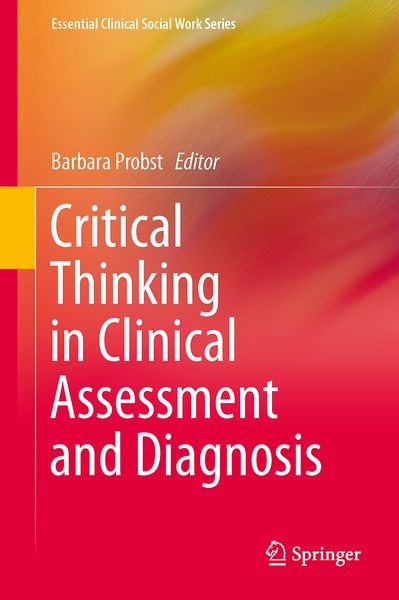
Produktbild: Critical Thinking in Clinical Assessment and Diagnosis

Critical Thinking in Clinical Assessment and Diagnosis

64,99 €

inkl. gesetzl. MwSt., Versandkostenfrei


Beschreibung

"This much-needed volume brings to the clinician or student some of the best critical-minded analysis by some of the most insightful thinkers about psychiatric diagnosis today. The thought-provoking questions these essays raise, and the multifaceted and provocative answers they provide, cultivate sensitivity...

Beschreibung

"This much-needed volume brings to the clinician or student some of the best critical-minded analysis by some of the most insightful thinkers about psychiatric diagnosis today. The thought-provoking questions these essays raise, and the multifaceted and provocative answers they provide, cultivate sensitivity to the nuances of diagnostic assessment that often makes the difference between clinical success and failure." - Jerome C. Wakefield, PhD, DSW, New York University Silver School of Social Work, New York

This transformative resource challenges social workers and mental health professionals to rethink their approaches to assessment and diagnosis from the ground up. Among the book's unique features are its use of diverse lenses to examine a common case and its illustration of how multiple perspectives can be integrated for a richly textured portrait of the individual in context. Equally crucial is the book's commitment to professional development, from exercises to improve case conceptualization to strategies for teaching and learning.

Topics include:

  • The DSM-5 definition of mental disorder: critique and alternatives.
  • Making assessment decisions: macro, mezzo, and micro perspectives.
  • Neuroscience, resilience, and the embodiment of "mental" disorder.
  • Narrative, psychodynamic, and cultural conceptualizations of disorder.
  • Person-centered and contextualized diagnosis in mental health.
  • Meeting the challenge of teaching integrated assessment.

Critical Thinking in Clinical Assessment and Diagnosis has much to offer professionals, researchers, and educators in the fields of social work and mental health.

.

Rezension

"Barbara Probst’s much-needed volume brings to the clinician or student some of the best critical-minded analysis by some of the most insightful thinkers about psychiatric diagnosis today. The authors demonstrate that the complex nature of clinical reality can emerge only through the give and take of critical thinking in the course of assessment. The thought-provoking questions these essays raise, and the multifaceted and provocative answers they provide, cultivate sensitivity to the nuances of diagnostic assessment that often makes the difference between clinical success and failure."
-
Jerome C. Wakefield, PhD, DSW, University Professor and Professor of Social Work, New York University Silver School of Social Work; co-author of The Loss of Sadness: How Psychiatry Transformed Normal Sorrow into Depressive Disorder and All We Have to Fear: Psychiatry's Transformation of Natural Anxieties into Mental Disorders.


"This book is an absolute gift to the social work profession, especially to social work educators who seek scholarly work that can guide students to think critically about clinical assessment and diagnosis. With this collection by many of the brightest and most articulate voices in social work, students and clinicians are invited to better understand and judiciously apply a wide range of theoretical and empirical lenses. This thought-provoking yet practical text is sure to be required in many social work programs."

-Tally Moses, PhD, University of Wisconsin-Madison

Portrait

Barbara Probst, PhD, LCSW, has taught at Hunter College since 2009. She has also taught Behavior and the Social Environment and Clinical Practice at Fordham University since 2005, as well as doctoral-level qualitative research and family theory at Smith College. Dr. Probst has published numerous articles on child and adolescent mental health in scholarly journals and a full-length book (When the Labels Don't Fit, Random House, 2008) on de-pathologizing difference. Dr. Probst is also a licensed clinical social worker with extensive experience working with children and families in schools, mental health agencies, and private practice. Her research focus is on how clinical social workers navigate the diagnostic and contextual paradigms in contemporary practice.  

Produktdetails

Einband

Gebundene Ausgabe

Erscheinungsdatum

19.05.2015

Abbildungen

XVI, 304 p. 3 illus.

Herausgeber Barbara Probst

Produktdetails

Einband

Gebundene Ausgabe

Erscheinungsdatum

19.05.2015

Abbildungen

XVI, 304 p. 3 illus.

Herausgeber Barbara Probst
Verlag Springer
Seitenzahl

304

Maße (L/B/H)

24,1/16/2,3 cm

Gewicht

595 g

Auflage

2015

Sprache

Englisch

ISBN

978-3-319-17773-1

Herstelleradresse

Springer-Verlag KG
Sachsenplatz 4-6
1201 Wien
AT

Email: ProductSafety@springernature.com

Noch keine Bewertungen vorhanden

Verfassen Sie die erste Bewertung zu diesem Artikel

Helfen Sie anderen Kundinnen und Kunden durch Ihre Meinung.

Kundinnen und Kunden meinen

Bewertungen (0)

Die Leseprobe wird geladen.
  • Produktbild: Critical Thinking in Clinical Assessment and Diagnosis
  • Foreword by Stuart A. Kirk.- Introduction: Why This Book is Needed.- Epistemological Issues in Diagnosis and Assessment.- The DSM-5 Definition of Mental Disorder: Critique and Alternatives.- Making Assessment Decisions: Macro, Mezzo, and Micro Perspectives.- Situating Disorder: Mental Disorder in Context.- Neuroscience, Resilience, and the Embodiment of "Mental" Disorder.- The Role of Temperament in Conceptualization of Mental Disorder.- A Psychodynamic Perspective on Assessment and Diagnosis.- Narratives of Illness, Difference, and Personhood.- Person-centered and Contextualized Diagnosis in Mental Health.- Integrating Practice and Research on Mental Disorder.- Meeting the Challenges of Teaching Integrated Assessment.- Assessment and Diagnosis in Action.- Supplementary Material.