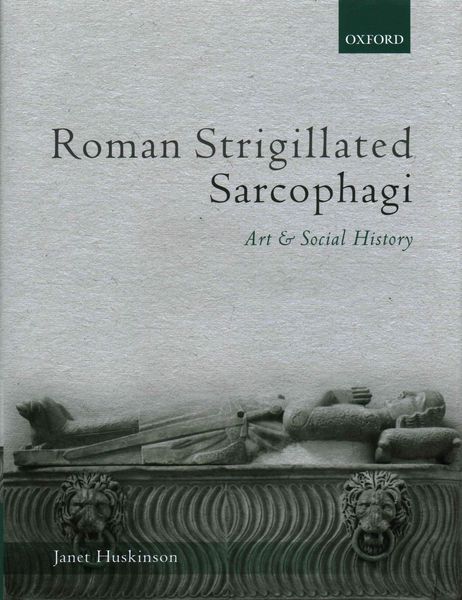
Roman Strigillated Sarcophagi Art and Social History
82,99 €
inkl. gesetzl. MwSt.,
Beschreibung
Produktdetails
Einband
Gebundene Ausgabe
Erscheinungsdatum
05.01.2016
Abbildungen
87 black and white illustrations
Verlag
Oxford University PressSeitenzahl
366
Maße (L/B/H)
25,2/20/2,5 cm
Gewicht
999 g
Sprache
Englisch
ISBN
978-0-19-920324-6
The first part of the volume examines aspects of their manufacture, use, and viewing, emphasizing distinctive features. The second part looks at the figured representations carved on the sarcophagi, and at their social significance and creativity, concentrating on how their various arrangements allowed viewers to develop their own interpretations. The subjects represented by the figures and the flexibility with which they might be read, provide invaluable insights into how Romans thought about life and death during these changing times.
The final part of the volume surveys how later societies responded to Roman strigillated sarcophagi. From as early as the fifth century AD their distinctive decoration and allusions to the Roman past made them especially attractive for reuse in particular contemporary contexts, notably for elite burials and the decoration of prominent buildings. The motif of curved fluting was also adopted and adapted: it decorated neo-classical memorials to Captain Cook, Napoleon's sister-in-law Christine Boyer, and Penelope Boothby, and its use continues into this century, well over one and a half millennia since it first decorated Roman sarcophagi.
Noch keine Bewertungen vorhanden
Verfassen Sie die erste Bewertung zu diesem Artikel
Helfen Sie anderen Kundinnen und Kunden durch Ihre Meinung.
Kurze Frage zu unserer Seite
Vielen Dank für Ihr Feedback
Wir nutzen Ihr Feedback, um unsere Produktseiten zu verbessern. Bitte haben Sie Verständnis, dass wir Ihnen keine Rückmeldung geben können. Falls Sie Kontakt mit uns aufnehmen möchten, können Sie sich aber gerne an unseren Kund*innenservice wenden.
zum Kundenservice