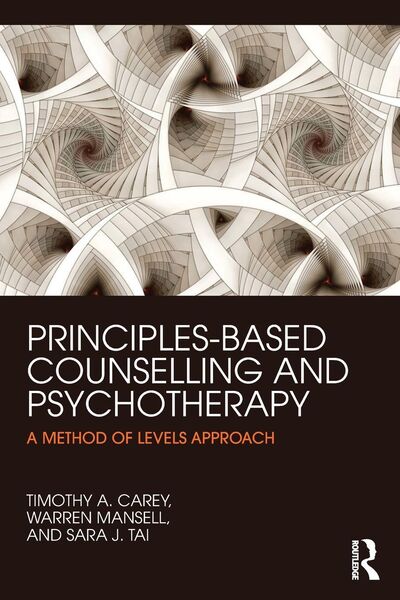
Principles-Based Counselling and Psychotherapy A Method of Levels approach
-
- Hardcover
- Taschenbuch ausgewählt
- eBook
-
Sprache:Englisch
51,99 €
inkl. gesetzl. MwSt.,
Beschreibung
Produktdetails
Einband
Taschenbuch
Erscheinungsdatum
05.06.2015
Abbildungen
5 SW-Abb., 1 Tabellen
Verlag
Taylor & FrancisSeitenzahl
186
Maße (L/B/H)
23,4/15,6/1 cm
Gewicht
292 g
Sprache
Englisch
ISBN
978-0-415-73878-1
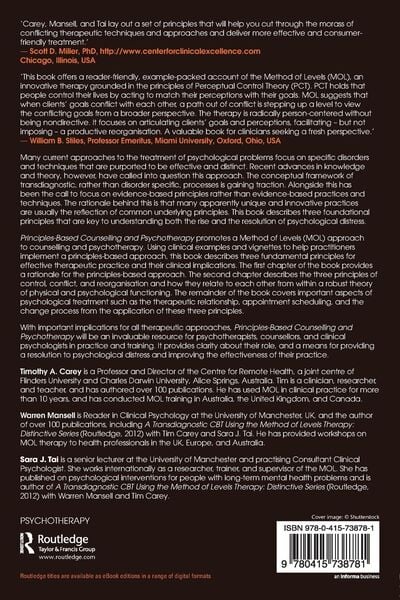
Many current approaches to the treatment of psychological problems focus on specific disorders and techniques that are purported to be effective and distinct. Recent advances in knowledge and theory, however, have called into question this approach. The conceptual framework of transdiagnostic, rather than disorder specific, processes is gaining traction. Alongside this has been the call to focus on evidence-based principles rather than evidence-based practices and techniques. The rationale behind this is that many apparently unique and innovative practices are usually the reflection of common underlying principles. This book describes three foundational principles that are key to understanding both the rise and the resolution of psychological distress.
Principles-Based Counselling and Psychotherapy promotes a Method of Levels (MOL) approach to counselling and psychotherapy. Using clinical examples and vignettes to help practitioners implement a principles-based approach, this book describes three fundamental principles for effective therapeutic practice and their clinical implications. The first chapter of the book provides a rationale for the principles-based approach. The second chapter describes the three principles of control, conflict, and reorganisation and how they relate to each other from within a robust theory of physical and psychological functioning. The remainder of the book covers important aspects of psychological treatment such as the therapeutic relationship, appointment scheduling, and the change process from the application of these three principles.
With important implications for all therapeutic approaches, Principles-Based Counselling and Psychotherapy will be an invaluable resource for psychotherapists, counsellors and clinical psychologists in practice and training. It provides clarity about their role, and a means for providing a resolution to psychological distress and improving the effectiveness of their practice.
Noch keine Bewertungen vorhanden
Verfassen Sie die erste Bewertung zu diesem Artikel
Helfen Sie anderen Kundinnen und Kunden durch Ihre Meinung.
Kurze Frage zu unserer Seite
Vielen Dank für Ihr Feedback
Wir nutzen Ihr Feedback, um unsere Produktseiten zu verbessern. Bitte haben Sie Verständnis, dass wir Ihnen keine Rückmeldung geben können. Falls Sie Kontakt mit uns aufnehmen möchten, können Sie sich aber gerne an unseren Kund*innenservice wenden.
zum Kundenservice