Gutscheinbedingungen

**Gültig bis 25.06.2026 auf fremdsprachige Bücher online auf thalia.at und in der Thalia App. Einzelne Artikel können ausgeschlossen sein. Ausgenommen sind preisgebundene Artikel & eBooks. Pro Einkauf einmal einlösbar. Click & Collect nur bei Onlinevorabzahlung möglich. Keine Barauszahlung. Nicht kombinierbar mit anderen Aktionen und Gutscheinen. Gutschein wird auf max. 500€ Bestellwert angerechnet. Nicht gültig für Geschenkkarten, Versandkosten und Services.

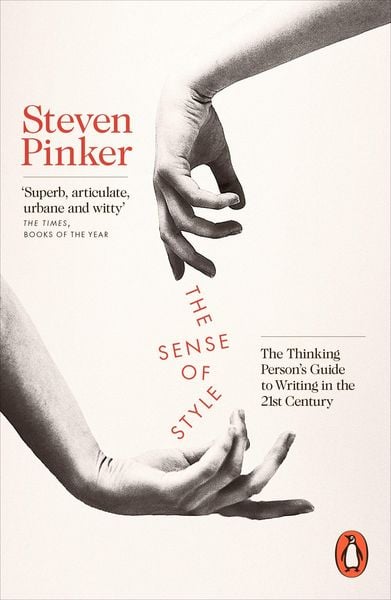
  • Produktbild: The Sense of Style
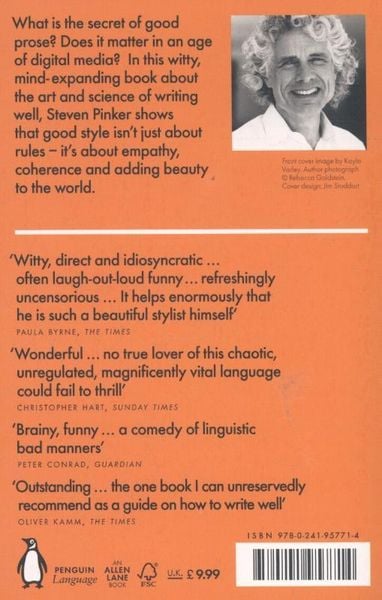
  • Produktbild: The Sense of Style

The Sense of Style The Thinking Person's Guide to Writing in the 21st Century

1

15,79 €

inkl. gesetzl. MwSt., zzgl. Versandkosten


  • Kostenlose Lieferung ab 30 € Einkaufswert
  • Versandkostenfrei für Bonuscard-Kund*innen

Beschreibung

Produktdetails

Verkaufsrang

21665

Einband

Taschenbuch

Erscheinungsdatum

03.09.2015

Verlag

Penguin Books Ltd

Seitenzahl

368

Maße (L/B/H)

19,9/13,1/2,4 cm

Gewicht

274 g

Sprache

Englisch

ISBN

978-0-241-95771-4

Beschreibung

Produktdetails

Verkaufsrang

21665

Einband

Taschenbuch

Erscheinungsdatum

03.09.2015

Verlag

Penguin Books Ltd

Seitenzahl

368

Maße (L/B/H)

19,9/13,1/2,4 cm

Gewicht

274 g

Sprache

Englisch

ISBN

978-0-241-95771-4

Herstelleradresse

Libri GmbH
Europaallee 1
36244 Bad Hersfeld
DE

Email: gpsr@libri.de

Kundinnen und Kunden meinen

1 Bewertungen

Informationen zu Bewertungen

Zur Abgabe einer Bewertung ist eine Anmeldung im Konto notwendig. Die Authentizität der Bewertungen wird von uns nicht überprüft. Wir behalten uns vor, Bewertungstexte, die unseren Richtlinien widersprechen, entsprechend zu kürzen oder zu löschen.

Die Bewertungen sind nach Format, Anzahl Sterne und Datum sortiert.

5 Sterne

(0)

4 Sterne

(1)

3 Sterne

(0)

2 Sterne

(0)

1 Sterne

(0)

Only for those, who want to write a book themselves...

Bewertung aus Zofingen am 10.03.2022

Bewertungsnummer: 1672501

Bewertet: Buch (Gebundene Ausgabe)

I must admit that as a non-native speaker, reading this book, I reached the limits and limitations of my English knowledge not just once. In particular with the sometimes trivial examples of weird sentences. Sentences I would never use. So for me it was hard work getting through the book. An interesting read though. One can imagine a worse teacher of language and its difficulties. Steven Pinker presents himself as an obnoxious guy, who attacks joyfully the nightmare folks, who read your stuff not because of their being interested in its content, but because they try to seek out spelling and grammar mistakes so they can make you feel awkward and silly: ‘the Gotcha Gang’, as Pinker calls them. And Mr. Pinker not only knows ‘his’ tribe, but he also knows, what he is talking about. An interesting read, as said. It is to be handled with care though: Writing is putting your thoughts on paper in a way that it is understandable for everybody. And of course it is smarter to follow good advice. This book of rules carries a danger in itself, though, i.e. that following the endless list of rules you might be scared away from writing. That would be contra-productive. One should be aware that there is a kind of ‘Gotcha Gang’ out there and one should be aware therefore that, as a writer, one has the obligation to put his thoughts on paper with care. But at the same time one should not be paralyzed by this threat: Just know that if it is not ‘The Gotcha Gang’, who makes fun of you, it is Steven Pinker, who has some comments on your style, your spelling or your use of grammar. As for the Gangbang ‘who cares?’, regarding remarks of professor Pinker: ‘face it, think it over and - in any case - correct it’, would be my advice. But always remember Theodore Roosevelt’s saying “It is not the critic who counts; not the man who points out how the strong man stumbles, or where the doer of deeds could have done them better. The credit belongs to the man who is actually in the arena, whose face is marred by dust and sweat and blood; who strives valiantly; who errs, who comes short again and again, because there is no effort without error and shortcoming; but who does actually strive to do the deeds; who knows great enthusiasms, the great devotions; who spends himself in a worthy cause; who at the best knows in the end the triumph of high achievement, and who at the worst, if he fails, at least fails while daring greatly, so that his place shall never be with those cold and timid souls who neither know victory nor defeat.”

Only for those, who want to write a book themselves...

Bewertung aus Zofingen am 10.03.2022
Bewertungsnummer: 1672501
Bewertet: Buch (Gebundene Ausgabe)

I must admit that as a non-native speaker, reading this book, I reached the limits and limitations of my English knowledge not just once. In particular with the sometimes trivial examples of weird sentences. Sentences I would never use. So for me it was hard work getting through the book. An interesting read though. One can imagine a worse teacher of language and its difficulties. Steven Pinker presents himself as an obnoxious guy, who attacks joyfully the nightmare folks, who read your stuff not because of their being interested in its content, but because they try to seek out spelling and grammar mistakes so they can make you feel awkward and silly: ‘the Gotcha Gang’, as Pinker calls them. And Mr. Pinker not only knows ‘his’ tribe, but he also knows, what he is talking about. An interesting read, as said. It is to be handled with care though: Writing is putting your thoughts on paper in a way that it is understandable for everybody. And of course it is smarter to follow good advice. This book of rules carries a danger in itself, though, i.e. that following the endless list of rules you might be scared away from writing. That would be contra-productive. One should be aware that there is a kind of ‘Gotcha Gang’ out there and one should be aware therefore that, as a writer, one has the obligation to put his thoughts on paper with care. But at the same time one should not be paralyzed by this threat: Just know that if it is not ‘The Gotcha Gang’, who makes fun of you, it is Steven Pinker, who has some comments on your style, your spelling or your use of grammar. As for the Gangbang ‘who cares?’, regarding remarks of professor Pinker: ‘face it, think it over and - in any case - correct it’, would be my advice. But always remember Theodore Roosevelt’s saying “It is not the critic who counts; not the man who points out how the strong man stumbles, or where the doer of deeds could have done them better. The credit belongs to the man who is actually in the arena, whose face is marred by dust and sweat and blood; who strives valiantly; who errs, who comes short again and again, because there is no effort without error and shortcoming; but who does actually strive to do the deeds; who knows great enthusiasms, the great devotions; who spends himself in a worthy cause; who at the best knows in the end the triumph of high achievement, and who at the worst, if he fails, at least fails while daring greatly, so that his place shall never be with those cold and timid souls who neither know victory nor defeat.”

Kundinnen und Kunden meinen

Pinker, S: Sense of Style

von Steven Pinker

0 Bewertungen filtern

Weitere Artikel finden Sie in

Die Leseprobe wird geladen.
  • Produktbild: The Sense of Style
  • Produktbild: The Sense of Style