KI-Beratung Beta

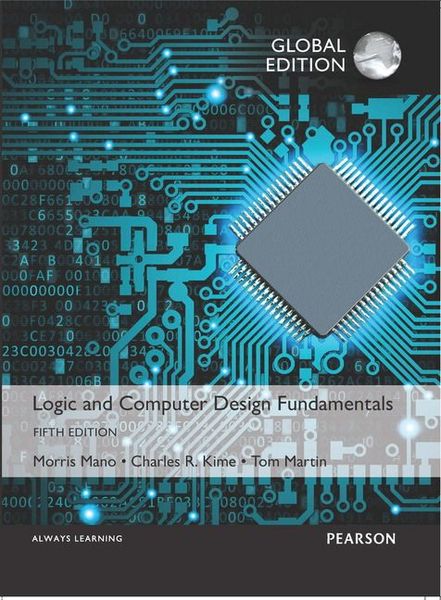
Produktbild: Logic and Computer Design Fundamentals, Global Edition

Logic and Computer Design Fundamentals, Global Edition

109,99 €

inkl. gesetzl. MwSt., Versandkostenfrei


Beschreibung

Produktdetails

Einband

Taschenbuch

Erscheinungsdatum

28.08.2015

Verlag

Pearson Studium

Seitenzahl

672

Maße (L/B/H)

23,5/17,8/3,6 cm

Gewicht

952 g

Auflage

5

Sprache

Englisch

ISBN

978-1-292-09607-0

Beschreibung

Produktdetails

Einband

Taschenbuch

Erscheinungsdatum

28.08.2015

Verlag

Pearson Studium

Seitenzahl

672

Maße (L/B/H)

23,5/17,8/3,6 cm

Gewicht

952 g

Auflage

5

Sprache

Englisch

ISBN

978-1-292-09607-0

Herstelleradresse

Pearson
St.-Martin-Straße 82
81541 München
DE

Email: salesde@pearson.com

Noch keine Bewertungen vorhanden

Verfassen Sie die erste Bewertung zu diesem Artikel

Helfen Sie anderen Kundinnen und Kunden durch Ihre Meinung.

Kundinnen und Kunden meinen

Bewertungen (0)

  • Produktbild: Logic and Computer Design Fundamentals, Global Edition
    • 1. Digital Systems and Information
    • 1-1 Information Representation
    • 1-2 Abstraction Layers in Computer Systems Design
    • 1-3 Number Systems
    • 1-4 Arithmetic Operations
    • 1-5 Decimal Codes
    • 1-6 Alphanumeric Codes
    • 1-7 Gray Codes
    • 1-8 Chapter Summary
    •  
    • 2. Combinational Logic Circuits
    • 2-1 Binary Logic and Gates
    • 2-2 Boolean Algebra
    • 2-3 Standard Forms
    • 2-4 Two-Level Circuit Optimization
    • 2-5 Map Manipulation
    • 2-6 Exclusive-OR Operator and Gates
    • 2-7 Gate Propagation Delay
    • 2-8 Hardware Description Languages Overview
    • 2-9 HDL Representations—VHDL
    • 2-10 HDL Represenations—Verilog
    • 2-11 Chapter Summary
    •  
    • 3. Combinational Logic Design
    • 3-1 Beginning Hierarchical Design
    • 3-2 Technology Mapping
    • 3-3 Combinational Functional Blocks
    • 3-4 Rudimentary Logic Functions
    • 3-5 Decoding
    • 3-6 Encoding
    • 3-7 Selecting
    • 3-8 Iterative Combinational Circuits
    • 3-9 Binary Adders
    • 3-10 Binary Subtraction
    • 3-11 Binary Adder-Subtractors
    • 3-12 Other Arithmetic Functions
    • 3-13 Chapter Summary
    •  
    • 4. Sequential Circuits
    • 4-1 Sequential Circuit Definitions
    • 4-2 Latches
    • 4-3 Flip-Flops
    • 4-4 Sequential Circuit Analysis
    • 4-5 Sequential Circuit Design
    • 4-6 State-machine Diagrams and Applications
    • 4-7 HDL Representation for Sequential Circuits—VHDL
    • 4-8 HDL Representation for Sequential Circuits—Verilog
    • 4-9 Flip-Flop Timing
    • 4-10 Sequential Circuit Timing
    • 4-11 Asynchronous Interactions
    • 4-12 Synchronization and Metastability
    • 4-13 Synchronous Circuit Pitfalls
    • 4-14 Chapter Summary
    •  
    • 5. Digital Hardware Implementation
    • 5-1 The Design Space
    • 5-2 Programmable Implementation Technologies
    • 5-3 Chapter Summary
    •  
    • 6. Registers and Register Transfers
    • 6-1 Registers and Load Enable
    • 6-2 Register Transfers
    • 6-3 Register Transfer Operations
    • 6-4 Register Transfers in VHDL and Verilog
    • 6-5 Microoperations
    • 6-6 Microoperations on a Single Register
    • 6-7 Register-Cell Design
    • 6-8 Multiplexer and Bus-Baed Transfers for Multiple Registers
    • 6-9 Serial Transfer and Microoperations
    • 6-10 Control of Register Transfers
    • 6-11 HDL Representation for Shift Registers and Counters—VHDL
    • 6-12 HDL Representation for Shift Registers and Counters—Verilog
    • 6-13 Microprogrammed Control
    • 6-15 Chapter Summary
    •  
    • 7. Memory Basics
    • 7-1 Memory Definitions
    • 7-2 Random-Access Memory
    • 7-3 SRAM Integrated Circuits
    • 7-4 Array of SRAM ICs
    • 7-5 DRAM ICs
    • 7-6 DRAM Types
    • 7-7 Arrays of Dynamic RAM ICs
    • 7-8 Chapter Summary
    •  
    • 8. Computer Design Basics
    • 8-1  Computer Design Basics
    • 8-2 Datapaths
    • 8-3 The Arithmetic/Logic Unit
    • 8-4 The Shifter