KI-Beratung Beta

Gutscheinbedingungen

**Gültig am 27.11.2026 auf Spielzeug, Schreibwaren, Filme, Geschenke & Trends, Musik, tolino eReader & Zubehör, Hörbücher und Hörbuch-Downloads, nicht preisgebundene Bücher und Kalender online auf thalia.at und in der Thalia App. Einzelne Artikel können ausgeschlossen sein. Aufgrund der Buchpreisbindung sind deutschsprachige Bücher und eBooks ausgenommen. Zusätzlich ausgenommen sind Abos & Flatrates, Games, Geschenkkarten/-boxen, Shelfies, Software, Zeitschriften sowie einzelne Artikel von tonies®. Pro Einkauf einmal einlösbar. Click & Collect nur bei Onlinevorabzahlung möglich. Keine Barauszahlung. Nicht kombinierbar mit anderen Aktionen und Gutscheinen. Gutschein wird auf max. 500€ Bestellwert angerechnet. Nicht gültig für Versandkosten und Services.

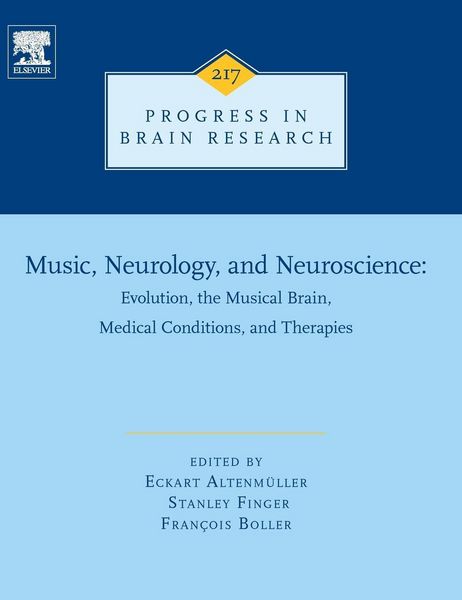
Produktbild: Music, Neurology, and Neuroscience

Music, Neurology, and Neuroscience Evolution, the Musical Brain, Medical Conditions, and Therapies

211,99 €

inkl. gesetzl. MwSt., Versandkostenfrei


Beschreibung

Did you ever ask whether music makes people smart, why a Parkinson patient's gait is improved with marching tunes, and whether Robert Schumann was suffering from schizophrenia or Alzheimer's disease? This broad but comprehensive book deals with history and new discoveries about music and the brain. It...

Beschreibung

Did you ever ask whether music makes people smart, why a Parkinson patient's gait is improved with marching tunes, and whether Robert Schumann was suffering from schizophrenia or Alzheimer's disease? This broad but comprehensive book deals with history and new discoveries about music and the brain. It provides a multi-disciplinary overview on music processing, its effects on brain plasticity, and the healing power of music in neurological and psychiatric disorders. In this context, the disorders the plagued famous musicians and how they affected both performance and composition are critically discussed, and music as medicine, as well as music as a potential health hazard are examined. Among the other topics covered are: how music fit into early conceptions of localization of function in the brain, the cultural roots of music in evolution, and the important roles played by music in societies and educational systems.

Portrait

François Boller, M.D., Ph.D. has been co-Series Editor of the Handbook of Clinical Neurology since 2002. He.is a board-certified neurologist currently Professor of Neurology at the George Washington University Medical School (GW) in Washington, DC. He was born in Switzerland and educated in Italy where he obtained a Medical Degree at the University of Pisa. After specializing in Neurology at the University of Milan, Dr. Boller spent several years at the Boston VA and Boston University Medical School, including a fellowship under the direction of Dr. Norman Geschwind. He obtained a Ph.D. in Experimental Psychology from Case Western Reserve University in Cleveland, Ohio where he was in charge of Neuroscience teaching at the Medical School and was nominated Teacher of the Year. In 1983, Dr. Boller became Professor of Neurology and Psychiatry at the University of Pittsburgh where he founded and directed one of the first NIH funded Alzheimer Disease Research Centers in the country. In 1989, he was put in charge of a Paris-based INSERM Unit dedicated to the neuropsychology and neurobiology of cerebral aging. He returned to the United States and joined the NIH in 2005, before coming to GW in July 2014.

Dr. Boller's initial area of interest was aphasia and related disorders; he later became primarily interested in cognitive disorders and dementia with emphasis on the correlates of cognitive disorders with pathology, neurophysiology and imaging. He was one of the first to study the relation between Parkinson and Alzheimer disease, two processes that were thought to be unrelated. His current area of interest is Alzheimer's disease and related disorders with emphasis on the early and late stages of the disease. He is also interested in the history of Neurosciences and is Past President of the International Society for the History of Neurosciences. He was the founding Editor-in-Chief of the European Journal of Neurology, the official Journal of the European Federation of Neurological Societies (now European Academy of Neurology). He is a Fellow of the American Academy of Neurology and a member of the American Neurological Association. In addition, he has chaired Committees within the International Neuropsychological Society, the International Neuropsychology Symposium, and the World Federation of Neurology (WFN). He has authored over 200 papers and books including the Handbook of Neuropsychology (Elsevier).

Produktdetails

Einband

Gebundene Ausgabe

Erscheinungsdatum

19.02.2015

Herausgeber Eckart Altenmüller + weitere
Verlag Elsevier Science & Technology

Produktdetails

Einband

Gebundene Ausgabe

Erscheinungsdatum

19.02.2015

Herausgeber
Verlag Elsevier Science & Technology
Seitenzahl

294

Maße (L/B/H)

24,4/19,7/2,2 cm

Gewicht

720 g

Sprache

Englisch

ISBN

978-0-444-63551-8

Noch keine Bewertungen vorhanden

Verfassen Sie die erste Bewertung zu diesem Artikel

Helfen Sie anderen Kundinnen und Kunden durch Ihre Meinung.

Kundinnen und Kunden meinen

Bewertungen (0)

Die Leseprobe wird geladen.
  • Produktbild: Music, Neurology, and Neuroscience
    1. Darwin and Spencer on the Origin of Music: Is Music the Food of Love?
    2. Kim Kleinman

    3. Music Evolution and Neuroscience
    4. Charles T. Snowdon

    5. Musicians and Music Making as a Model for the Study of Brain Plasticity
    6. Gottfried Schlaug

    7. Expert Music Performance: Cognitive, Neural, and Developmental Bases
    8. Robert J. Zatorre

    9. Apollo's Curse - Neurological Causes of Motor Impairments in Musicians
    10. Eckart Altenmüller

    11. Music and Its Association with Epileptic Disorders
    12. Melissa Maguire

    13. Treatment and Prevention of Music Performance Anxiety
    14. Claudia Spahn

    15. Music as Therapy in Early History
    16. Michael H. Thaut

    17. An Enlightenment Proposal for Music Therapy: Richard Brocklesby on Music, Spirit and the Passions
    18. Penelope Gouk

    19. Neurological Implications and Neuropsychological Considerations on Folk Music and Dance
    20. Michele Augusto Riva

    21. Music and Dementia
    22. Séverine Samson

    23. Apollo's Gift: New Aspects of Neurologic Music Therapy
    24. Gottfried Schlaug

    25. The Discovery of Human Auditory-Motor Entrainment and Its Role in the Development of Neurologic Music Therapy

      Michael H. Thaut