
Gutscheinbedingungen

**Gültig bis 06.07.2026 auf fremdsprachige Bücher online auf thalia.at, in der Thalia App ab einem Mindestbestellwert von 30€ und in allen Thalia Buchhandlungen in Österreich. In den Buchhandlungen nur gültig auf lagernde Ware. Einzelne Artikel können ausgeschlossen sein. Ausgenommen sind preisgebundene Artikel & eBooks. Pro Einkauf einmal einlösbar. Nur gültig gegen Vorlage oder im Onlineshop hinterlegter Bonuscard. Infos zur Einlösung in der Buchhandlung sind auf der Bonuscard-Vorteilspreisseite zu finden. Click & Collect nur bei Onlinevorabzahlung möglich. Keine Einlösung bei Scan & Go-Bezahlung. Keine Barauszahlung. Nicht kombinierbar mit anderen Aktionen und Gutscheinen. Gutschein wird auf max. 500€ Bestellwert angerechnet. Nicht gültig für Versandkosten und Services.

  • Produktbild: Post-Genomic Perspectives in Modeling and Control of Breathing
  • Produktbild: Post-Genomic Perspectives in Modeling and Control of Breathing
Band 551 - 12%

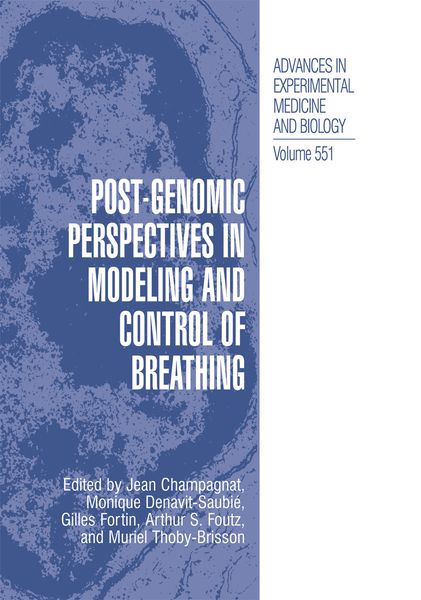
Post-Genomic Perspectives in Modeling and Control of Breathing

12% sparen

192,99 € UVP 219,99 €

inkl. gesetzl. MwSt., Versandkostenfrei


Beschreibung

Produktdetails

Einband

Taschenbuch

Erscheinungsdatum

16.12.2014

Herausgeber

Jean Champagnat + weitere

Verlag

Springer Us

Seitenzahl

342

Maße (L/B/H)

25,4/17,8/2 cm

Gewicht

684 g

Auflage

2005

Sprache

Englisch

ISBN

978-1-4899-7342-9

Beschreibung

Produktdetails

Einband

Taschenbuch

Erscheinungsdatum

16.12.2014

Herausgeber

Verlag

Springer Us

Seitenzahl

342

Maße (L/B/H)

25,4/17,8/2 cm

Gewicht

684 g

Auflage

2005

Sprache

Englisch

ISBN

978-1-4899-7342-9

Herstelleradresse

Libri GmbH
Europaallee 1
36244 Bad Hersfeld
DE

Email: gpsr@libri.de

Noch keine Bewertungen vorhanden

Verfassen Sie die erste Bewertung zu diesem Artikel

Helfen Sie anderen Kundinnen und Kunden durch Ihre Meinung.

Kundinnen und Kunden meinen

Bewertungen (0)

  • Produktbild: Post-Genomic Perspectives in Modeling and Control of Breathing
  • Produktbild: Post-Genomic Perspectives in Modeling and Control of Breathing
  • Views on the Human Breathing Behavior.- Different Profile in Ventilatory vs. Respiratory Sensation Responses to CO2 with Varying Po2.- Amygdala and Emotional Breathing in Humans.- Immediate Effects of Bilateral Carotid Body Resection on Total Respiratory Resistance and Compliance in Humans.- Memories of Yoshiyuki Honda, MD, PhD.- Memories of Dr. Yoshiyuki Honda.- Mechanisms of Central and Carotid Bodies Chemoreception.- Chemosensory Control of the Respiratory Function.- Brainstem NHE-3 Expression and Control of Breathing.- Functional Connection From the Surface Chemosensitive Region to the Respiratory Neuronal Network in the Rat Medulla.- Chemosensory Inputs and Neural Remodeling in Carotid Body and Brainstem Catecholaminergic Cells.- Role of Fe2+ in Oxygen Sensing in the Carotid Body.- Ventilatory Responsiveness to CO2 Above & Below Eupnea: Relative Importance of Peripheral Chemoreception.- Carotid Body Tumors in Humans Caused by a Mutation in the Gene for Succinate Dehydrogenase D (SDHD).- A SIDS-Like Phenotype is Associated With Reduced Respiratory Chemoresponses in PACAP Deficient Neonatal Mice.- Selective Alteration of the Ventilatory Response to Hypoxia Results from Mutation in the Myelin Proteolipid Protein Gene.- From Neurons to Neural Assemblies: Brainstem Control of Rhythm Generation.- Organization of Central Pathways Mediating the Hering-Breuer Reflex and Carotid Chemoreflex.- Converging Functional and Anatomical Evidence for Novel Brainstem Respiratory Compartments in the Rat.- Eupneic Respiratory Rhythm in Awake Goats is Dependent on an Intact Pre-Bötzinger Complex.- BDNF Preferentially Targets Membrane Properties of Rhythmically Active Neurons in the pre-Bötzinger Complex in Neonatal Mice.- Ionic Currents and Endogenous Rhythm Generation in the pre-Bötzinger Complex: Modelling and In Vitro Studies.- Modulation of Inspiratory Inhibition of the Bötzinger Complex by Raphe Pallidus and Locus Coeruleus in Rabbits.- Behavioural Control of Breathing in Mammals: Role of the Midbrain Periaqueductal Gray.- Breathing at Birth: Influence of Early Developmental Events.- From Molecular to Integrated Neural Control of Breathing.- A Dual-Role Played by Extracellular ATP in Frequency-Filtering of the Nucleus Tractus Solltarii Network.- Role of GABA in Central Respiratory Control Studied in Mice Lacking GABA-Synthesizing Enzyme 67-kDa Isoform of Glutamic Acid Decarboxylase.- Breathing Without Acetylcholinesterase.- In-Silico Model of NMDA and Non-NMDA Receptor Activities Using Analog Very-Large-Scale Integrated Circuits.- Respiratory Role of Ionotropic Glutamate Receptors in the Rostral Ventral Respiratory Group of the Rabbit.- Serotonergic Receptors and Effects in Hypoglossal and Laryngeal Motoneurons.- Modelling Respiratory Rhythmogenesis: Focus on Phase Switching Mechanisms.- Respiratory Activity During Sleep and Anesthesia.- Ventilatory Instability Induced by Selective Carotid Body Inhibition in the Sleeping Dog.- Stability Analysis of the Respiratory Control System During Sleep.- A Physical Model of Inspiratory Flow Limitation in Awake Healthy Subjects.- Antioxidants Prevent Blunting of Hypoxic Ventilatory Response by Low-Dose Halothane.- Mechanism of Propofol-Induced Central Respiratory Depression in Neonatal Rats.- Interaction of Arousal States with Depression of Acute Hypoxic Ventilatory Response by 0.1 MAC Halothane.- Cardio-Respiratory Regulations and Cerebral Blood Flow.- Relationship Between Ventilatory and Circulatory Responses to Sustained Mild Hypoxia in Humans.- Respiratory, Cerebrovascular and Pressor Responses to Acute Hypoxia: Dependency on Pet Co 2.- Can Cardiogenic Oscillations Provide an Estimate of Chest Wall Mechanics?.- Nonlinear Modeling of the Dynamic Effects of Arterial Pressure and Blood Gas Variations on Cerebral Blood Flow in Healthy Humans.- Ventilatory Response to Exercise.- Mixed Venous CO2 and Ventilation During Exercise and CO2-Rebreathing in Humans.- Effects of Pain and Audiovisual Stimulation on the Hypoxic Ventllatory Response.- Effect of Progressive Hypoxia with Moderate Hypercapnia on Ventilatory vs. Respiratory Sensation Responses in Humans.- Frequency Response of the Input Reaching the Respiratory Centres During Moderate Intensity Exercise.- Variability and Plasticity of Breathing.- Effects of Resistive Loading on Breathing Variability.- Effects of Intermittent Hypoxic Training and Detraining on Ventilatory Chemosensitive Adaptations in Endurance Athletes.- Effects of 5 Consecutive Nocturnal Hypoxic Exposures on Respiratory Control and Hematogenesis in Humans.- Memory, Reconsolidation and Extinction in Lymnaea Require the Soma of RPeD1.- Conclusions and Perspectives.- Modeling and Control of Breathing: Perspectives from Pre- to Post-Genomic Era.- Post-Genomic Perspectives in Modeling and Control of Breathing.