KI-Beratung Beta

Gutscheinbedingungen

**Gültig bis 18.11.2026 auf englischsprachige Klassiker (klassiker-32728) online auf thalia.at und in der Thalia App. Einzelne Artikel können ausgeschlossen sein. Ausgenommen sind preisgebundene Artikel & eBooks. Pro Einkauf einmal einlösbar. Click & Collect nur bei Onlinevorabzahlung möglich. Keine Barauszahlung. Nicht kombinierbar mit anderen Aktionen und Gutscheinen. Gutschein wird auf max. 500€ Bestellwert angerechnet. Nicht gültig für Geschenkkarten, Versandkosten und Services.

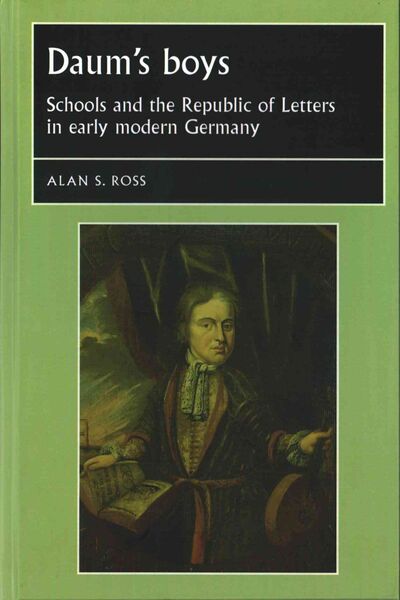
Produktbild: Daum's boys

Daum's boys Schools and the Republic of Letters in early modern Germany

144,99 €

inkl. gesetzl. MwSt., Versandkostenfrei


Beschreibung

The first English language in-depth study of a footsoldier of the seventeenth-century Republic of Letters. Its subject, the German polymath and schoolteacher Christian Daum, left behind one of the largest private archives of any early modern European scholar.

Beschreibung

The first English language in-depth study of a footsoldier of the seventeenth-century Republic of Letters. Its subject, the German polymath and schoolteacher Christian Daum, left behind one of the largest private archives of any early modern European scholar.

Produktdetails

Einband

Gebundene Ausgabe

Erscheinungsdatum

01.04.2015

Abbildungen

Illustrations, black & white

Verlag Ingram Publishers Services

Produktdetails

Einband

Gebundene Ausgabe

Erscheinungsdatum

01.04.2015

Abbildungen

Illustrations, black & white

Verlag Ingram Publishers Services
Seitenzahl

256

Maße (L/B/H)

24/16,1/2 cm

Gewicht

549 g

Sprache

Englisch

ISBN

978-0-7190-9089-9

Herstelleradresse

Libri GmbH
Europaallee 1
36244 Bad Hersfeld
DE

Email: gpsr@libri.de

Noch keine Bewertungen vorhanden

Verfassen Sie die erste Bewertung zu diesem Artikel

Helfen Sie anderen Kundinnen und Kunden durch Ihre Meinung.

Kundinnen und Kunden meinen

Bewertungen (0)

Die Leseprobe wird geladen.
  • Produktbild: Daum's boys
  • Introduction 1. 'A veritable gem': culture, authority and education in early modern Zwickau 2. The finished scholar: convincing oneself and convincing others 3. The virtues of diversity: pedagogical innovation and contested curricula 4. The pupils: educational strategies and social mobility 5. Violent aspirations: pupils' transgression and the spectre of university 6. Networks, patronage and exploitation: correspondence and the next generation of scholars Conclusion: Civic communities, humanist education and the 'Age of Enlightenment' Appendices Bibliography Index