KI-Beratung Beta

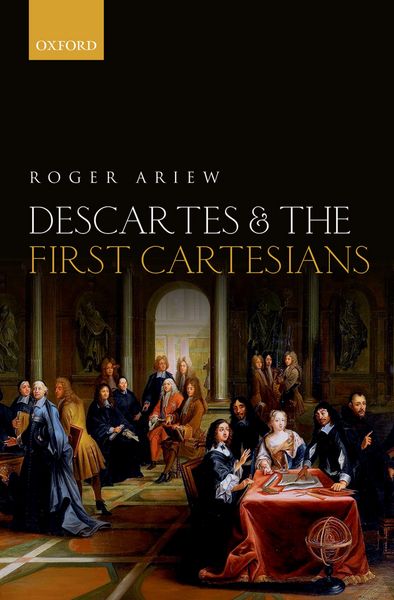
Produktbild: Descartes and the First Cartesians

Descartes and the First Cartesians

92,60 €

inkl. gesetzl. MwSt.

Beschreibung

Descartes and the First Cartesians adopts the perspective that we should not approach René Descartes as a solitary thinker, but as a philosopher who constructs a dialogue with his contemporaries, so as to engage them and elements of his society into his philosophical enterprise. Roger Ariew argues that...

Beschreibung

Descartes and the First Cartesians adopts the perspective that we should not approach René Descartes as a solitary thinker, but as a philosopher who constructs a dialogue with his contemporaries, so as to engage them and elements of his society into his philosophical enterprise. Roger Ariew argues that an important aspect of this engagement concerns the endeavor to establish Cartesian philosophy in the Schools, that is, to replace Aristotle as the authority there. Descartes wrote the Principles of Philosophy as something of a rival to Scholastic textbooks, initially conceiving the project as a comparison of his philosophy and that of the Scholastics. Still, what Descartes produced was inadequate for the task. The topics of Scholastic textbooks ranged more broadly than those of Descartes; they usually had quadripartite arrangements mirroring the structure of the collegiate curriculum, divided as they typically were into logic, ethics, physics, and metaphysics. But Descartes produced at best only what could be called a general metaphysics and a partial physics. These deficiencies in the Cartesian program and in its aspiration to replace Scholastic philosophy in the schools caused the Cartesians to rush in to fill the voids. The attempt to publish a Cartesian textbook that would mirror what was taught in the schools began in the 1650s with Jacques Du Roure and culminated in the 1690s with Pierre-Sylvain Régis and Antoine Le Grand. Ariew's original account thus considers the reception of Descartes' work, and establishes the significance of his philosophical enterprise in relation to the textbooks of the first Cartesians and in contrast with late Scholastic textbooks.

Produktdetails

Format

PDF

Kopierschutz

Ja

Family Sharing

Nein

Text-to-Speech

Nein

Produktdetails

Format

PDF

Format

eBooks im PDF-Format haben eine festgelegte Seitengröße und eignen sich daher nur bedingt zum Lesen auf einem tolino eReader oder Smartphone. Für den vollen Lesegenuss empfehlen wir Ihnen bei PDF-eBooks die Verwendung eines Tablets oder Computers.

Kopierschutz

Ja

Kopierschutz

Zum Lesen dieses eBooks auf eReadern außerhalb der tolino Familie sowie am PC benötigen Sie eine Adobe ID. Weitere Hinweise zum Lesen von kopiergeschützten eBooks finden Sie unter Hilfe/Downloads.

Family Sharing

Nein

Family Sharing

Mit Family Sharing können Sie eBooks innerhalb Ihrer Familie (max. sechs Mitglieder im gleichen Haushalt) teilen. Sie entscheiden selbst, welches Buch Sie mit welchem Familienmitglied teilen möchten. Auch das parallele Lesen durch verschiedene Familienmitglieder ist durch Family Sharing möglich. Um eBooks zu teilen oder geteilt zu bekommen, muss jedes Familienmitglied ein Konto bei Thalia oder einem anderen tolino-Buchhändler haben. Weitere Informationen finden Sie unter Hilfe/Family-Sharing.

Text-to-Speech

Nein

Text-to-Speech

Bedeutet Ihnen Stimme mehr als Text? Mit der Funktion Text-to-Speech können Sie sich im tolino webReader und in der aktuellen Thalia – Lesen & Hören App das eBook vorlesen lassen. Weitere Informationen finden Sie unter Hilfe/Text-to-Speech.

Erscheinungsdatum

06.11.2014

Verlag Oxford University Press
Seitenzahl

288 (Printausgabe)

Dateigröße

18418 KB

Sprache

Englisch

EAN

9780191036040

Barrierefreiheit
  • keine Information zur Barrierefreiheit bekannt

Noch keine Bewertungen vorhanden

Verfassen Sie die erste Bewertung zu diesem Artikel

Helfen Sie anderen Kundinnen und Kunden durch Ihre Meinung.

Kundinnen und Kunden meinen

Bewertungen (0)

Weitere Artikel finden Sie in

Die Leseprobe wird geladen.
  • Produktbild: Descartes and the First Cartesians