KI-Beratung Beta

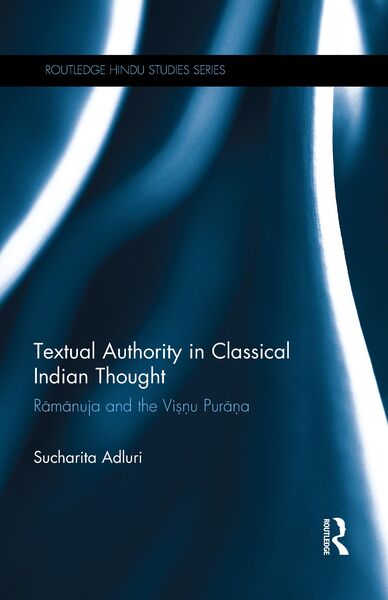
Produktbild: Textual Authority in Classical Indian Thought

Textual Authority in Classical Indian Thought Ramanuja and the Vishnu Purana

50,40 €

inkl. gesetzl. MwSt.

Beschreibung

Theistic Vedanta originated with Ramanuja (1077-1157), who was one of the foremost theologians of Visistadvaita Vedanta and also an initiate of the Srivaisnava sectarian tradition in South India. As devotees of the God Visnu and his consort Sri, the Srivaisnavas established themselves through various...

Beschreibung

Theistic Vedanta originated with Ramanuja (1077-1157), who was one of the foremost theologians of Visistadvaita Vedanta and also an initiate of the Srivaisnava sectarian tradition in South India. As devotees of the God Visnu and his consort Sri, the Srivaisnavas established themselves through various processes of legitimation as a powerful sectarian tradition. One of the processes by which the authority of the Srivaisnavas was consolidated was Ramanuja's synthesis of popular Hindu devotionalism with the philosophy of Vedanta.

This book demonstrates that by incorporating a text often thought to be of secondary importance - the Visnu Purana (1st-4th CE) - into his reading of the Upanisads, which were the standard of orthodoxy for Vedanta philosophy, Ramanuja was able to interpret Vedanta within the theistic context of Srivaisnavism. Ramanuja was the first Brahmin thinker to incorporate devotional puranas into Vedanta philosophy. His synthetic theology called Visistadvaita (unity-of-the-differenced) wielded tremendous influence over the expansion of Visnu devotionalism in South India and beyond. In this book, the exploration of the exegetical function of this purana in arguments salient to Ramanuja's Vedanta facilitates our understanding of the processes of textual accommodation and reformulation that allow the incorporation of divergent doctrinal claims.

Expanding on and reassessing current views on Ramanuja's theology, the book contributes new insights to broader issues in religious studies such as canon expansion, commentarial interpretation, tradition-building, and the comparative study of scripture. It will be of interest to students and scholars of Indian philosophy and Religious Studies.

Produktdetails

Format

PDF

Kopierschutz

Ja

Family Sharing

Nein

Text-to-Speech

Nein

Produktdetails

Format

PDF

Format

eBooks im PDF-Format haben eine festgelegte Seitengröße und eignen sich daher nur bedingt zum Lesen auf einem tolino eReader oder Smartphone. Für den vollen Lesegenuss empfehlen wir Ihnen bei PDF-eBooks die Verwendung eines Tablets oder Computers.

Kopierschutz

Ja

Kopierschutz

Zum Lesen dieses eBooks auf Geräten der tolino Familie sowie auf sonstigen eReadern und am PC benötigen Sie eine ByteBook-ID. Weitere Hinweise zum Lesen von kopiergeschützten eBooks finden Sie unter Hilfe/Downloads.

Family Sharing

Nein

Family Sharing

Mit Family Sharing können Sie eBooks innerhalb Ihrer Familie (max. sechs Mitglieder im gleichen Haushalt) teilen. Sie entscheiden selbst, welches Buch Sie mit welchem Familienmitglied teilen möchten. Auch das parallele Lesen durch verschiedene Familienmitglieder ist durch Family Sharing möglich. Um eBooks zu teilen oder geteilt zu bekommen, muss jedes Familienmitglied ein Konto bei Thalia oder einem anderen tolino-Buchhändler haben. Weitere Informationen finden Sie unter Hilfe/Family-Sharing.

Text-to-Speech

Nein

Text-to-Speech

Bedeutet Ihnen Stimme mehr als Text? Mit der Funktion Text-to-Speech können Sie sich im tolino webReader und in der aktuellen Thalia – Lesen & Hören App das eBook vorlesen lassen. Weitere Informationen finden Sie unter Hilfe/Text-to-Speech.

Erscheinungsdatum

30.10.2014

Verlag Taylor & Francis eBooks
Seitenzahl

170 (Printausgabe)

Dateigröße

1659 KB

Auflage

1. Auflage

Sprache

Englisch

EAN

9781317625278

Barrierefreiheit
  • navigierbares Inhaltsverzeichnis
  • kurze Alternativtexte (z.B. für Abbildungen) vorhanden
  • keine Vorlesefunktionen des Lesesystems deaktiviert
  • navigierbarer Index
  • Seitennummerierung folgt dem gedruckten Werk

Noch keine Bewertungen vorhanden

Verfassen Sie die erste Bewertung zu diesem Artikel

Helfen Sie anderen Kundinnen und Kunden durch Ihre Meinung.

Kundinnen und Kunden meinen

Bewertungen (0)

Weitere Artikel finden Sie in

Die Leseprobe wird geladen.
  • Produktbild: Textual Authority in Classical Indian Thought