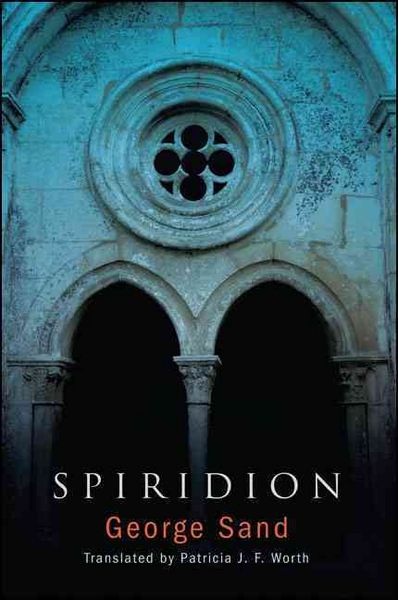
Spiridion
-
- Hardcover ausgewählt
- Taschenbuch
- eBook
-
Sprache:Englisch
- Englisch 117,99 € ausgewählt
- Französisch 23,60 €
117,99 €
inkl. gesetzl. MwSt.,
Beschreibung
Produktdetails
Einband
Gebundene Ausgabe
Erscheinungsdatum
01.05.2015
Verlag
State University Of New York PressSeitenzahl
248
Maße (L/B/H)
22,4/14,2/2,3 cm
Gewicht
417 g
Übersetzt von
Patricia J. F. Worth
Sprache
Englisch
ISBN
978-1-4384-5625-6
An abbot's ghost searches for an intelligent monk to exhume his manuscript from a hellish crypt and learn the truth that monks lack two things: freedom of inquiry and benevolence.
Both Gothic and philosophical, Spiridion tells the story of a young novice, Angel, who finds himself cruelly ostracized by his monastic superiors and terrified by the ghostly visits of his monastery's founder, the abbot Spiridion. Though he founded the monastery on the search for truth, Spiridion watched his once intelligent and virtuous monks degenerate into a cruel, mindless community. Turning away from the Church and withdrawing into his cell, he poured his energy into a manuscript that tells the "truth" about Roman Catholic doctrine and monastic life and provides a vision of a new and eternal gospel. The manuscript was buried with him, and his spirit now searches for a monk who is intelligent enough to exhume it from his crypt, which is guarded by hellish spirits, and share its vision with the world.
Translated into English for the first time in more than 160 years, Spiridion offers a fierce critique of Catholic doctrine as well as solutions for living with the Church's teachings. Although Sand had broken with the Church several years earlier, she nevertheless continued to believe in an omnipotent God, and her novel makes the distinction, as Angel's protector, Father Alexis, puts it, "between the authority of faith and the application of this authority in the hands of men." As translator Patricia J. F. Worth argues in her introduction, the novel's emphasis on freedom of inquiry, benevolence, and moral reform inspired other nineteenth-century writers, including Fyodor Dostoyevsky, Matthew Arnold, and Henry James, and the novel is also relevant to twenty-first-century discussions of religious authority and rigid adherence to doctrine.
Noch keine Bewertungen vorhanden
Verfassen Sie die erste Bewertung zu diesem Artikel
Helfen Sie anderen Kundinnen und Kunden durch Ihre Meinung.
Kurze Frage zu unserer Seite
Vielen Dank für Ihr Feedback
Wir nutzen Ihr Feedback, um unsere Produktseiten zu verbessern. Bitte haben Sie Verständnis, dass wir Ihnen keine Rückmeldung geben können. Falls Sie Kontakt mit uns aufnehmen möchten, können Sie sich aber gerne an unseren Kund*innenservice wenden.
zum Kundenservice