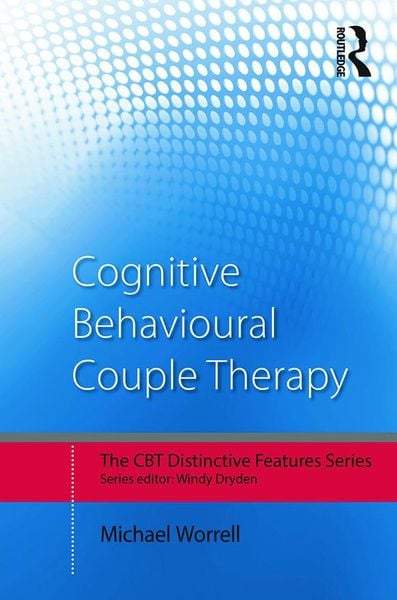
Cognitive Behavioural Couple Therapy Distinctive Features
-
- Taschenbuch ausgewählt
- eBook
-
Sprache:Englisch
32,99 €
inkl. gesetzl. MwSt.,
Beschreibung
Produktdetails
Einband
Taschenbuch
Erscheinungsdatum
20.04.2015
Abbildungen
1 SW-Abb.
Verlag
Taylor & FrancisSeitenzahl
146
Maße (L/B/H)
18,6/12,3/1,5 cm
Gewicht
171 g
Sprache
Englisch
ISBN
978-0-415-72928-4
Cognitive Behavioural Couple Therapy (CBCT) is an enhanced and contextually grounded approach that provides evidence-based strategies for working with couple distress, as well as individual psychopathology in the context of a distressed relationship. Cognitive Behavioural Couple Therapy: Distinctive Features explores this truly integrative and experiential way of working. This model has significantly widened the traditional CBT focus on cognition and behaviour to include an equal emphasis on emotion, stable individual differences and vulnerabilities, as well as an awareness of the importance of the environment and the wider context for couple relationships.
Comprising 30 key points, and divided into two parts - Theory and Practice - this concise book includes numerous clinical examples that illustrate the key features of Cognitive Behavioural Couple Therapy. It will offer essential guidance for students, practitioners experienced in individual CBT, as well as practitioners of couple therapy from other theoretical orientations who require an accessible guide to the distinctive theoretical and practical features of this contemporary approach.
Noch keine Bewertungen vorhanden
Verfassen Sie die erste Bewertung zu diesem Artikel
Helfen Sie anderen Kundinnen und Kunden durch Ihre Meinung.
Kurze Frage zu unserer Seite
Vielen Dank für Ihr Feedback
Wir nutzen Ihr Feedback, um unsere Produktseiten zu verbessern. Bitte haben Sie Verständnis, dass wir Ihnen keine Rückmeldung geben können. Falls Sie Kontakt mit uns aufnehmen möchten, können Sie sich aber gerne an unseren Kund*innenservice wenden.
zum Kundenservice