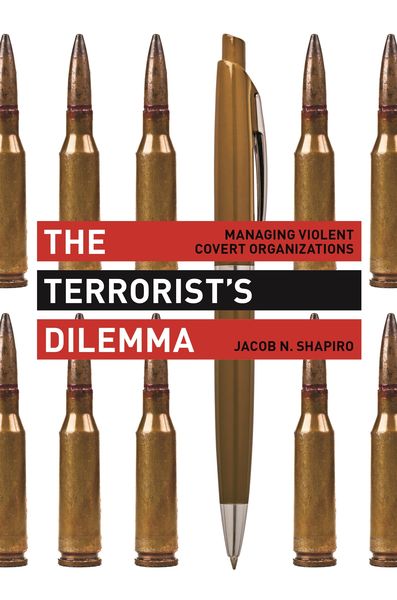
The Terrorist's Dilemma Managing Violent Covert Organizations
-
- Englisch ausgewählt
34,99 €
inkl. gesetzl. MwSt.,
Beschreibung
Produktdetails
Einband
Taschenbuch
Erscheinungsdatum
21.07.2015
Abbildungen
w. mit 6 Illustrationen
Verlag
Princeton University PressSeitenzahl
352
Maße (L/B/H)
23,6/15,6/2,2 cm
Gewicht
500 g
Sprache
Englisch
ISBN
978-0-691-16630-8
"How do terrorists cash checks, file expenses, or meet payroll, when every document reveals identities and locations? Understanding that the mundane challenges of organizing terrorism reveal vulnerabilities, Shapiro's superbly researched book combines authoritative scholarly analysis with page-turning examples, some drawn from internal documents, others populated with Bolshevik assassins, IRA bombers, and Hamas suicide attackers. I predict a month's quiet while thoughtful terrorists and counterterrorists stay up late absorbing The Terrorist's Dilemma. Compelling, required reading."--Eli Berman, author of Radical, Religious and Violent: The New Economics of Terrorism
"The Terrorist's Dilemma expertly incorporates organizational perspectives into the study of terrorism, producing a theoretically insightful and empirically rich work that upends many conventional assumptions. Shapiro proves that differences within the chain of command, management weaknesses, and other problems common to organizations of all stripes plague terrorist groups and offer numerous opportunities to fight them better."--Daniel Byman, Georgetown University
"The Terrorist's Dilemma adds an important dimension to the study of terrorism. The book is inventive in its use of organizational theory and sources, and its argument is logically impeccable. It is an astute and useful corrective to the misperceptions of terrorism as utterly unreasoning."--Martha Crenshaw, author of Explaining Terrorism
"The overall topic of this book--the internal dynamics and dilemmas that terrorist groups face in controlling their members--has not been seriously examined, and this book makes important contributions to a timely subject. The empirical studies are well-researched and provide compelling evidence."--Michael Freeman, author of Freedom or Security
"This book offers comprehensive evidence about how the structure of terrorist organizations affects patterns of terrorist violence and how changes to the operational environment feed back into the way terrorists organize themselves. The result is a far richer and more nuanced picture of how terrorism works, and what can be done to prevent it, than that offered by the existing literature."--Ethan Bueno de Mesquita, University of Chicago
Kundinnen und Kunden meinen
Verfassen Sie die erste Bewertung zu diesem Artikel
Helfen Sie anderen Kund*innen durch Ihre Meinung
Kurze Frage zu unserer Seite
Vielen Dank für Ihr Feedback
Wir nutzen Ihr Feedback, um unsere Produktseiten zu verbessern. Bitte haben Sie Verständnis, dass wir Ihnen keine Rückmeldung geben können. Falls Sie Kontakt mit uns aufnehmen möchten, können Sie sich aber gerne an unseren Kund*innenservice wenden.
zum Kundenservice