Beschreibung
Produktdetails
Einband
Gebundene Ausgabe
Erscheinungsdatum
12.02.2015
Abbildungen
Illustrationen, nicht spezifiziert
Verlag
Mcgraw Hill Higher EducationSeitenzahl
236
Maße (L/B/H)
24,1/19,6/1,7 cm
Gewicht
642 g
Sprache
Englisch
ISBN
978-0-07-183937-2
Publisher's Note: Products purchased from Third Party sellers are not guaranteed by the publisher for quality, authenticity, or access to any online entitlements included with the product.
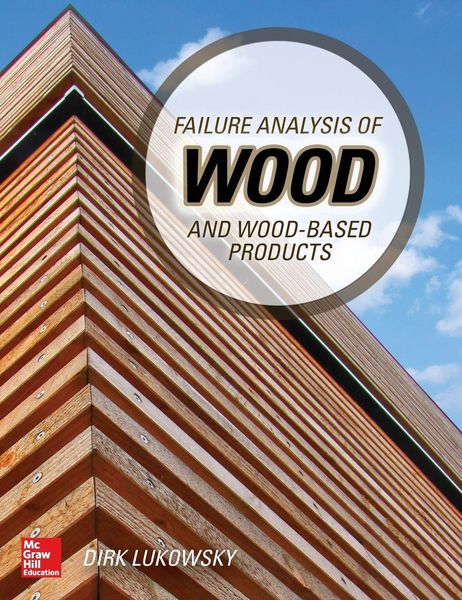
PRACTICAL, PROVEN METHODS FOR WOOD FAILURE ANALYSIS
Written by an expert in the field, this authoritative resource presents tested techniques for conducting in-depth, professional investigations of failures involving wood and wood-based products. The book offers a detailed look at the various causes of damage to wood, includingmaterial characteristics, design and conditions of use,and chemical influences.
State-of-the-art forensic analysis methods such as tracking of relevant features, physical and chemical analysis, and microscopy are provided. This comprehensive guide shows you how to conduct efficient, costeffective,and reproducible wood failure investigations on site and inthe laboratory and deliver accurate findings and conclusions.
Failure Analysis of Wood and Wood-Based Products covers:
- Investigation strategy
- Methods of investigation
- Interpretation of features and distributions
- Examples of failures
Noch keine Bewertungen vorhanden
Verfassen Sie die erste Bewertung zu diesem Artikel
Helfen Sie anderen Kundinnen und Kunden durch Ihre Meinung.
Kurze Frage zu unserer Seite
Vielen Dank für Ihr Feedback
Wir nutzen Ihr Feedback, um unsere Produktseiten zu verbessern. Bitte haben Sie Verständnis, dass wir Ihnen keine Rückmeldung geben können. Falls Sie Kontakt mit uns aufnehmen möchten, können Sie sich aber gerne an unseren Kund*innenservice wenden.
zum Kundenservice