Gutscheinbedingungen

**Gültig bis 12.08.2026 auf fremdsprachige Bücher online auf thalia.at und in der Thalia App. Einzelne Artikel können ausgeschlossen sein. Ausgenommen sind preisgebundene Artikel & eBooks. Pro Einkauf einmal einlösbar. Click & Collect nur bei Onlinevorabzahlung möglich. Keine Barauszahlung. Nicht kombinierbar mit anderen Aktionen und Gutscheinen. Gutschein wird auf max. 500€ Bestellwert angerechnet. Nicht gültig für Geschenkkarten, Versandkosten und Services.

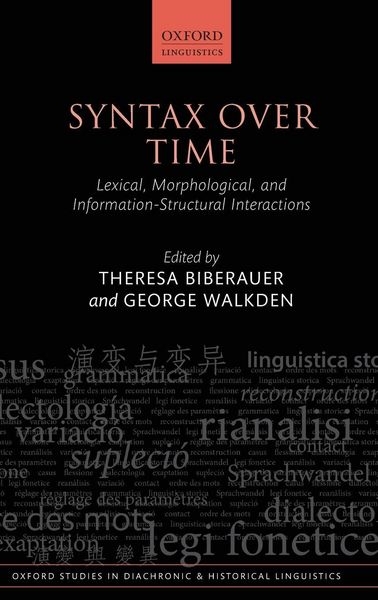
Produktbild: SYNTAX OVER TIME OSDHL 15 C
Band 15

SYNTAX OVER TIME OSDHL 15 C

196,99 €

inkl. gesetzl. MwSt., Versandkostenfrei


Beschreibung

Produktdetails

Einband

Gebundene Ausgabe

Erscheinungsdatum

26.02.2015

Herausgeber

Biberauer Theresa + weitere

Verlag

Oxford Academic

Seitenzahl

440

Maße (L/B/H)

24/16,1/2,8 cm

Gewicht

822 g

Sprache

Englisch

ISBN

978-0-19-968792-3

Beschreibung

Produktdetails

Einband

Gebundene Ausgabe

Erscheinungsdatum

26.02.2015

Herausgeber

Verlag

Oxford Academic

Seitenzahl

440

Maße (L/B/H)

24/16,1/2,8 cm

Gewicht

822 g

Sprache

Englisch

ISBN

978-0-19-968792-3

Herstelleradresse

Libri GmbH
Europaallee 1
36244 Bad Hersfeld
DE

Email: gpsr@libri.de

Noch keine Bewertungen vorhanden

Verfassen Sie die erste Bewertung zu diesem Artikel

Helfen Sie anderen Kundinnen und Kunden durch Ihre Meinung.

Kundinnen und Kunden meinen

Bewertungen (0)

  • Produktbild: SYNTAX OVER TIME OSDHL 15 C

    • 1.: Theresa Biberauer and George Walkden: Introduction


    • PART I: Syntax and the Lexicon


    • 2: Caitlin Light: Expletive there in West Germanic


    • 3: Joan Maling and Sigriðdur Sigurjónsdottir: From passive to active: Stages in the Icelandic New Impersonal


    • 4: William Haddican, Eytan Zweig, and Daniel Ezra Johnson: Change in the syntax and semantics of be like quotatives


    • 5: Veronika Heged¿s: The grammaticalization of postpositions in Old Hungarian


    • 6: Katalin É. Kiss: A negative cycle in 12th - 15th century Hungarian


    • 7: Ana Maria Martins: Negation and NPI composition inside DP


    • PART II: Syntax and Morphology


    • 8: Chris H. Reintges: Increasing morphological complexity and how syntax drives morphological change


    • 9: Adam Ledgeway: Reconstructing complementizer-drop in the dialects of the Salento: A syntactic or phonological phenomenon


    • 10: Marit Julien: On negation, tense, and participles in Finnic and Sámi


    • 11: Krzysztof Migdalski: On the loss of tense and verb-adjacent clitics in Slavic


    • 12: Dimitris Michelioudakis: The evolution of Inherent Case in the diachrony of Greek


    • PART III: Syntax and Information Structure


    • 13: Virginia Hill: From preposition to topic marker: Old Romanian pe


    • 14: George Walkden: Verb-third in early West Germanic: A comparative perspective


    • 15: Ed Cormany: Changes in Friulano subject clitics: Conflation and interactions with the left periphery


    • 16: Lieven Danckaert: The decline of Latin left-peripheral presentation foci: Causes and consequences


    • 17: Montserrat Batllori and Maria-Lluïsa Hernanz: Weak focus and polarity: Asymmetries between Spanish and Catalan


    • 18: Roland Hinterhölzl: An interface account of word order variation in Old High German


    • 19: Ann Taylor and Susan Pintzuk: Verb order, object position, and information status in Old English


    • 20: Joel C. Wallenberg: Antisymmetry and heavy NP shift across Germanic


    • 21: Edith Aldridge: Pronominal object shift in Archaic Chinese