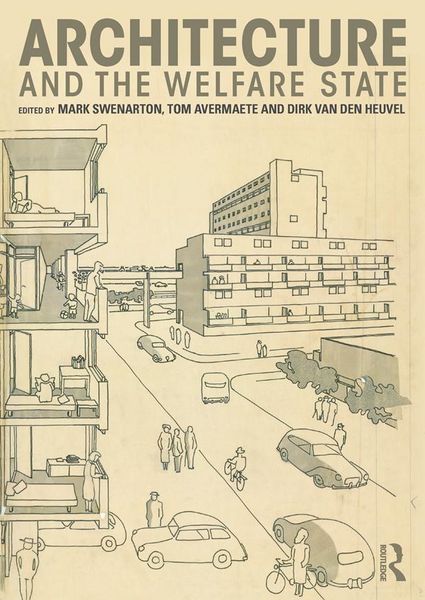
Architecture and the Welfare State
-
- Taschenbuch
- eBook ausgewählt
-
Form:Einzelkauf Download
-
Sprache:Englisch
-
eBook Format:ePUB
- PDF 84,80 €
- ePUB 84,80 € ausgewählt
84,80 €
inkl. gesetzl. MwSt.Beschreibung
Produktdetails
Format
ePUB
Kopierschutz
Ja
Family Sharing
Nein
Text-to-Speech
Ja
Erscheinungsdatum
15.09.2014
Herausgeber
Mark Swenarton + weitereVerlag
Taylor & Francis eBooksSeitenzahl
360 (Printausgabe)
Dateigröße
22103 KB
Sprache
Englisch
EAN
9781317661894
In the decades following World War Two, and in part in response to the Cold War, governments across Western Europe set out ambitious programmes for social welfare and the redistribution of wealth that aimed to improve the everyday lives of their citizens. Many of these welfare state programmes - housing, schools, new towns, cultural and leisure centres - involved not just construction but a new approach to architectural design, in which the welfare objectives of these state-funded programmes were delineated and debated. The impact on architects and architectural design was profound and far-reaching, with welfare state projects moving centre-stage in architectural discourse not just in Europe but worldwide.
This is the first book to explore the architecture of the welfare state in Western Europe from an international perspective. With chapters covering Austria, Belgium, France, Germany, Italy, The Netherlands, Sweden and the UK, the book explores the complex role played by architecture in the formation and development of the welfare state in both theory and practice.
Themes include:
- the role of the built environment in the welfare state as a political project
- the colonial dimension of European welfare state architecture and its 'export' to Africa and Asia
- the role of welfare state projects in promoting consumer culture and economic growth
- the picture of the collective produced by welfare state architecture
- the role of architectural innovation in the welfare state
- the role of the architect, as opposed to construction companies and others, in determining what was built
- the relationship between architectural and social theory
- the role of internal institutional critique and the counterculture.
Contributors include: Tom Avermaete, Eve Blau, Nicholas Bullock, Miles Glendinning, Janina Gosseye, Hilde Heynen, Caroline Maniaque-Benton, Helena Mattsson, Luca Molinari, Simon Pepper, Michelle Provoost, Lukasz Stanek, Mark Swenarton, Florian Urban and Dirk van den Heuvel.
Noch keine Bewertungen vorhanden
Verfassen Sie die erste Bewertung zu diesem Artikel
Helfen Sie anderen Kundinnen und Kunden durch Ihre Meinung.
Kurze Frage zu unserer Seite
Vielen Dank für Ihr Feedback
Wir nutzen Ihr Feedback, um unsere Produktseiten zu verbessern. Bitte haben Sie Verständnis, dass wir Ihnen keine Rückmeldung geben können. Falls Sie Kontakt mit uns aufnehmen möchten, können Sie sich aber gerne an unseren Kund*innenservice wenden.
zum Kundenservice