KI-Beratung Beta

Gutscheinbedingungen

**Gültig bis 18.11.2026 auf englischsprachige Klassiker (klassiker-32728) online auf thalia.at und in der Thalia App. Einzelne Artikel können ausgeschlossen sein. Ausgenommen sind preisgebundene Artikel & eBooks. Pro Einkauf einmal einlösbar. Click & Collect nur bei Onlinevorabzahlung möglich. Keine Barauszahlung. Nicht kombinierbar mit anderen Aktionen und Gutscheinen. Gutschein wird auf max. 500€ Bestellwert angerechnet. Nicht gültig für Geschenkkarten, Versandkosten und Services.

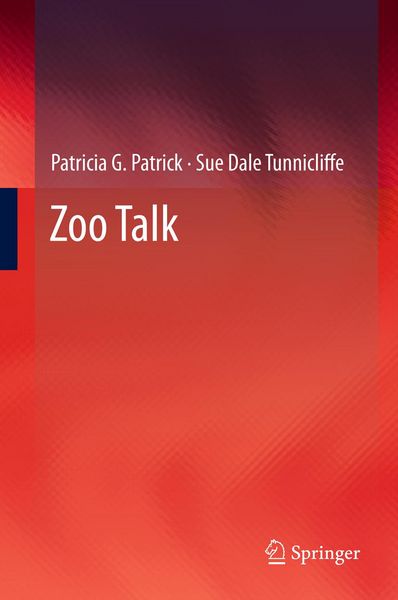
  • Produktbild: Zoo Talk
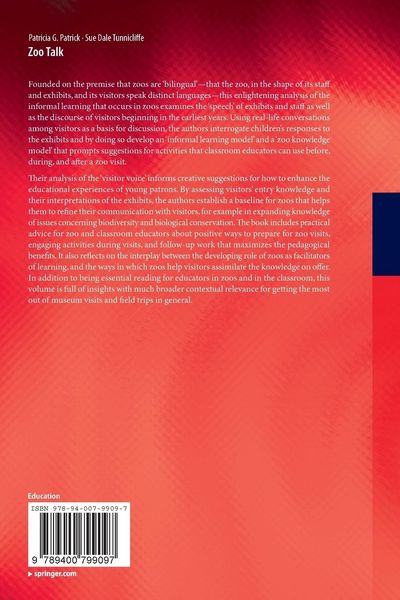
  • Produktbild: Zoo Talk
- 11%

Zoo Talk

11% sparen

96,99 € UVP 109,99 €

inkl. gesetzl. MwSt., Versandkostenfrei


Beschreibung

Founded on the premise that zoos are ‘bilingual’—that the zoo, in the shape of its staff and exhibits, and its visitors speak distinct languages—this enlightening analysis of the informal learning that occurs in zoos examines the ‘speech’ of exhibits and staff as well as the discourse of visitors beginning...

Beschreibung

Founded on the premise that zoos are ‘bilingual’—that the zoo, in the shape of its staff and exhibits, and its visitors speak distinct languages—this enlightening analysis of the informal learning that occurs in zoos examines the ‘speech’ of exhibits and staff as well as the discourse of visitors beginning in the earliest years. Using real-life conversations among visitors as a basis for discussion, the authors interrogate children’s responses to the exhibits and by doing so develop an ‘informal learning model’ and a ‘zoo knowledge model’ that prompts suggestions for activities that classroom educators can use before, during, and after a zoo visit.

Their analysis of the ‘visitor voice’ informs creative suggestions for how to enhance the educational experiences of young patrons. By assessing visitors’ entry knowledge and their interpretations of the exhibits, the authors establish a baseline for zoos that helps them to refine their communication with visitors, for example in expanding knowledge of issues concerning biodiversity and biological conservation. The book includes practical advice for zoo and classroom educators about positive ways to prepare for zoo visits, engaging activities during visits, and follow-up work that maximizes the pedagogical benefits. It also reflects on the interplay between the developing role of zoos as facilitators of learning, and the ways in which zoos help visitors assimilate the knowledge on offer. In addition to being essential reading for educators in zoos and in the classroom, this volume is full of insights with much broader contextual relevance for getting the most out of museum visits and field trips in general.

Rezension

From the book reviews:

“The book Zoo Talk, authored by Patricia G. Patrick and Sue Dale Tunnicliffe, provides a new look at informal education, suggests activities for educators to employ and identifies potential learning opportunities in zoos and aquariums. … The book Zoo Talk is essential reading for all educators in zoos and aquariums.” (WAZA News, Issue 4, 2014)

Produktdetails

Einband

Taschenbuch

Erscheinungsdatum

15.10.2014

Abbildungen

VIII, 216 p.

Verlag Springer Netherland

Produktdetails

Einband

Taschenbuch

Erscheinungsdatum

15.10.2014

Abbildungen

VIII, 216 p.

Verlag Springer Netherland
Seitenzahl

216

Maße (L/B/H)

23,5/15,5/1,3 cm

Gewicht

347 g

Auflage

1. Auflage

Sprache

Englisch

ISBN

978-94-007-9909-7

Herstelleradresse

Springer-Verlag KG
Sachsenplatz 4-6
1201 Wien
AT

Email: ProductSafety@springernature.com

Noch keine Bewertungen vorhanden

Verfassen Sie die erste Bewertung zu diesem Artikel

Helfen Sie anderen Kundinnen und Kunden durch Ihre Meinung.

Kundinnen und Kunden meinen

Bewertungen (0)

  • Produktbild: Zoo Talk
  • Produktbild: Zoo Talk

  • Introduction.- Chapter 1 A History of Animal Collections.- Chapter 2 Rational for the Existence of Zoos.- Chapter 3 Visitors Knowledge of Zoos.- Chapter 4 Exhibit Design.- Chapter 5 Talking About Animals.- Chapter 6 Visitor Voice.- Chapter 7 School and Family Groups’ Conversations.- Chapter 8 The Zoo Voice: Zoo Education and Learning.- Chapter 9 Information Educators Need to Know About Zoo Field Trips (Useful Field Trip Information).- Chapter 10 Zoo Field Trip Design.- Conclusions.