Gutscheinbedingungen

**Gültig am 17.06.2026 auf Spielzeug, Schreibwaren, Filme, Geschenke & Trends, Musik, tolino eReader & Zubehör, Hörbücher und Hörbuch-Downloads (außer Abo), nicht preisgebundene Bücher und Kalender online auf thalia.at und in der Thalia App. Einzelne Artikel können ausgeschlossen sein. Aufgrund der Buchpreisbindung sind deutschsprachige Bücher und eBooks ausgenommen. Zusätzlich ausgenommen sind preisgebundene Artikel, Abos & Flatrates, eBooks, Games, Geschenkkarten/-boxen, Shelfies, Software, Zeitschriften sowie einzelne Artikel von tonies®. Pro Einkauf einmal einlösbar. Click & Collect nur bei Onlinevorabzahlung möglich. Keine Barauszahlung. Nicht kombinierbar mit anderen Aktionen und Gutscheinen. Gutschein wird auf max. 500€ Bestellwert angerechnet. Nicht gültig für Versandkosten und Services.

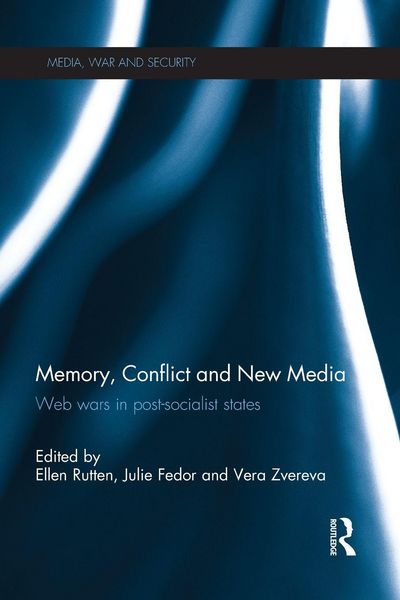
  • Produktbild: Memory, Conflict and New Media
  • Produktbild: Memory, Conflict and New Media

Memory, Conflict and New Media Web Wars in Post-Socialist States

91,99 €

inkl. gesetzl. MwSt., Versandkostenfrei


Beschreibung

Produktdetails

Einband

Taschenbuch

Erscheinungsdatum

27.04.2015

Herausgeber

Rutten Ellen + weitere

Verlag

Taylor and Francis

Seitenzahl

288

Maße (L/B/H)

23,4/15,6/1,6 cm

Gewicht

530 g

Sprache

Englisch

ISBN

978-1-138-84761-3

Beschreibung

Produktdetails

Einband

Taschenbuch

Erscheinungsdatum

27.04.2015

Herausgeber

Verlag

Taylor and Francis

Seitenzahl

288

Maße (L/B/H)

23,4/15,6/1,6 cm

Gewicht

530 g

Sprache

Englisch

ISBN

978-1-138-84761-3

Herstelleradresse

Produktsicherheitsverantwortliche/r
Europaallee 1
36244 Bad Hersfeld
DE

Email: gpsr@libri.de

Kundinnen und Kunden meinen

0 Bewertungen

Informationen zu Bewertungen

Zur Abgabe einer Bewertung ist eine Anmeldung im Konto notwendig. Die Authentizität der Bewertungen wird von uns nicht überprüft. Wir behalten uns vor, Bewertungstexte, die unseren Richtlinien widersprechen, entsprechend zu kürzen oder zu löschen.

Die Bewertungen sind nach Format, Anzahl Sterne und Datum sortiert.

Verfassen Sie die erste Bewertung zu diesem Artikel

Helfen Sie anderen Kund*innen durch Ihre Meinung

Kundinnen und Kunden meinen

0 Bewertungen filtern

Die Leseprobe wird geladen.
  • Produktbild: Memory, Conflict and New Media
  • Produktbild: Memory, Conflict and New Media
  • Introduction: Old Conflict, New Media: Post-Socialist Digital Memories, Ellen Rutten and Vera Zvereva Part I: Concepts of Memory 1. Europe’s Other World: Romany Memory within the New Dynamics of the Globital Memory Field, Anna Reading 2. Mourning and Melancholia in Putin’s Russia: An Essay in Mnemonics, Alexander Etkind 3. Memory Events and Memory Wars: Victory Day in L’viv, 2011 through the Prism of Quantitative Analysis, Galina Nikiporets-Takigawa 4. War of Memories in the Ukrainian Media: Diversity of Identities, Political Confrontation, and Production Technologies, Volodymyr Kulyk 5. #Holodomor – Twitter and Public Discourse in Ukraine, Martin Paulsen Part II: Words of Memory 6. ‘A Stroll Through the Keywords of my Memory’: Digitally Mediated Commemoration of the Soviet Linguistic Heritage, Ingunn Lunde 7. Memory and Self-Legitimization in the Russian Blogosphere: Argumentative Practices in Historical and Political Discussions in Russian-Language Blogs of the 2000s, Ilya Kukulin 8. Building Wiki-History: Between Consensus and Edit Warring, Helene Dounaevsky 9. News Framing under Conditions of Unsettled Conflict: An Analysis of Georgian Online and Print News around the 2008 Russo-Georgian War, Doreen Spoerer-Wagner 10. Rust on the Monument: Challenging the Myth of Victory in Belarus, Aliaksei Lastouski Part III: Images of Memory 11. Between RuNet and UkrNet: Mapping the Crimean Web War, Maria Pasholok 12. Repeating History? The Computer Game as Historiographic Device, Gernot Howanitz 13. The Digital (Artistic) Memory of Nicolae Ceausescu, Caterina Preda 14. Witnessing War, Globalizing Victory: Representations of World War II on the Website Russia Today, Jussi Lassila 15. From ‘The Second Katyn’ to ‘A Day Without Smolensk’: Facebook Responses to the Smolensk Tragedy and its Aftermath, Dieter de Bruyn Conclusion, Julie Fedor Timeline: New Media and Memory Politics