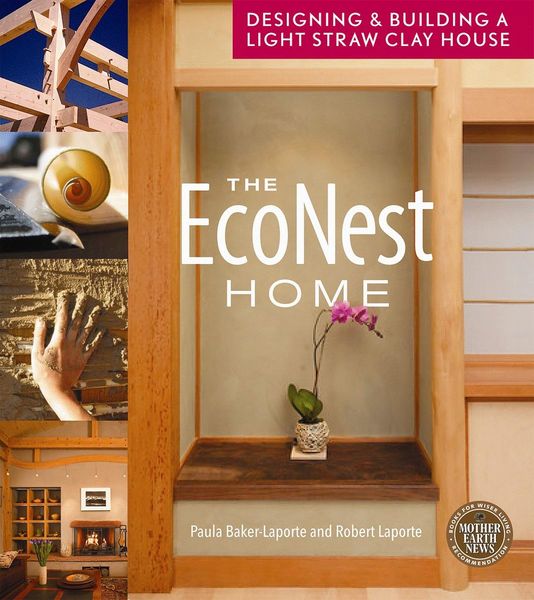
Produktbild: The Econest Home

The Econest Home Designing and Building a Light Straw Clay House

44,99 €

inkl. gesetzl. MwSt., Versandkostenfrei


Beschreibung

Produktdetails

Einband

Taschenbuch

Erscheinungsdatum

01.07.2015

Verlag

New Society Publishers

Seitenzahl

384

Maße (L/B/H)

22,6/20,3/2,3 cm

Gewicht

771 g

Sprache

Englisch

ISBN

978-0-86571-777-0

Beschreibung

Produktdetails

Einband

Taschenbuch

Erscheinungsdatum

01.07.2015

Verlag

New Society Publishers

Seitenzahl

384

Maße (L/B/H)

22,6/20,3/2,3 cm

Gewicht

771 g

Sprache

Englisch

ISBN

978-0-86571-777-0

Herstelleradresse

Libri GmbH
Europaallee 1
36244 Bad Hersfeld
DE

Email: gpsr@libri.de

Kundinnen und Kunden meinen

0 Bewertungen

Informationen zu Bewertungen

Zur Abgabe einer Bewertung ist eine Anmeldung im Konto notwendig. Die Authentizität der Bewertungen wird von uns nicht überprüft. Wir behalten uns vor, Bewertungstexte, die unseren Richtlinien widersprechen, entsprechend zu kürzen oder zu löschen.

Die Bewertungen sind nach Format, Anzahl Sterne und Datum sortiert.

Verfassen Sie die erste Bewertung zu diesem Artikel

Helfen Sie anderen Kund*innen durch Ihre Meinung

Kundinnen und Kunden meinen

0 Bewertungen filtern

Die Leseprobe wird geladen.
  • Produktbild: The Econest Home
  • Table of Contents

    Why build a natural home ?
    • The authentic food/authentic home analogy
    • our impacts and responsibilities
    • appropriate response and design
    • alternative building methods and materials
    • conventional vs. regenerative living
    • myths and realities
    • history of light clay construction

    Site Selection
    • cultural history of site selection
    • modern day health concerns
    • ecological site designs
    • natural climate control
    • regenerating the landscape
    • food and shelter

    EcoNest: a Family of Design and Building Strategies Applying the Principles of Building Biology in the design, construction and occupation of a home:
    a. Recognizing nature as the gold standard for a healthy indoor environment.
    b. Design for Health and Ecology;
    • History of use
    • non-toxic choices
    • natural materials
    • maintaining hygroscopicity
    • natural lighting
    • proportion
    • size
    • beauty
    • sacred space
    • relationship to nature
    • adaptability
    • flexible space
    • color in accordance with nature
    • maintaining a healthy balance of humidity
    • a healthy electro-climate

    c. Recognizing the role of the craftsman in enriching the lives of all who dwell within.
    • Modern day precedents for building craft revival
    • Why we teach others,
    • Building the Builder, Craftsmanship Leadership and teamwork
    • Design for the temperate climate zones

    Home Owners Guide to the design process
    • Initiating a legacy
    • Working with a design professional
    • Phases of design
    • Making a thousand choices and staying sane!
    • Putting it all in perspective

    Foundation Systems “ a good pair of boots”
    • The role of the foundation in the health and longevity of the building
    • drainage issues
    • height of foundation
    • reduction of concrete
    • rubble trench construction
    • wood insulated concrete forms

    The Timberframe
    • About the sustainable use of wood
    • ecology and re-useabiltiy of timber framing
    • framing terms and concepts
    • European vs. Japanese Frame Construction Styles
    • plan
    • layout
    • encoding
    • cutting
    • assembly
    • raising the frame

    The EcoNest Clay Straw Wall System
    • Wall terms and concepts
    • Site analysis and staging for efficient production
    • Scaffolding, circulation, site safety

    Framework
    • Load-bearing and non-load-bearing Larsen trusses
    • Larsen truss layout
    • Planning for future interior attachments
    • Incorporating mechanical and electrical systems
    Formwork
    • Interior face and exterior face forming
    • Building a leap form
    • Door + window framing and insulation

    Production
    • . Testing soil for clay content
    • Choosing the straw
    • Mixing
    • Variation of densities in accordance with wall orientation
    Delivery
    • Making hoppers
    • Materials handling and delivery
    Filling
    • Placing and tamping clay straw
    • Horizontal reinforcing
    • Topping off the wall
    • Removing and re-using the formwork

    Drying and Prepping for Finish

    • Accelerated drying techniques
    • Chinking and creating an air tight envelope
    • Other delivery techniques (sidebar about crane delivery)

    The Roof System
    • the “good hat” concept
    • roofing terms and concepts
    • form
    • calculations
    • truss roof process
    • roof details
    • roof ventilation
    • insulating the roof
    • alternative insulation materials

    Exterior Finishes
    • exterior skin comparisons
    • exterior earth plaster
    • exterior lime plaster
    • Keim treatments
    • wood siding
    • vented rain screens

    Crafting the Interiors
    • plaster ceilings
    • ceiling finishes
    • the mandala ceiling construction
    • wood ceilings
    • plaster wall finishes
    • partition walls
    • mass interior walls
    • framed walls
    • shoji screens and pockets for shoji screens
    • cabinetry construction and selection
    • attaching cabinetry to the walls
    • nichos
    • doors
    • floor systems, alternatives to concrete
    • earthen floors
    • wood floors

    Natural and Mechanical Systems for energy efficient, year round comfort
    • passive heating and cooling strategies for a temperate climate
    • decreasing or eliminating dependence mechanical systems
    • power + electrical considerations
    • day lighting and artificial lighting
    • water collection, storage, purification and drinking
    • plumbing considerations
    • heating with fuel
    • masonry heaters
    • cooling and the 4 strategies

    Portfolio
    Several new EcoNest Case studies

    Appendices
    a. general construction guidelines
    b. New Mexico construction guidelines
    c. State of Oregon Reach Code
    c. Sources of information: books + websites
    d. Architects and builders guide
    e. Material suppliers