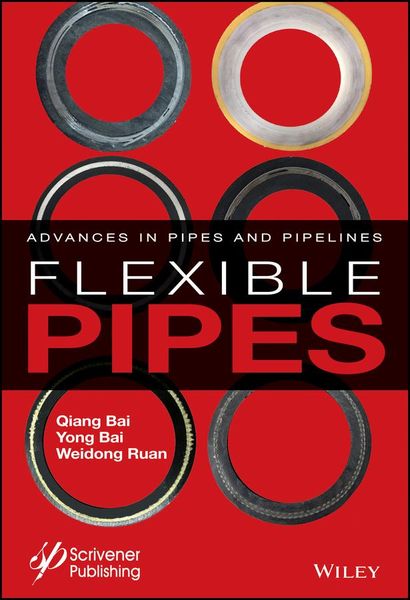
Produktbild: Flexible Pipes

Flexible Pipes Advances in Pipes and Pipelines

307,99 €

inkl. gesetzl. MwSt., Versandkostenfrei


Beschreibung

Produktdetails

Einband

Gebundene Ausgabe

Erscheinungsdatum

17.04.2017

Verlag

John Wiley & Sons

Seitenzahl

640

Maße (L/B/H)

25,7/18,3/3,3 cm

Gewicht

1238 g

Auflage

1. Auflage

Sprache

Englisch

ISBN

978-1-119-04126-9

Beschreibung

Produktdetails

Einband

Gebundene Ausgabe

Erscheinungsdatum

17.04.2017

Verlag

John Wiley & Sons

Seitenzahl

640

Maße (L/B/H)

25,7/18,3/3,3 cm

Gewicht

1238 g

Auflage

1. Auflage

Sprache

Englisch

ISBN

978-1-119-04126-9

Herstelleradresse

Libri GmbH
Europaallee 1
36244 Bad Hersfeld
DE

Email: GPSR Kontakt

Noch keine Bewertungen vorhanden

Verfassen Sie die erste Bewertung zu diesem Artikel

Helfen Sie anderen Kundinnen und Kunden durch Ihre Meinung.

Kundinnen und Kunden meinen

Bewertungen (0)

Die Leseprobe wird geladen.
  • Produktbild: Flexible Pipes
  • Preface xxi

    About the Authors xxiii

    Part I Design and Analysis

    1 Flexible Pipes and Limit-States Design 3

    1.1 I ntroduction 3

    1.2 Applications of Flexible Pipe 3

    1.2.1 Metal-Based Flexible Pipes 5

    1.2.2 Composite-Based Flexible Pipes 7

    1.2.3 D esign Codes and Specifications 10

    1.3 Comparison between Flexible Pipes and Rigid Pipes 12

    1.3.1 Unbonded Flexible Riser vs. Rigid Steel Riser 12

    1.3.2 Flexible Jumper vs. Rigid Steel Jumper 12

    1.3.3 Flexible Composite Pipe vs. Rigid Pipe 13

    1.3.3.1 Material Costs 14

    1.3.3.2 I nstallation Costs 14

    1.3.3.3 Operational Costs 15

    1.3.3.4 Comparison Example 15

    1.4 Failure Mode and Design Criteria 15

    1.4.1 Unbonded Flexible Pipe 15

    1.4.1.1 Failure Modes 15

    1.4.1.2 D esign Criteria 17

    1.4.2 Flexible Composite Pipe 20

    1.4.2.1 Failure Modes 20

    1.4.2.2 D esign Criteria 20

    1.5 L imit State Design 24

    1.5.1 L imit States 24

    1.5.2 Reliability-Based Methods 25

    References 26

    2 Materials and Aging 29

    2.1 I ntroduction 29

    2.1.1 Unbonded Flexible Pipes 30

    2.1.2 Flexible Composite Pipes 34

    vi Contents

    2.2 Metallic Material 35

    2.2.1 Stainless Steel 35

    2.2.2 Carbon Steel 36

    2.3 Polymer Material 36

    2.3.1 Annulus 36

    2.3.2 Chemical Resistance 39

    2.3.3 Permeation and Permeation Control Systems 41

    2.3.3.1 Theory of Gas Permeation 41

    2.3.3.2 Permeation Calculation 42

    2.3.4 Anti H2S Layer 44

    2.4 Aging 45

    2.4.1 N onmetallic Material 46

    2.4.2 Metallic Material 48

    References 49

    3 Ancillary Equipment and End Fitting Design 51

    3.1 I ntroduction 51

    3.1.1 D esign Criteria 51

    3.2 Bend Stiffeners and Bellmouths 53

    3.2.1 I ntroduction 53

    3.2.2 D esign Criteria and Failure Modes 55

    3.2.3 D esign Considerations 56

    3.2.4 Bellmouths 57

    3.3 Bend Restrictor 58

    3.4 Buoyancy Modules 59

    3.5 Cathodic Protection 60

    3.6 Annulus Venting System 61

    3.7 E nd Fittings 63

    3.7.1 Unbonded Flexible Pipes 64

    3.7.1.1 D esign Criteria 64

    3.7.1.2 Metallic Materials 66

    3.7.1.3 E nd Fittings by Different Manufacturers 66

    3.7.2 Flexible Composite Pipes 68

    3.7.2.1 D esign Criteria 70

    3.7.2.2 Materials 70

    3.7.2.3 E nd Fitting Types 71

    3.7.2.4 I nstallation 72

    References 74

    4 Reliability-Based Design Factors 75

    4.1 Introduction 75

    4.2 Failure Probability 76

    4.2.1 L imit State and Failure Mode 76

    4.2.2 Failure Probability 76

    4.3 Safety Factor Based on Reliability 77

    4.3.1 Uncertainties of Resistance and Load Effect 78

    4.3.2 L RFD Formulation 79

    4.3.3 D esign Process 79

    Contents vii

    4.4 D esign Example 82

    4.4.1 L imit State Function 83

    4.4.1.1 Resistance Model for Inner Pressure Load 83

    4.4.1.2 L imit State Function 83

    4.4.2 Probability Model of Resistance 83

    4.4.2.1 Probability Distribution of Resistance Parameters 83

    4.4.2.2 Probability Model of Resistance 84

    4.4.3 Probability Model of Load Effect 85

    4.4.4 Target Reliability 85

    4.4.5 Safety Factor Design Results 85

    References 87

    Part II Unbonded Flexible Pipes

    5 Unbonded Flexible Pipe Design 91

    5.1 I ntroduction 91

    5.2 Applications of Flexible Pipe 92

    5.2.1 Flexible Risers 92

    5.2.2 Flexible Flowlines 94

    5.2.3 L oading and Offloading Hoses 94

    5.2.4 Jumper Lines 96

    5.2.5 D rilling Risers 97

    5.3 Flexible Pipe System and Components 97

    5.3.1 I nterlocked Steel Carcass 98

    5.3.2 I nternal Polymer Sheath 99

    5.3.3 Armor Layers 99

    5.3.3.1 Pressure Armor 99

    5.3.3.2 Tensile Armor 100

    5.3.3.3 Composite Armor 100

    5.3.4 E xternal Polymer Sheath 102

    5.3.5 Other Layers and Configurations 102

    5.3.6 Main Ancillaries 103

    5.3.6.1 E nd Fittings 103

    5.3.6.2 Bend Stiffener and Bellmouths 104

    5.3.6.3 Bend Restrictor 105

    5.3.6.4 Buoyancy Modules 106

    5.3.6.5 Annulus Venting System 106

    References 106

    6 Design and Analyses of Unbonded Flexible Pipe 109

    6.1 I ntroduction 109

    6.2 Flexible Pipe Guidelines 110

    6.2.1 API Specification 17K 110

    6.2.2 API Specification 17J 111

    6.2.2.1 Safety Against Collapse 112

    6.2.2.2 D esign Criteria 112

    6.2.3 API RP 17B 112

    viii Contents

    6.3 Material and Mechanical Properties 113

    6.3.1 Properties of Sealing Components 114

    6.3.1.1 Polymer 114

    6.3.1.2 Steel 114

    6.3.1.3 Fibres 115

    6.3.2 Properties of Armor Components 115

    6.3.2.1 Submerged Weight 116

    6.3.2.2 Bending Stiffness and Curvature Radius 116

    6.3.2.3 Axial Stiffness and Tension Capacity 116

    6.3.2.4 Torque Stiffness and Torque Capacity 117

    6.4 Analytical Solutions in Flexible Pipe Design 117

    6.4.1 Overview 117

    6.4.2 Analytical Modeling of Flexible Pipes 117

    6.4.3 Analytical Method of Unbonded Flexible Pipes 118

    6.4.4 Axis-Symmetric Behavior 120

    6.4.4.1 Kinematic Restraint 120

    6.4.4.2 Governing Equations 121

    6.4.5 Bending Behavior 122

    6.5 FE Analysis of Unbonded Flexible Pipe 123

    6.5.1 Static Analysis 123

    6.5.2 Fatigue Analysis 124

    References 126

    7 Unbonded Flexible Pipe Under Internal Pressure 129

    7.1 I ntroduction 129

    7.2 Analytical Solution 130

    7.2.1 Polymeric Layer 131

    7.2.2 Helically Wound Steel Layer 132

    7.2.3 Assembly of Layers 134

    7.3 FE Analysis 134

    7.4 Results and Discussion 137

    7.4.1 General 137

    7.4.2 Axial Tension and End Displacement 138

    7.4.3 Hoop Stress 138

    7.4.4 Axial Stress 141

    7.4.4.1 Axial Stress of Model A and Model B 141

    7.4.4.2 Axial Stresses of Model C and Model D_141

    7.4.5 Comparison of Mises Stress 144

    7.5 Conclusions 145

    References 146

    8 Unbonded Flexible Pipe Under External Pressure 149

    8.1 I ntroduction 149

    8.2 Finite Element Analysis 151

    8.2.1 Simplification 152

    8.2.2 Modeling Description 152

    8.2.3 Models with Different Stiffness Ratios 153

    8.2.4 Models with Different D/t Ratios 154

    Contents ix

    8.3 FEM Results and Discussion 155

    8.3.1 Prediction of Confined External Pressure 155

    8.3.1.1 Same D/t Ratio with Different Stiffness Ratios 155

    8.3.1.2 D ifferent D/t Ratios with Different Stiffness Ratios 157

    8.3.2 Confined Post-Buckling Behavior 158

    8.4 Analytical Solution 158

    8.5 Test Study 161

    8.5.1 Material Characteristics 162

    8.5.2 Confined Collapse Tests 163

    8.5.3 Test Results 165

    8.6 Comparison of Three Methods 167

    8.7 Conclusions 168

    References 169

    9 Unbonded Flexible Pipe Under Tension 171

    9.1 I ntroduction 171

    9.2 Tension Load 172

    9.2.1 Helical Layer 172

    9.2.2 Tube Layer 175

    9.2.3 Principle of Virtual Work 175

    9.3 Results and Discussion 177

    9.4 Parametric Study 180

    9.4.1 L ay Angle 181

    9.4.2 D iameter-to-Thickness 183

    9.5 Conclusions 184

    References 185

    10 Unbonded Flexible Pipe Under Bending 187

    10.1 I ntroduction 187

    10.2 Helical Layer within No-Slip Range 188

    10.2.1 Geometry of Helical Layer 188

    10.2.2 Bending Stiffness of Helical Layer 191

    10.3 Helical Layer within Slip Range 192

    10.3.1 Critical Curvature 192

    10.3.2 Axial Force in Helical Wire within Slip Range 194

    10.3.3 Axial Force in Helical Wire within No-Slip Range 194

    10.3.4 Bending Stiffness of Helical Layer 196

    References 197

    11 Unbonded Flexible Pipe Under Tension and Internal Pressure 199

    11.1 I ntroduction 199

    11.2 Analytical Solution 200

    11.3 FE Analysis 200

    11.3.1 Case 1: Tension Only 201

    11.3.2 Case 2: Internal Pressure Only 202

    11.3.3 Case 3: Combined Tension and Internal Pressure 202

    x Contents

    11.4 Results and Discussion 202

    11.5 Conclusions 208

    References 208

    12 Cross-Sectional Design and Case Study for Unbonded Flexible Pipes 211

    12.1 I ntroduction 211

    12.2 Cross-Sectional Design 212

    12.2.1 General Design Requirements 212

    12.2.2 Manufacturing Configuration and Material Qualification 213

    12.2.2.1 Carcass 213

    12.2.2.2 Pressure Sheath 213

    12.2.2.3 Pressure Armor 213

    12.2.2.4 Tensile Armor 214

    12.2.2.5 Tape 214

    12.2.2.6 Shield 214

    12.3 Case Study 214

    12.3.1 D esign Procedure 214

    12.3.2 D esign Requirement 214

    12.3.3 D esign Method 215

    12.3.3.1 Strength Design for Axisymmetric Loads 215

    12.3.3.2 Collapse Resistance Design 216

    12.3.4 D esign Results 216

    12.3.5 L oad Analysis 217

    12.3.6 FE Analysis 218

    12.4 Conclusions 219

    References 220

    13 Fatigue Analysis of Unbonded Flexible Pipe 223

    13.1 I ntroduction 223

    13.2 Theoretical Approach 224

    13.2.1 Assumptions 224

    13.2.2 E nvironment Conditions 224

    13.2.3 Transposition of Forces and Bending Moments 225

    13.2.4 Fatigue Design Criteria 225

    13.2.4.1 S-N Curves 225

    13.2.4.2 Miner's rule 225

    13.3 Case Study 226

    13.3.1 I ntroduction 226

    13.3.2 Base Case 227

    13.4 Conclusions 230

    References 230

    Contents xi

    Part III Steel Reinforced Flexible Pipes

    14 Steel Reinforced Flexible Pipe Under Internal Pressure 235

    14.1 I ntroduction 235

    14.2 Applications 235

    14.2.1 Offshore 236

    14.2.2 Onshore 236

    14.2.3 Rehabilitation 237

    14.3 D esign and Manufacturing 237

    14.3.1 D esign Codes 237

    14.3.2 Manufacturing 237

    14.3.2.1 I ntroduction 237

    14.3.2.2 I nner and Outer Layers 238

    14.3.2.3 Steel Strip Reinforcement Layers 238

    14.3.2.4 E nd Fitting 238

    14.4 Analytical Solution 240

    14.4.1 Mechanical Properties 240

    14.4.2 Assumptions 242

    14.4.3 Stress Analysis 242

    14.4.3.1 L ayer Properties 244

    14.4.3.2 Stress-Strain Relations of HDPE Layers 246

    14.4.3.3 Stress-Strain Relations of Steel Strip Layers 247

    14.4.4 Boundary Condition 248

    14.4.4.1 Stress Boundary Condition 248

    14.4.4.2 I nterface Condition 248

    14.4.4.3 E quilibrium Equation of Axial Force 248

    14.4.4.4 Torsion Balance Equation 248

    14.5 FE Analysis 249

    14.6 Results and Discussion 249

    14.6.1 Stress Analysis on Layer 2 249

    14.6.2 Stress Analysis Between Layers 252

    14.7 Conclusions 253

    References 254

    15 Steel Reinforced Flexible Pipe Under External Pressure 255

    15.1 I ntroduction 255

    15.2 E xperimental Tests 256

    15.2.1 Material Characteristics 256

    15.2.2 Collapse Experiment 256

    15.2.3 E xperimental Results 258

    15.3 FE Analysis 258

    15.4 Simplified Estimation for Collapse Pressure 262

    15.5 Parametric Study 264

    15.6 Conclusions 266

    References 267

    xii Contents

    16 Steel Reinforced Flexible Pipe Under Pure Tension 269

    16.1 I ntroduction 269

    16.2 E xperimental Tests 270

    16.2.1 Test Processes 270

    16.2.2 Test Results and Discussions 270

    16.3 FE Analysis 273

    16.3.1 E lements and Interactions 273

    16.3.2 L oad and Boundary Conditions 274

    16.3.3 Material Properties 274

    16.4 Comparison and Discussions 275

    16.4.1 Comparison between Test and FE Analysis 275

    16.4.2 Mechanical Response of PE Layers 276

    16.4.3 Mechanical Response of Steel Strips 279

    16.5 Conclusions 281

    References 282

    17 Steel Reinforced Flexible Pipe Under Bending 283

    17.1 I ntroduction 283

    17.2 FE Analysis 284

    17.2.1 Model and Material Properties 284

    17.2.2 L oads and Boundary Conditions 285

    17.2.3 Analysis Results 285

    17.3 Mechanical Behaviors and Discussions 287

    17.3.1 I nner PE Layer 287

    17.3.2 Outer PE Layer 289

    17.3.3 Steel Strip Layers 290

    17.4 Conclusions 291

    References 291

    18 Steel Reinforced Flexible Pipe Under Combined Internal

    Pressure and Tension 293

    18.1 I ntroduction 293

    18.2 Analytical Solution 293

    18.2.1 Strain Analysis 293

    18.2.2 Stress Analysis 294

    18.2.3 Boundary Conditions 297

    18.3 I nner HDPE layer 297

    18.3.1 Reinforcement Layers 298

    18.3.2 Outer HDPE Layer 298

    18.3.3 E quilibrium Equation 299

    18.3.4 Solution Chart 299

    18.4 Finite Element Analysis 300

    18.4.1 I ntroduction 300

    18.4.2 Material Properties 300

    18.4.3 FE Model 301

    18.4.4 Boundary Conditions 304

    Contents xiii

    18.5 Results and Discussion 304

    18.5.1 Comparison of Methods 304

    18.5.2 L oad Steps 305

    18.5.3 Axial Tension Followed by Internal Pressure 306

    18.5.3.1 Stress Response 306

    18.5.3.2 Failure Behavior 306

    18.5.4 I nternal Pressure Followed by Axial Tension 307

    18.6 Conclusions 309

    References 310

    19 Steel Reinforced Flexible Pipe Under Combined

    Internal Pressure and Bending 311

    19.1 I ntroduction 311

    19.2 Analytical Solution 312

    19.3 FE Analysis 316

    19.3.1 Finite Element Model 316

    19.3.2 Boundary Conditions 316

    19.3.3 Analysis Results 317

    19.4 Summary 319

    References 321

    20 Steel Reinforced Flexible Pipe Under Combined

    Bending and External Pressure 323

    20.1 I ntroduction 323

    20.2 E xperimental Tests 324

    20.2.1 Test Procedure 324

    20.2.2 Test Results and Discussions 325

    20.3 FE Analysis 326

    20.3.1 Finite Element Modeling 327

    20.3.2 Comparison of Test and Analysis Results 327

    20.4 Analysis Results and Discussions 329

    20.5 Conclusions 330

    References 331

    21 Cross-Sectional Design and Case Study for Steel Reinforced Flexible Pipe 333

    21.1 I ntroduction 333

    21.2 Mechanical Behaviors 334

    21.3 Cross-Sectional Design 335

    21.3.1 D esign Requirement 335

    21.3.2 Strength Capacity 336

    21.4 Case Study 338

    21.4.1 General 338

    21.4.2 D esign Analysis 339

    21.4.2.1 Preliminary Analysis 339

    21.4.2.2 FE Analysis 339

    21.5 Conclusions 340

    References 340

    22 Damage Assessment for Steel Reinforced Flexible Pipe 343

    22.1 I ntroduction 343

    22.2 D amage Analysis of Outer Layer 344

    22.2.1 General 344

    22.2.2 FE Analysis 344

    22.2.3 Material Parameters 345

    22.2.4 Modeling of Damage Analysis 346

    22.2.5 Analysis Results 347

    22.3 I nfluence of Different Intervals 351

    22.4 E ffects of Insufficient Strength in Steel Strip 352

    References 354

    Part IV Bonded Flexible Pipes

    23 Bonded Flexible Rubber Pipes 357

    23.1 I ntroduction 357

    23.1.1 Constructions of Bonded Flexible Pipe 358

    23.1.2 Types of Bonded Flexible Pipe 359

    23.2 D esign and Applications 360

    23.2.1 I ntroduction 360

    23.2.2 D esign Criteria 361

    23.2.3 Hose Design Activities 361

    23.2.4 Bonded Flexible Hose Design 363

    23.2.5 E nd Fittings 365

    23.2.6 Materials 366

    23.2.7 Applications 369

    23.3 Failure Modes 371

    23.3.1 E arly Failures 372

    23.3.2 Random Failures 373

    23.3.3 Wear-Down Failures 373

    23.3.4 E xamples of Hose Failures 373

    23.4 I ntegrity Management 374

    23.4.1 Risk Analysis 374

    23.4.2 Risk Evaluation Process 374

    23.4.3 Actions Following Risk Assessment 375

    References 376

    24 Nonmetallic Bonded Flexible Pipe Under Internal Pressure 377

    24.1 I ntroduction 377

    24.1.1 N omenclature 378

    24.2 E xperimental Tests 379

    24.2.1 Material Properties 379

    24.2.2 Burst Tests 380

    24.3 Analytical Solution 381

    24.3.1 I ntroduction 381

    24.3.2 Assumptions 381

    xiv Contents

    Contents xv

    24.3.3 Coordinate Systems 382

    24.3.4 I nner Layer and Outer Layer 383

    24.3.5 Reinforced Layers 385

    24.3.6 Boundary Conditions 387

    24.3.7 Failure Criterion 388

    24.3.8 Burst Pressure Calculation 388

    24.4 Finite Element Analysis 389

    24.5 Results and Comparison 391

    References 392

    25 Nonmetallic Bonded Flexible Pipe Under External Pressure 393

    25.1 I ntroduction 393

    25.2 Analytical Solution of Collapse 394

    25.2.1 Kinematics 394

    25.2.2 Materials of Each Layer 395

    25.2.2.1 PE_395

    25.2.2.2 Reinforced Layer 395

    25.2.2.3 The Material Plasticity 396

    25.2.3 Principle of Virtual Work 397

    25.2.4 Amendment of Radius and Wall Thickness 398

    25.2.5 Analytical Method 399

    25.3 FE Analysis 400

    25.3.1 I ntroduction 400

    25.3.2 FE Modeling 401

    25.4 E xample of Collapse Analysis 401

    25.4.1 I ntroduction 401

    25.4.2 I nput Data 401

    25.4.3 Pressure-Ovality Curves 402

    25.5 Sensitivity Analysis 403

    25.5.1 E ffect of Initial Imperfections 404

    25.5.2 E ffect of Shear Deformation 404

    25.5.3 E ffect of Pre-Buckling Deformation 405

    References 406

    26 Nonmetallic Bonded Flexible Pipe Under Bending 407

    26.1 I ntroduction 407

    26.2 Analytical Solution 409

    26.2.1 Assumptions 409

    26.2.2 Kinematics 409

    26.2.3 Models of Material 410

    26.2.3.1 Mechanical Behaviors of HDPE_410

    26.2.3.2 Mechanical Behaviors of Fiber Reinforced Layer 412

    26.2.4 Constitutive Model for RTP 415

    26.2.5 Principle of Virtual Work 415

    26.3 FE Analysis 416

    26.4 E xperiment Test 418

    xvi Contents

    26.5 Results and Discussion 419

    26.6 Parametric Studies 421

    26.6.1 Wall-Thickness 421

    26.6.2 D iameter of Pipe 422

    26.6.3 D /t Ratio 422

    26.6.4 I nitial Ovality 423

    26.7 Conclusions 424

    References 424

    Appendix 426

    27 Nonmetallic Bonded Flexible Pipe Under Combined

    Tension and Internal Pressure 429

    27.1 I ntroduction 429

    27.2 N onlinear Analytical Solution 431

    27.2.1 Fundamental Assumptions 431

    27.2.2 Simplification of Reinforcement Layers 432

    27.2.3 Kinematics of a Single Wire 433

    27.2.4 D eformation of Cross Section 434

    27.2.5 E quilibrium Equation 440

    27.2.6 Constitutive Model 442

    27.2.7 Solution Method 442

    27.3 Finite Element Model 442

    27.3.1 Model Design and Meshing 443

    27.3.2 Materials 444

    27.3.3 Constraints 444

    27.3.4 Boundary Conditions and Loadings 445

    27.4 Results and Discussion 445

    27.4.1 Tension-Extension Relation 445

    27.4.2 Stress in Kevlar Wires 446

    27.4.3 Radial Deformation 446

    27.4.4 D iscussion 446

    27.5 Parametric Study 448

    27.5.1 I nternal Pressure 449

    27.5.2 L ay Angle 450

    27.5.3 D /t Ratio 450

    27.5.4 Amount of Kevlar Wires 451

    27.6 Conclusions 452

    References 453

    28 Nonmetallic Bonded Flexible Pipe Under Combined

    External Pressure and Bending 455

    28.1 General 455

    28.2 I ntroduction 455

    28.3 Analytical Solution 457

    28.3.1 Kinematics 457

    28.3.2 Material Simplification 458

    28.3.3 Constitutive Model 462

    Contents xvii

    28.3.4 Principle of Virtual Work 462

    28.3.5 Amendment of Radius and Wall Thickness 463

    28.3.6 Solution Method 463

    28.4 Finite Element Model 464

    28.5 Results and Discussions 465

    28.5.1 Collapse of RTP Under External Pressure 465

    28.5.2 Collapse of RTP Under Pure Bending 468

    28.5.3 Collapse of RTP Under Combined Bending

    and External Pressure 471

    28.6 Conclusions 473

    References 474

    29 Fibre Glass Reinforced Flexible Pipes Under Internal Pressure 475

    29.1 I ntroduction 475

    29.2 Analytical Solution 476

    29.2.1 Assumptions 476

    29.2.2 Stress Analysis 476

    29.2.3 Boundary Conditions 479

    29.3 Finite Element Analysis 480

    29.4 Results and Discussions 481

    29.5 Winding Angle 483

    29.6 Conclusions 484

    References 485

    30 Fibre Glass Reinforced Flexible Pipe Under External Pressure 487

    30.1 I ntroduction 487

    30.2 FE Analysis 488

    30.2.1 I ntroduction 488

    30.2.2 Geometrical Parameters and Material Properties 489

    30.2.3 FE Modeling 490

    30.3 Results and Discussions 491

    30.3.1 I ntroduction 491

    30.3.2 I nitial Imperfection 491

    30.3.2.1 I nitial Ovality 491

    30.3.2.2 I nitial Wall Eccentricity 492

    30.3.3 Geometrical Configurations 494

    30.3.3.1 D iameter Over Thickness Ratio D1/t1 of

    Outer PE Layer 494

    30.3.3.2 N umber of Reinforced Layers 495

    30.3.3.3 D iameter Over Thickness Ratio D2/t2

    of Inner Layer 496

    30.3.4 Material 496

    30.5 Conclusions 497

    References 498

    xviii Contents

    31 Steel Wire Bonded Flexible Pipe Under Internal Pressure 499

    31.1 I ntroduction 499

    31.2 Analytical Solution 501

    31.2.1 General 501

    31.2.2 Stress and Strain Analysis 501

    31.2.3 Simplification of Reinforced Layers 503

    31.3 Finite Element Analysis 504

    31.3.1 General 504

    31.3.2 ABAQUS Modeling 504

    31.4 Analysis Results 506

    31.4.1 Comparison of Strains 506

    31.4.2 E ffect of Winding Angle 507

    31.5 E xperimental Test 508

    31.5.1 General 508

    31.5.2 Test Results 508

    31.6 E ngineering Burst Pressure Formula 509

    References 510

    32 Steel Wire Bonded Flexible Pipe Under External Pressure 513

    32.1 I ntroduction 513

    32.2 Analytical solution 514

    32.2.1 Fundamental Assumptions 514

    32.2.2 N onlinear Ring Theory 514

    32.2.3 Constitutive Relation of Material 516

    32.2.4 Principle of Virtual Work Equation 518

    32.3 N umerical Simulations 520

    32.4 E xperimental Test 523

    32.5 Conclusions 525

    References 525

    33 Steel Wire Bonded Flexible Pipe Under Bending and Internal Pressure 527

    33.1 I ntroduction 527

    33.2 Analytical Solution 528

    33.2.1 Principle of Virtual Work 529

    33.2.2 Burst Pressure of PSP in Axial Direction 531

    33.2.3 Burst Pressure of PSP in Circumferential Direction 531

    33.2.4 Constitutive Model for Materials 532

    33.3 N umerical Simulations 535

    33.4 Pure Bending Experimental Test 535

    33.4.1 Test 535

    33.4.2 Results and Discussion 537

    33.5 Combined Internal Pressure and Bending Experimental Test 538

    33.5.1 Test Facilities 539

    33.5.2 Test Procedure 539

    33.5.3 Test Results 540

    33.6 Comparison of Results 540

    33.7 Conclusions 541

    References 542

    Contents xix

    34 Cross-Sectional Design and Case Study for Steel Wire

    Bonded Flexible Pipe 543

    34.1 I ntroduction 543

    34.2 Cross-Sectional Design 544

    34.2.1 D esign Procedure 544

    34.2.2 D esign Parameters 544

    34.2.3 Properties and Capacities 546

    34.3 Case Study 550

    34.4 V alidation by FE Model 551

    34.5 Conclusions 555

    References 555

    35 Damage Assessment for Steel Wire Bonded Flexible Pipes 557

    35.1 I ntroduction 557

    35.2 Analytical Method 558

    35.2.1 Basic Assumptions 558

    35.2.2 Stress-Strain Relationship 558

    35.3 Finite Element Analysis 564

    35.4 Comparison between Analytical Method and FEM 565

    35.4.1 E ffect of Steel Wire Winding Angle 567

    35.4.2 E ffects of Steel Wire Diameter 568

    35.4.3 E ffects of Missing Steel Wire 568

    35.4.4 E ffect of Damaged Inner and Outer PE Layers 569

    35.4.5 E ffects of Layer Interfacial Peeling 569

    35.5 Summary 572

    References 573

    36 Third-Party Damage for Steel Wire Bonded Flexible Pipe 575

    36.1 I ntroduction 575

    36.2 Pipeline, Soil and Tamper Parameters 576

    36.3 Finite Element Model 577

    36.4 L oading and Boundary Conditions 578

    36.5 Analysis Results 578

    36.5.1 D ynamic Response 579

    36.5.2 Tamping Velocity 581

    36.5.3 Buried Depth 581

    36.6 Summary 583

    References 583

    Index 585