
Gutscheinbedingungen

**Gültig bis 22.07.2026 ab einem Mindestbestellwert von 40€ auf Spielzeug, Schreibwaren, Filme, Geschenke & Trends, Musik, tolino eReader & Zubehör, Hörbücher und Hörbuch-Downloads (außer Abo), nicht preisgebundene Bücher und Kalender online auf thalia.at und in der Thalia App. Einzelne Artikel können ausgeschlossen sein. Aufgrund der Buchpreisbindung sind deutschsprachige Bücher und eBooks ausgenommen. Zusätzlich ausgenommen sind preisgebundene Artikel, Abos & Flatrates, eBooks, Games, Geschenkkarten/-boxen, Shelfies, Software, Zeitschriften sowie einzelne Artikel von tonies®. Pro Einkauf einmal einlösbar. Click & Collect nur bei Onlinevorabzahlung möglich. Keine Barauszahlung. Nicht kombinierbar mit anderen Aktionen und Gutscheinen. Gutschein wird auf max. 500€ Bestellwert angerechnet. Nicht gültig für Versandkosten und Services. Preisgebundene Artikel sind vom Mindestbestellwert ausgeschlossen.

  • Produktbild: Behavior of Marine Animals
  • Produktbild: Behavior of Marine Animals
- 12%

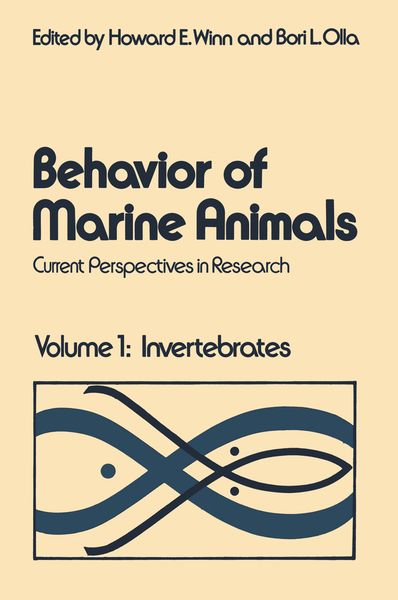
Behavior of Marine Animals Current Perspectives in Research Volume 1: Invertebrates

12% sparen

95,99 € UVP 109,99 €

inkl. gesetzl. MwSt., Versandkostenfrei


Beschreibung

Produktdetails

Einband

Taschenbuch

Erscheinungsdatum

19.02.2012

Verlag

Springer Us

Seitenzahl

244

Maße (L/B/H)

22,9/15,2/1,6 cm

Gewicht

410 g

Auflage

Softcover reprint of the original 1st ed. 1972

Sprache

Englisch

ISBN

978-1-4684-0909-3

Beschreibung

Produktdetails

Einband

Taschenbuch

Erscheinungsdatum

19.02.2012

Verlag

Springer Us

Seitenzahl

244

Maße (L/B/H)

22,9/15,2/1,6 cm

Gewicht

410 g

Auflage

Softcover reprint of the original 1st ed. 1972

Sprache

Englisch

ISBN

978-1-4684-0909-3

Herstelleradresse

Libri GmbH
Europaallee 1
36244 Bad Hersfeld
DE

Email: GPSR Kontakt

Noch keine Bewertungen vorhanden

Verfassen Sie die erste Bewertung zu diesem Artikel

Helfen Sie anderen Kundinnen und Kunden durch Ihre Meinung.

Kundinnen und Kunden meinen

Bewertungen (0)

  • Produktbild: Behavior of Marine Animals
  • Produktbild: Behavior of Marine Animals
  • of Volume 1.- 1 Orientation in Shore-Living Arthropods, Especially the Sand Fiddler Crab.- I. Introduction.- II. Review of Orientation in Shore-living Forms.- A. Amphipods.- B. Isopods.- C. Lycosid Spiders.- D. Insects.- E. Decapods.- III. Orientation by Fiddler Crabs, Genus Uca.- A. Orientation Mechanisms and Adaptiveness.- B. Factors Controlling Preferred Bearings.- C. Orientation during Ontogeny in Uca pugilator, the Sand Fiddler Crab.- IV. General Discussion.- References.- 2 Acoustic Signalling and Detection by Semiterrestrial Crabs of the Family Ocypodidae.- I. Introduction.- II. Patterns of Activity and Display.- III. Signal Characteristics.- A. Ambulatory Leg Movements.- B. Rapping.- C. Body Thumping.- D. Stridulation.- E. Ghost Crab Sounds.- IV. Detection of Tonal Stimuli.- A. Perceptual Capacities.- B. Sound Reception.- V. Detection of Rapping Sounds.- A. Characteristics of the Visual-Acoustic System.- B. Methods.- C. Results.- VI. Discussion and Conclusions.- Acknowledgments.- References.- 3 Ritualization in Marine Crustacea.- I. Introduction.- A. The Concept of Ritualization.- B. Methods of Study.- II. Communication Studies in Marine Crustacea.- A. Visual Agonistic Stimuli.- B. Agonistic-Sexual Behavior Patterns.- C. Cleaning Symbiosis.- D. Tactile Stimuli.- E. Chemical Stimuli.- III. Model Presentations and Sequence Analysis.- IV. Ritualization in Hermit Crabs.- A. Agonistic Movements in Petrochirus.- B. Film Analysis.- C. Multilevel “Typical Form” in Pagurus longicarpus.- V. Discussion.- Acknowledgments.- References.- 4 Aggressive Behavior in Stomatopods and the Use of Information Theory in the Analysis of Animal Communication.- I. Introduction.- II. Information Theory.- A. The Measure of Information.- B. Measures of Communication.- C. Some Comments on Terminology.- III. Information Theory and Behavior.- A. Methods.- B. Applications.- C. Limitations.- IV. Stomatopod Aggressive Behavior—An Example of the Use of Information Theory in Behavioral Analysis.- A. Description of the Behavior.- B. General Methods.- C. Intraindividual Sequences.- D. Interindividual Sequences.- E. Interspecific Sequences.- V. General Discussion.- A. Quantitative Analysis of Behavior.- B. Information Theory.- Acknowledgments.- References.- 5 Predatory Behavior of a Shell-Boring Muricid Gastropod.- I. Introduction.- II. Experimental Animals.- A. Predator.- B. Prey.- III. Detection and Approach to Prey.- A. Distance Detection of Prey.- B. Approach to Prey.- C. Close-Range Detection and Mounting of Prey.- IV. Penetration of Prey.- A. Selection of Borehole Site.- B. Penetration of Shell.- C. Duration of Boring Periods.- V. Relationship of Size of Borehole, ABO, and Radula.- A. Borehole Characteristics.- B. Borehole, ABO, Radula, Shell Height, and Other Parameters.- C. Variation in Size of Boreholes.- D. Maximum Depth of Boreholes.- VI. Feeding.- A. Penetration of Mantle Cavity of Prey.- B. Biting and Swallowing.- C. Rate of Feeding.- D. Gaping of Oysters.- VII. Discussion and Conclusions.- Acknowledgments.- References.