KI-Beratung Beta

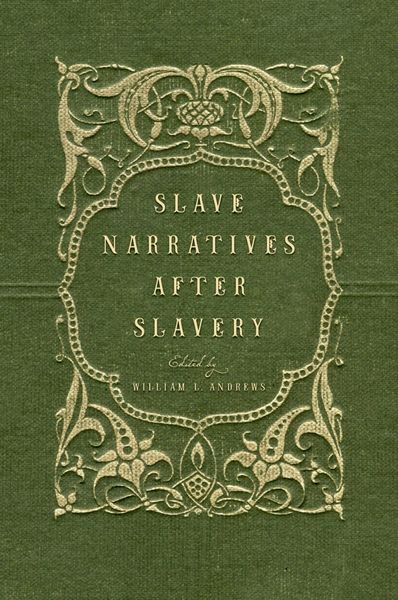
Produktbild: Slave Narratives after Slavery

Slave Narratives after Slavery

34,50 €

inkl. gesetzl. MwSt.

Beschreibung

The pre-Civil War autobiographies of famous fugitives such as Frederick Douglass, William Wells Brown, and Harriet Jacobs form the bedrock of the African American narrative tradition. After emancipation arrived in 1865, former slaves continued to write about their experience of enslavement and their...

Beschreibung

The pre-Civil War autobiographies of famous fugitives such as Frederick Douglass, William Wells Brown, and Harriet Jacobs form the bedrock of the African American narrative tradition. After emancipation arrived in 1865, former slaves continued to write about their experience of enslavement and their upward struggle to realize the promise of freedom and citizenship. Slave Narratives After Slavery reprints five of the most important and revealing first-person narratives of slavery and freedom published after 1865. Elizabeth Keckley's controversial Behind the Scenes (1868) introduced white America to the industry and progressive outlook of an emerging black middle class. The little-known Narrative of the life of John Quincy Adams, When in Slavery, and Now as a Freeman (1872) gave eloquent voice to the African American working class as it migrated from the South to the North in search of opportunity. William Wells Brown's My Southern Home (1880) retooled the image of slavery delineated in his widely-read antebellum Narrative and offered his reader a first-hand assessment of the South at the close of Reconstruction. Lucy Ann Delaney used From the Darkness Cometh the Light (1891) to pay tribute to her enslaved mother and to exemplify the qualities of mind and spirit that had ensured her own fulfillment in freedom. Louis Hughes's Thirty Years a Slave (1897) spoke for a generation of black Americans who, perceiving the spread of segregation across the South, sought to remind the nation of the horrors of its racial history and of the continued dedication of the once enslaved to dignity, opportunity, and independence.

Produktdetails

Format

ePUB

Kopierschutz

Ja

Family Sharing

Nein

Text-to-Speech

Ja

Produktdetails

Format

ePUB

Format

eBooks im ePUB-Format erlauben eine dynamische Anpassung des Inhalts an die jeweilige Display-Größe des Lesegeräts. Das Format eignet sich daher besonders für das Lesen auf mobilen Geräten, wie z.B. Ihrem tolino, Tablets oder Smartphones.

Kopierschutz

Ja

Kopierschutz

Zum Lesen dieses eBooks auf Geräten der tolino Familie sowie auf sonstigen eReadern und am PC benötigen Sie eine ByteBook-ID. Weitere Hinweise zum Lesen von kopiergeschützten eBooks finden Sie unter Hilfe/Downloads.

Family Sharing

Nein

Family Sharing

Mit Family Sharing können Sie eBooks innerhalb Ihrer Familie (max. sechs Mitglieder im gleichen Haushalt) teilen. Sie entscheiden selbst, welches Buch Sie mit welchem Familienmitglied teilen möchten. Auch das parallele Lesen durch verschiedene Familienmitglieder ist durch Family Sharing möglich. Um eBooks zu teilen oder geteilt zu bekommen, muss jedes Familienmitglied ein Konto bei Thalia oder einem anderen tolino-Buchhändler haben. Weitere Informationen finden Sie unter Hilfe/Family-Sharing.

Text-to-Speech

Ja

Text-to-Speech

Bedeutet Ihnen Stimme mehr als Text? Mit der Funktion Text-to-Speech können Sie sich im tolino webReader und in der aktuellen Thalia – Lesen & Hören App das eBook vorlesen lassen. Weitere Informationen finden Sie unter Hilfe/Text-to-Speech.

Erscheinungsdatum

25.04.2011

Herausgeber William L. Andrews
Verlag Oxford University Press
Seitenzahl

(Printausgabe)

Dateigröße

3081 KB

Sprache

Englisch

EAN

9780199831227

Barrierefreiheit
  • keine Information zur Barrierefreiheit bekannt

Noch keine Bewertungen vorhanden

Verfassen Sie die erste Bewertung zu diesem Artikel

Helfen Sie anderen Kundinnen und Kunden durch Ihre Meinung.

Kundinnen und Kunden meinen

Bewertungen (0)

Weitere Artikel finden Sie in

Die Leseprobe wird geladen.
  • Produktbild: Slave Narratives after Slavery