KI-Beratung Beta

Gutscheinbedingungen

**Gültig bis 18.11.2026 auf englischsprachige Klassiker (klassiker-32728) online auf thalia.at und in der Thalia App. Einzelne Artikel können ausgeschlossen sein. Ausgenommen sind preisgebundene Artikel & eBooks. Pro Einkauf einmal einlösbar. Click & Collect nur bei Onlinevorabzahlung möglich. Keine Barauszahlung. Nicht kombinierbar mit anderen Aktionen und Gutscheinen. Gutschein wird auf max. 500€ Bestellwert angerechnet. Nicht gültig für Geschenkkarten, Versandkosten und Services.

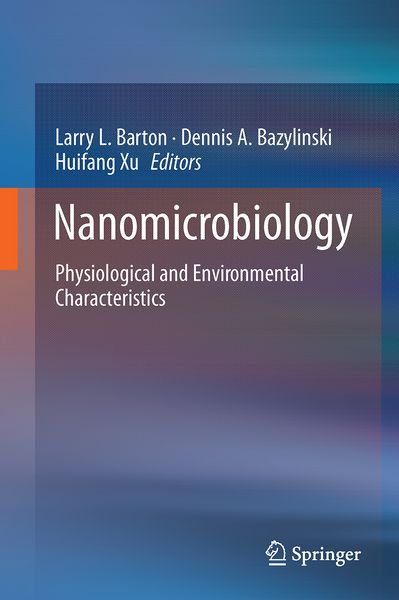
  • Produktbild: Nanomicrobiology
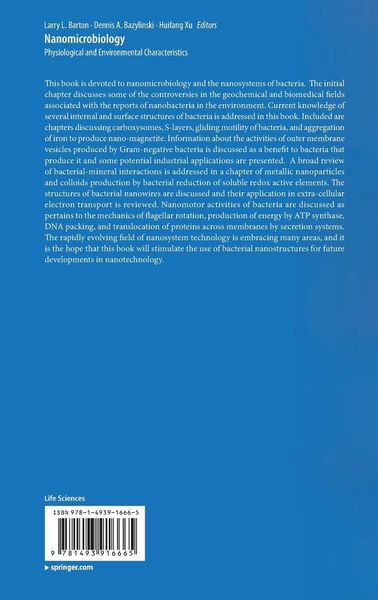
  • Produktbild: Nanomicrobiology
- 12%

Nanomicrobiology Physiological and Environmental Characteristics

12% sparen

95,99 € UVP 109,99 €

inkl. gesetzl. MwSt., Versandkostenfrei


Beschreibung

This book is devoted to nanomicrobiology and the nanosystems of bacteria.  The initial chapter discusses some of the controversies in the geochemical and biomedical fields associated with the reports of nanobacteria in the environment. Current knowledge of several internal and surface structures of bacteria...

Beschreibung

This book is devoted to nanomicrobiology and the nanosystems of bacteria.  The initial chapter discusses some of the controversies in the geochemical and biomedical fields associated with the reports of nanobacteria in the environment. Current knowledge of several internal and surface structures of bacteria is addressed in this book. Included are chapters discussing carboxysomes, S-layers, gliding motility of bacteria, and aggregation of iron to produce nano-magnetite. Information about the activities of outer membrane vesicles produced by Gram-negative bacteria is discussed as a benefit to bacteria that produce it and some potential industrial applications are presented.  A broad review of bacterial-mineral interactions is addressed in a chapter of metallic nanoparticles and colloids production by bacterial reduction of soluble redox active elements. The structures of bacterial nanowires are discussed and their application in extra-cellular electron transport is reviewed. Nanomotor activities of bacteria are discussed as pertains to the mechanics of flagellar rotation, production of energy by ATP synthase, DNA packing, and translocation of proteins across membranes by secretion systems. The rapidly evolving field of nanosystem technology is embracing many areas, and it is the hope that this book will stimulate the use of bacterial nanostructures for future developments in nanotechnology.     

Rezension

“This interesting book is focused on some ultrastructural components of prokaryotic cell, either belonging to Domain Bacteria or to Domain Archaea, as well as on metal nanoparticles formation during metabolism and nanostructures involved in bacterial glinding motility. … The chapters are written very clearly, from microbiological point of view and from nanotechnological point of view … . The book Nanomicrobiology seems to me to be a useful working instrument for young growing students and scientists … .” (Ioan I. Ardelean, Bulletin of Micro and Nanoelectrotechnologies, Vol. 6 (1-2), 2015)

Produktdetails

Einband

Gebundene Ausgabe

Erscheinungsdatum

06.11.2014

Abbildungen

X, 184 p. 39 illus., 28 illus. in color.

Herausgeber Larry L. Barton + weitere

Produktdetails

Einband

Gebundene Ausgabe

Erscheinungsdatum

06.11.2014

Abbildungen

X, 184 p. 39 illus., 28 illus. in color.

Herausgeber
Verlag Springer Us
Seitenzahl

184

Maße (L/B/H)

24,1/16/1,5 cm

Gewicht

413 g

Auflage

2014

Sprache

Englisch

ISBN

978-1-4939-1666-5

Herstelleradresse

Springer-Verlag KG
Sachsenplatz 4-6
1201 Wien
AT

Email: ProductSafety@springernature.com

Noch keine Bewertungen vorhanden

Verfassen Sie die erste Bewertung zu diesem Artikel

Helfen Sie anderen Kundinnen und Kunden durch Ihre Meinung.

Kundinnen und Kunden meinen

Bewertungen (0)

Die Leseprobe wird geladen.
  • Produktbild: Nanomicrobiology
  • Produktbild: Nanomicrobiology
  • Preface.- Nanostructures and nanobacteria.- S-layer structure in bacteria and archaea.- Magnetotactic Bacteria, Magnetosomes and Nanotechnology.- Carboxysomes and their structural organization in prokaryotes.- Bacterial organization at the smallest level: Molecular motors, nanowires, and outer membrane vesicles.- The mechanism of bacterial gliding motility: Insights from molecular and cellular studies in the Myxobacteria and Bacteroidetes.- Nanoparticles formed by microbial metabolism of metals and minerals.