KI-Beratung Beta

Gutscheinbedingungen

**Gültig am 20.11.2026 ab einem Mindestbestellwert von 30€ auf Spielzeug, Schreibwaren, Filme, Geschenke & Trends, Musik, tolino eReader & Zubehör, Hörbücher und Hörbuch-Downloads, nicht preisgebundene Bücher und Kalender online auf thalia.at und in der Thalia App. Einzelne Artikel können ausgeschlossen sein. Aufgrund der Buchpreisbindung sind deutschsprachige Bücher und eBooks ausgenommen. Zusätzlich ausgenommen sind Abos & Flatrates, Games, Geschenkkarten/-boxen, Shelfies, Software, Zeitschriften sowie einzelne Artikel von tonies®. Pro Einkauf einmal einlösbar. Click & Collect nur bei Onlinevorabzahlung möglich. Keine Barauszahlung. Nicht kombinierbar mit anderen Aktionen und Gutscheinen. Gutschein wird auf max. 500€ Bestellwert angerechnet. Nicht gültig für Versandkosten und Services. Preisgebundene Artikel sind vom Mindestbestellwert ausgeschlossen.

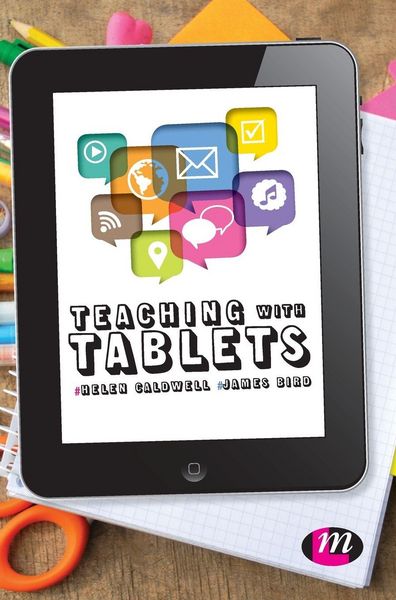
  • Produktbild: Teaching with Tablets
  • Produktbild: Teaching with Tablets
- 11%

Teaching with Tablets

11% sparen

105,99 € UVP 120,00 €

inkl. gesetzl. MwSt., Versandkostenfrei


Beschreibung

The presence of handheld technologies in the classroom isn't enough - you need to know how to use them to enhance teaching and transform learning.  As more and more primary schools acquire devices such as iPads and tablets, it is becoming clear that adding them as a classroom resource is not enough. Teachers...

Beschreibung

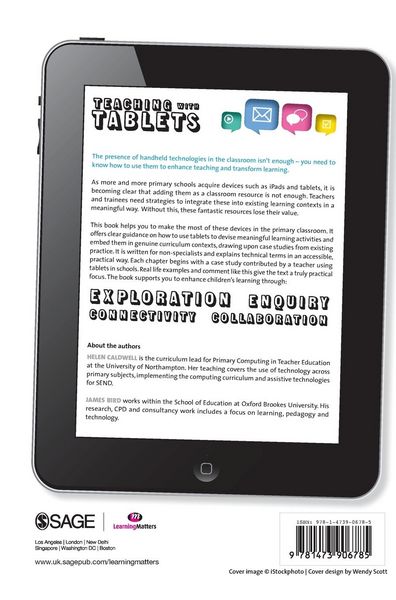
The presence of handheld technologies in the classroom isn't enough - you need to know how to use them to enhance teaching and transform learning. 
As more and more primary schools acquire devices such as iPads and tablets, it is becoming clear that adding them as a classroom resource is not enough. Teachers and trainees need strategies to integrate these into existing learning contexts in a meaningful way. Without this, these fantastic resources lose their value.
This book helps teachers to make the most of these devices in the primary classroom. It offers guidance on:

  • how to use tablets to devise meaningful learning activities
  • embed them in genuine curriculum contexts, drawing upon case studies from existing practice

It is written for non-specialists and explains technical terms in an accessible, practical way. Each chapter begins with a case study contributed by a teacher using tablets in schools. Real life examples and comments like this give the text a truly practical focus. The book's Pinterest board includes the apps mentioned in the book as well as a handy infographic for a snapshot guide on starting off your tablet  teaching journey. 

A note from the authors
The use of technology in schools continues to evolve rapidly as new devices and tools become available, and the adoption of mobile devices such as iPads and tablets has been a particularly exciting development in recent years. The benefits offered by these technologies, such as their portability, connectivity, accessibility and range of media, present new challenges and opportunities for teaching and learning. As the take up of tablets gathers pace in our schools there is a need for advice on the best approaches and apps to help achieve successful learning outcomes. Teachers need to find meaningful ways to integrate the devices into their own practice and to evaluate which of the many thousands of educational apps might be appropriate for their pupils.
This book considers how iPads and tablets can be used to enhance teaching and learning in primary schools. It is especially relevant in the light of the computing curriculum, which puts a new emphasis on children as makers and creators of digital content. Across other curriculum subjects too, the introduction of mobile devices that can be quickly and reliably accessed has precipitated a shift in practice. For example, they have enabled teachers and children to spontaneously pursue lines of inquiry, to connect, collaborate and publish in many different ways, and to use their digital skills to enhance their exploration of the physical world outside the classroom.
With these opportunities in mind, we offer anecdotes from the classroom and examples of how tablets might be embedded within current pedagogy and practice as a natural learning tool. Each chapter combines a practical case study with discussion of related pedagogy, and recommends apps to support a personalised, inclusive and active approach to teaching and learning.

Rezension

Technology is also progressing rapidly into the education industry. Student prefer learning with IoT (Internet of Things). However most of the teachers with many years of working experience are now motivated to use technology to teach and to keep themselves abreast of teaching technology. The tablet is the future of interactive teaching and learning. This book is a great guide on teaching for the future with a reliable tool - tablet. Dr Habib Kassim drupal 20150416

Produktdetails

Einband

Gebundene Ausgabe

Erscheinungsdatum

19.03.2015

Verlag SAGE Publications
Seitenzahl

154

Produktdetails

Einband

Gebundene Ausgabe

Erscheinungsdatum

19.03.2015

Verlag SAGE Publications
Seitenzahl

154

Maße (L/B/H)

25/17,5/1,3 cm

Gewicht

400 g

Sprache

Englisch

ISBN

978-1-4739-0678-5

EU-Ansprechpartner

Kolibri 360 GmbH
Ettore-Bugatti-Straße 6-14
51149 Köln
DE
produktsicherheit@kolibri360.de

Herstelleradresse

SAGE Publications
1 Oliver's Yard 55 City Road
EC1Y 1SP London
GB
orders@sagepub.co.uk

Noch keine Bewertungen vorhanden

Verfassen Sie die erste Bewertung zu diesem Artikel

Helfen Sie anderen Kundinnen und Kunden durch Ihre Meinung.

Kundinnen und Kunden meinen

Bewertungen (0)

Die Leseprobe wird geladen.
  • Produktbild: Teaching with Tablets
  • Produktbild: Teaching with Tablets
  • Introduction
    Theme: Combining Media
    Chapter 1: Manipulating Media
    Chapter 2: Digital Storytelling
    Theme: Visible Learning
    Chapter 3: Visible Learning
    Chapter 4: Talk and Collaboration
    Theme: Personalised Learning
    Chapter 5: Individual Needs
    Chapter 6: Early Years
    Theme: Any Place Learning
    Chapter 7: Technology Outdoors
    Chapter 8: Children as Researchers
    Theme: Computing Curriculum
    Chapter 9: Computing
    Chapter 10: Touch Physics