Beschreibung
Produktdetails
Einband
Taschenbuch
Erscheinungsdatum
24.02.2017
Verlag
John Wiley & SonsSeitenzahl
418
Maße (L/B/H)
25,4/17,8/2,2 cm
Gewicht
723 g
Auflage
2. Auflage
Sprache
Englisch
ISBN
978-1-118-99132-9
Reviews of the First Edition:
"... fills an important gap in undergraduate education, and I would encourage every instructor of organic chemistry to seriously evaluate this text as a substantive aid. This book is definitely well worth its price!"
Angewandte Chemie International Edition
"... serves as a valuable workbook to counteract student memorization and compartmentalization of organic chemistry material. ... a great supplemental resource to guide the novice organic chemistry student down the path to a true understanding of the subject."
Chemical Education Today
"The high point of the book is the provision of a large number of carefully targeted problems at the end of each chapter, complete with well-explained worked answers. I am sure that these will be highly useful to students...."
Physical Sciences Centre Reviews
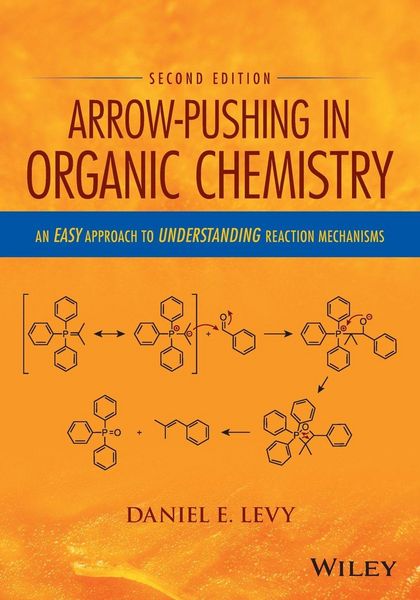
Most organic chemistry texts intimidate through sheer size, encyclopedic presentation of reactions, and a huge amount of material to memorize. Building on the legacy of a highly successful first edition, this book teaches a better and easier way to approach the subject?the arrow-pushing strategy that reduces organic chemistry to the study of interactions between organic acids and bases and builds from there. To help the students discouraged by the belief that this topic cannot be mastered without signi cant memorization, the 2nd edition of Arrow-Pushing in Organic Chemistry serves as a handy supplement for understanding the subject. New and updated chapters cover free radicals, carbenes, and pericyclic reaction mechanisms. Additionally, problem sets for each chapter emphasize the important concepts, reinforce the reader's knowledge of chemistry, and introduce other aspects of organic chemistry discussed in latter chapters or in a student's class.
Key benefits and features of the 2nd edition include:
- New chapters, an expanded index, and additional problem sets complete with detailed solutions
- Introduction of ionic and nonionic reactive species and reaction mechanisms
- Strategies to predict reactive species, sites of reactions, and reaction products
- A solid foundation upon which organic chemistry students can advance with con dence
Noch keine Bewertungen vorhanden
Verfassen Sie die erste Bewertung zu diesem Artikel
Helfen Sie anderen Kundinnen und Kunden durch Ihre Meinung.
Kurze Frage zu unserer Seite
Vielen Dank für Ihr Feedback
Wir nutzen Ihr Feedback, um unsere Produktseiten zu verbessern. Bitte haben Sie Verständnis, dass wir Ihnen keine Rückmeldung geben können. Falls Sie Kontakt mit uns aufnehmen möchten, können Sie sich aber gerne an unseren Kund*innenservice wenden.
zum Kundenservice