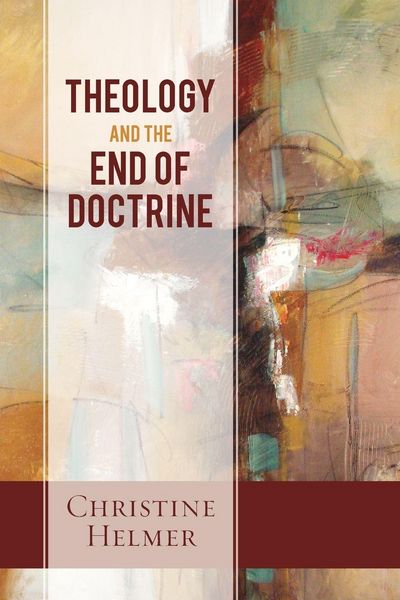
Theology and the End of Doctrine
-
- Taschenbuch ausgewählt
- eBook
-
Sprache:Englisch
39,99 €
inkl. gesetzl. MwSt.,
Beschreibung
Produktdetails
Einband
Taschenbuch
Erscheinungsdatum
25.07.2014
Verlag
Westminster John Knox PressSeitenzahl
216
Maße (L/B/H)
22,9/15,2/1,2 cm
Gewicht
321 g
Sprache
Englisch
ISBN
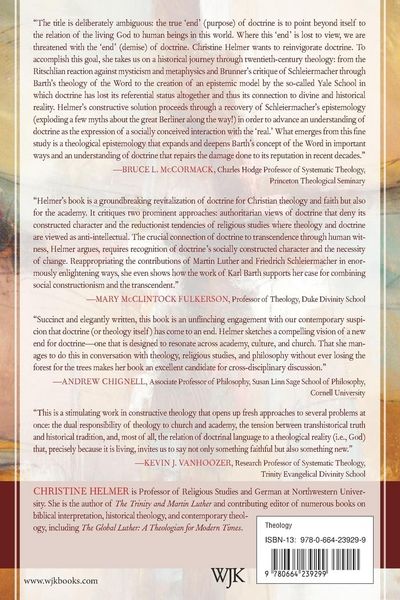
978-0-664-23929-9
This book is about the crisis brought about by doctrine's estrangement from reality--that is from actual lives, experiences, histories, and from God. By invoking "the end of doctrine," Christine Helmer opens a new discussion of doctrinal production that is engaged with the challenges and possibilities of modernity. The end of doctrine refers on the one hand to unquestioning doctrinal reception, which Helmer critiques, and on the other, represents an invitation to a new way of understanding the aim of doctrine in deeper connection to the reality that it seeks.
The book's first section offers an analysis of the current situation in theology by reconstructing a trajectory of Protestant theology from the turn of the twentieth century to today. This history focuses primarily on the status of the word in theology and explains how changes in theology in the context of the political and social crisis in Europe in the 1920s and 1930s led to a distancing of the word from reality. Helmer then turns to the constructive section of the book to propose a repositioning of theology to the world and to God. Helmer's powerful work will inspire revitalized interest in both doctrine and theological inquiry itself.
Noch keine Bewertungen vorhanden
Verfassen Sie die erste Bewertung zu diesem Artikel
Helfen Sie anderen Kundinnen und Kunden durch Ihre Meinung.
Kurze Frage zu unserer Seite
Vielen Dank für Ihr Feedback
Wir nutzen Ihr Feedback, um unsere Produktseiten zu verbessern. Bitte haben Sie Verständnis, dass wir Ihnen keine Rückmeldung geben können. Falls Sie Kontakt mit uns aufnehmen möchten, können Sie sich aber gerne an unseren Kund*innenservice wenden.
zum Kundenservice