KI-Beratung Beta

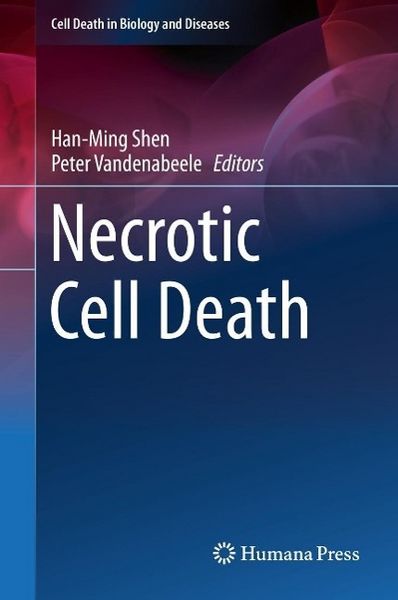
Produktbild: Necrotic Cell Death

Necrotic Cell Death

109,99 €

inkl. gesetzl. MwSt.

Beschreibung

Produktdetails

Format

PDF

Kopierschutz

Nein

Family Sharing

Nein

Text-to-Speech

Nein

Erscheinungsdatum

29.03.2014

Herausgeber

Han-Ming Shen + weitere

Verlag

Springer New York

Seitenzahl

397 (Printausgabe)

Dateigröße

8092 KB

Sprache

Englisch

EAN

9781461482208

Beschreibung

Portrait

Dr. Han-Ming Shen is currently Associate Professor in the Department of Physiology, Yong Loo Lin School of Medicine, National University of Singapore. He received his Ph.D. from the National University of Singapore and holds a Master of Medicine from Zhejiang Medical University, China. Winner of several academic and scientific awards, Dr. Shen's main research interests include autophagy in cell death and cancer, involvement of reactive oxygen/nitrogen species and oxidative stress in cell death signaling pathways (apoptotic and non-apoptotic cell death), and antioxidants and natural products as anti-cancer agents.Dr. Peter Vandenabeele obtained his PhD in Biology in the lab of Prof. Walter Fiers at Ghent University in Belgium. Currently, he is a Primary Investigator at the Flanders Institute for Biotechnology (VIB) and a Senior Professor at Ghent University where he also served for ten years as Director of the Bachelor's and Master's program in Biochemistry and Biotechnology and still serves on the Board of Governors.  His research focuses on molecular mechanisms of cell death and inflammation with focus on necrotic cell death which is studied in an integrated way at biochemical, cell biological and experimental disease level. Dr. Vandenabeele has also twice been chairman of the Euroconference on Apoptosis, organized by the European Cell Death Organization (ECDO).

Produktdetails

Format

PDF

eBooks im PDF-Format haben eine festgelegte Seitengröße und eignen sich daher nur bedingt zum Lesen auf einem tolino eReader oder Smartphone. Für den vollen Lesegenuss empfehlen wir Ihnen bei PDF-eBooks die Verwendung eines Tablets oder Computers.

Kopierschutz

Nein

Dieses eBook können Sie uneingeschränkt auf allen Geräten der tolino Familie, allen sonstigen eReadern und am PC lesen. Das eBook ist nicht kopiergeschützt und kann ein personalisiertes Wasserzeichen enthalten. Weitere Hinweise zum Lesen von eBooks mit einem personalisierten Wasserzeichen finden Sie unter Hilfe/Downloads.

Family Sharing

Nein

Mit Family Sharing können Sie eBooks innerhalb Ihrer Familie (max. sechs Mitglieder im gleichen Haushalt) teilen. Sie entscheiden selbst, welches Buch Sie mit welchem Familienmitglied teilen möchten. Auch das parallele Lesen durch verschiedene Familienmitglieder ist durch Family Sharing möglich. Um eBooks zu teilen oder geteilt zu bekommen, muss jedes Familienmitglied ein Konto bei Thalia oder einem anderen tolino-Buchhändler haben. Weitere Informationen finden Sie unter Hilfe/Family-Sharing.

Text-to-Speech

Nein

Bedeutet Ihnen Stimme mehr als Text? Mit der Funktion Text-to-Speech können Sie sich im tolino webReader und in der aktuellen Thalia – Lesen & Hören App das eBook vorlesen lassen. Weitere Informationen finden Sie unter Hilfe/Text-to-Speech.

Barrierefreiheit

  • keine Information zur Barrierefreiheit bekannt

Erscheinungsdatum

29.03.2014

Herausgeber

Verlag

Springer New York

Seitenzahl

397 (Printausgabe)

Dateigröße

8092 KB

Sprache

Englisch

EAN

9781461482208

Noch keine Bewertungen vorhanden

Verfassen Sie die erste Bewertung zu diesem Artikel

Helfen Sie anderen Kundinnen und Kunden durch Ihre Meinung.

Kundinnen und Kunden meinen

Bewertungen (0)

Weitere Artikel finden Sie in

  • Produktbild: Necrotic Cell Death
  • Necrotic cell death at a glance: concept, mechanisms and biological functions.- Necroptosis: Alternative death modality under death receptors.- RIP1 and RIP3 in necrotic cell death.- PARP-mediated necrotic cell death.- Autophagic cell death, true or false?.- Oxidative stress and necrotic cell death.- Necrosis and DNA damage.- Lysosomes in necrotic cell death.- Necrotic cell death in development.- Necrotic cell death  in immunity.- Necrotic cell death in inflammation.- Necrotic cell death and cancer.- Necrotic cell death in ischemia reperfusion injury.- Necrostatin, a necrosis inhibitor as a therapeutic agent.- Necrotic cell death in model organisms (C. elegan).- Methodology in studying necrotic cell death.¿