KI-Beratung Beta

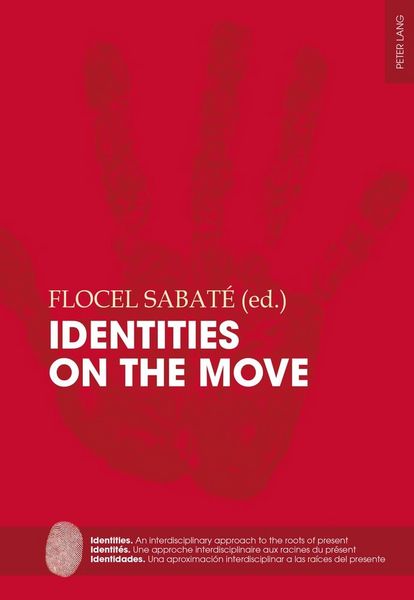
Produktbild: Identities on the Move
Band 1

Identities on the Move

142,25 €

inkl. gesetzl. MwSt., Versandkostenfrei


Beschreibung

Produktdetails

Einband

Taschenbuch

Erscheinungsdatum

12.05.2014

Herausgeber

Flocel Sabaté

Verlag

Peter Lang Group AG, International Academic Publishers

Seitenzahl

515

Maße (B/H)

14,8/21 cm

Gewicht

770 g

Auflage

1

Sprache

Englisch

ISBN

978-3-0343-1296-7

Beschreibung

Portrait

Flocel Sabaté is professor in Medieval History and head of the Institute for Research into Identities and Society (University of Lleida, Catalonia, Spain). He served as invited professor in universities such as Paris-1, Poitiers, ENS-Lettres et Sciences (Lyon), Universidad Nacional de Mexico or Yale, and led international research projects from European institutions such as the European Science Foundation or Marie Curie Actions. He belongs to more than fifty boards for scientific journals and series and has written more than three hundred research works, including different books about medieval society.

Produktdetails

Einband

Taschenbuch

Erscheinungsdatum

12.05.2014

Herausgeber

Flocel Sabaté

Verlag

Peter Lang Group AG, International Academic Publishers

Seitenzahl

515

Maße (B/H)

14,8/21 cm

Gewicht

770 g

Auflage

1

Sprache

Englisch

ISBN

978-3-0343-1296-7

EU-Ansprechpartner

Kolibri 360 GmbH
Ettore-Bugatti-Straße 6-14
51149 Köln
DE
produktsicherheit@kolibri360.de

Herstelleradresse

Peter Lang
Avenue du Théâtre 7
1005 Lausanne
CH
orders@peterlang.com

Noch keine Bewertungen vorhanden

Verfassen Sie die erste Bewertung zu diesem Artikel

Helfen Sie anderen Kundinnen und Kunden durch Ihre Meinung.

Kundinnen und Kunden meinen

Bewertungen (0)

  • Produktbild: Identities on the Move

  • Contents: Flocel Sabaté: Identities on the move – Kaspar Klavins : Le tracé de l’identité européene de l’Espagne aux Pays Baltes – Felicitas Schmieder: Travelling in the ‘Orbis Christianus’ and beyond (Thirteenth-Fifteenth Century): What makes the difference? – Lesley Twomey:
    De aquestes raons de la Senyora, los apòstols e Magdalena e les altres dones prengueren molta consolació:
    Establishing Female Identity through the Virgin’s words in the ‘Vita Christi’ of «Sor Isabel de Villena» – Gérard Nahon : Les juifs à Recife 1630-1654. Un modèle évanescent? – Juan Sisinio Pérez: The construction of Spanish national identity – Paul Aubert: Spain/France: Reciprocal Images during the Restoration Period (1875-1931) – Caroline Barrera: Identities on the Move. Foreign and Colonial Students in France (19th c.-1960s) – Joaquim Capdevila/Teresa Serés/Sònia Rubió: Literature and Shows of Modern Customs in Catalan ‘Ethnotypism’ and the creation of some modern imaginary of popular catalanity – Josep Maria Figueres: Exile in Mexico and Catalan identity. Catalonia in the imaginarium of first generation exiles in Mexico (1939-2005) – Maria Carmen Figuerola: Malika Mokeddem or the Recreation of a New Mestization – Pere Solà: «In the Name of Identity: violence and the Need of Belong» by Amin Maaloof: a reflection on the notion of identity – Montserrat Roser: Questions of artistic and personal identity in the interwar poetry J. V. Foix – Joan Julià-Muné: Will Major Languages Ruin Minor Languages? English and Chinese vs. Catalan and Occitan – M. Carme Junyent: Languages, links and identities in a society on the move – Teresa Sala/Lluís Samper/Xavier Burrial: Changing rural identity. Discourses on rurality in catalan school – Roberta Maierhofer: Aging as Continuity and Change: Age as Personal and Social Transformation – Jorge Wagensberg: Individuals in front of individualities: an identities’ conflict – Hugh O’Donnell: Talking the talk? Language and Identity in the European Soup Oper – Daniel-Henri Pageaux : L’imagologie face à la question de l’identité – Thibault Courcelle : Quelle identité européene ? Sentiments d’appartenance et représentations de l’Europe en mouvement dans la construction européenne – Maria Saur: Multi-culturism of Many-colours-ism. The ‘colours’ of the Presidents Obama and Khama – Michel Wieviorka : Les mutations du racisme contemporain.